

Short answer: The shofar is a ritual horn, traditionally from a ram (or a kudu antelope for the long, curved Yemenite style), sounded at pivotal moments in Jewish life and above all on Rosh Hashanah, the Jewish New Year. Its blast is understood as a spiritual wake-up call to repentance and renewal, and it carries layered meaning: it recalls the ram offered in place of Isaac, echoes the horn heard at Mount Sinai, and points toward a future redemption. Because it must be a hollow horn from a kosher animal (never a cow) and is shaped almost entirely by hand, an authentic shofar is at once a religious article and a genuinely crafted piece of cultural merchandise.
What the shofar means and why it is sounded
The shofar is best understood as a ritual horn rather than a melodic instrument. As Encyclopaedia Britannica describes it, the shofar produces only a small set of piercing tones, not tunes, and its purpose is to signal and to stir, not to entertain. Its central role today is on Rosh Hashanah, when the Torah commands that the first day of the seventh month be marked with loud blasts (Leviticus 23:24 and Numbers 29:1), making the sounding of the shofar the defining commandment of the day, as Exploring Judaism explains.
The meaning most often taught comes from Maimonides (the Rambam), who in the 12th century framed the blast as a spiritual alarm clock: "Awake, you sleepers, from your sleep... ponder your deeds and remember your Creator." Across a full Rosh Hashanah service, 100 blasts are sounded, built from three basic notes: tekiah (one long blast), shevarim (three shorter wails), and teruah (at least nine short staccato bursts), according to Chabad.org. When Rosh Hashanah falls on Shabbat the shofar is generally not blown, out of a rabbinic concern about carrying it, not because of any objection to the horn itself. A single long blast also closes the Yom Kippur fast.
From the Binding of Isaac to Mount Sinai
The shofar's earliest prominent appearance in Scripture is at Mount Sinai, where Exodus 19:16 records a loud horn blast accompanying thunder, smoke, and the giving of the Torah, filling the people with awe. As The Conversation notes, that moment ties the horn forever to revelation and covenant.
Tradition also connects the ram's horn to the Binding of Isaac in Genesis 22, where a ram caught in a thicket is offered in Isaac's place. The Judaica Webstore Blog explains that this is why a ram's horn is preferred: blowing it on Rosh Hashanah is understood to invoke the merit of Abraham and to appeal for divine mercy. The horn had many other public uses in the Bible as well, announcing the new moon and the Sabbath, proclaiming the anointing of a king, and signaling in times of war. On the Jubilee year it is sounded on Yom Kippur "to proclaim liberty throughout the land" (Leviticus 25:9), tying the shofar to freedom and release as much as to judgment, as Britannica records.
In the 10th century, Rabbi Saadia Gaon gathered these threads into ten reasons for blowing the shofar, among them announcing the New Year, recalling Sinai, calling people to repentance, remembering the Binding of Isaac, and heralding the messianic redemption, per Chabad. Few objects in Judaism hold that many layers of meaning in a single sound.
Ram's horn or kudu: how a real shofar is made
In Hebrew, the word shofar essentially means ram's horn, and that remains the preferred material. The instrument can be made from the horn of any kosher animal except a cow, whose horn is associated with the sin of the golden calf and is technically called keren rather than shofar. The two most common types sold are the shorter, curved ram's horn and the long, dramatically twisted Yemenite kudu shofar, prized for its deeper, multi-tonal sound.
Authenticity here is a matter of craft, not just tradition. According to Barsheshet-Ribak Shofarot Israel, a genuine shofar is hand-made from the hollow horn of a kosher animal, heated in boiling water, straightened, and drilled through by hand, with any side hole rendering it non-kosher. Because Israeli makers still shape each horn individually, no two are exactly alike, and every authentic shofar functions at once as a religious article, a cultural symbol, and a handmade product.
Bringing the shofar's story home
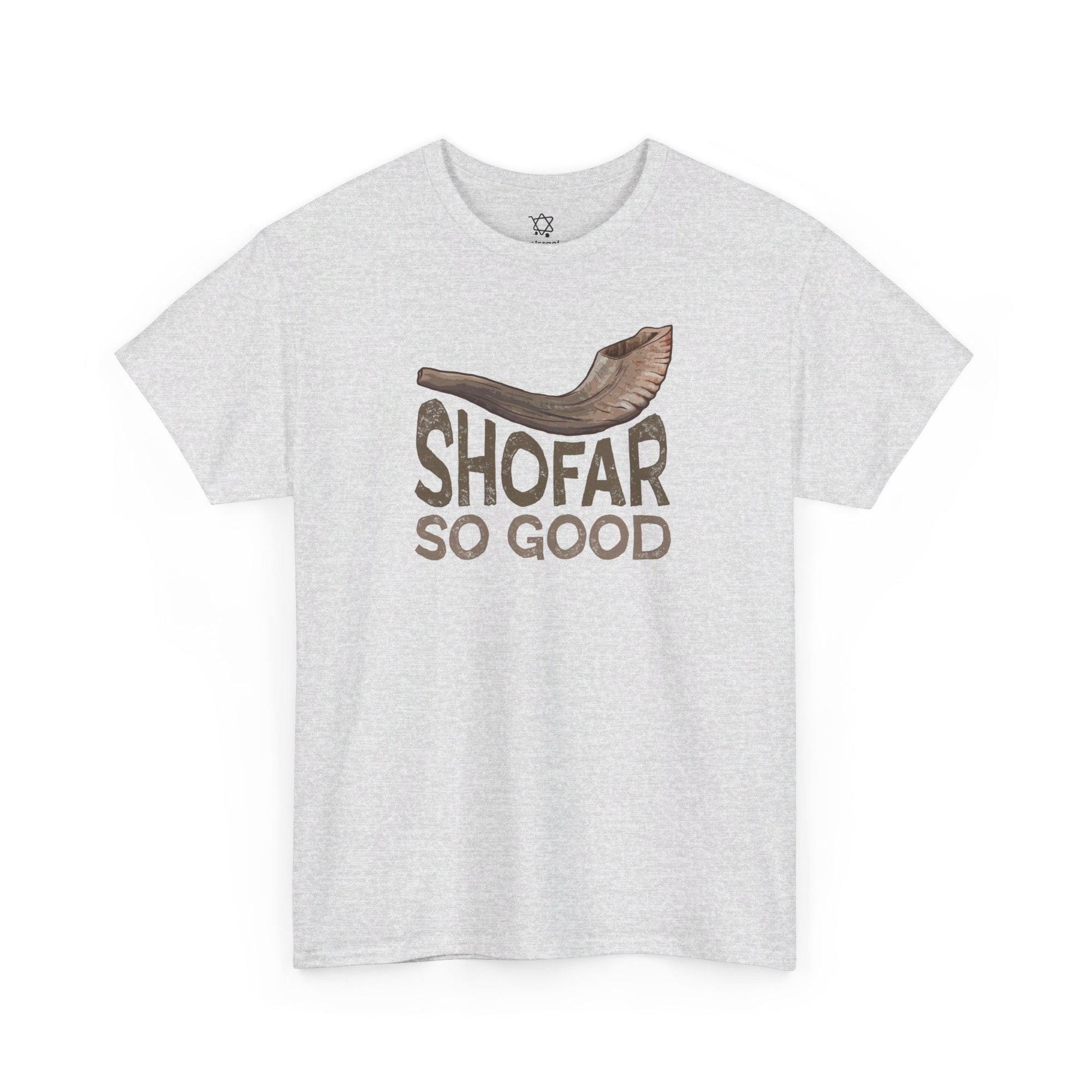
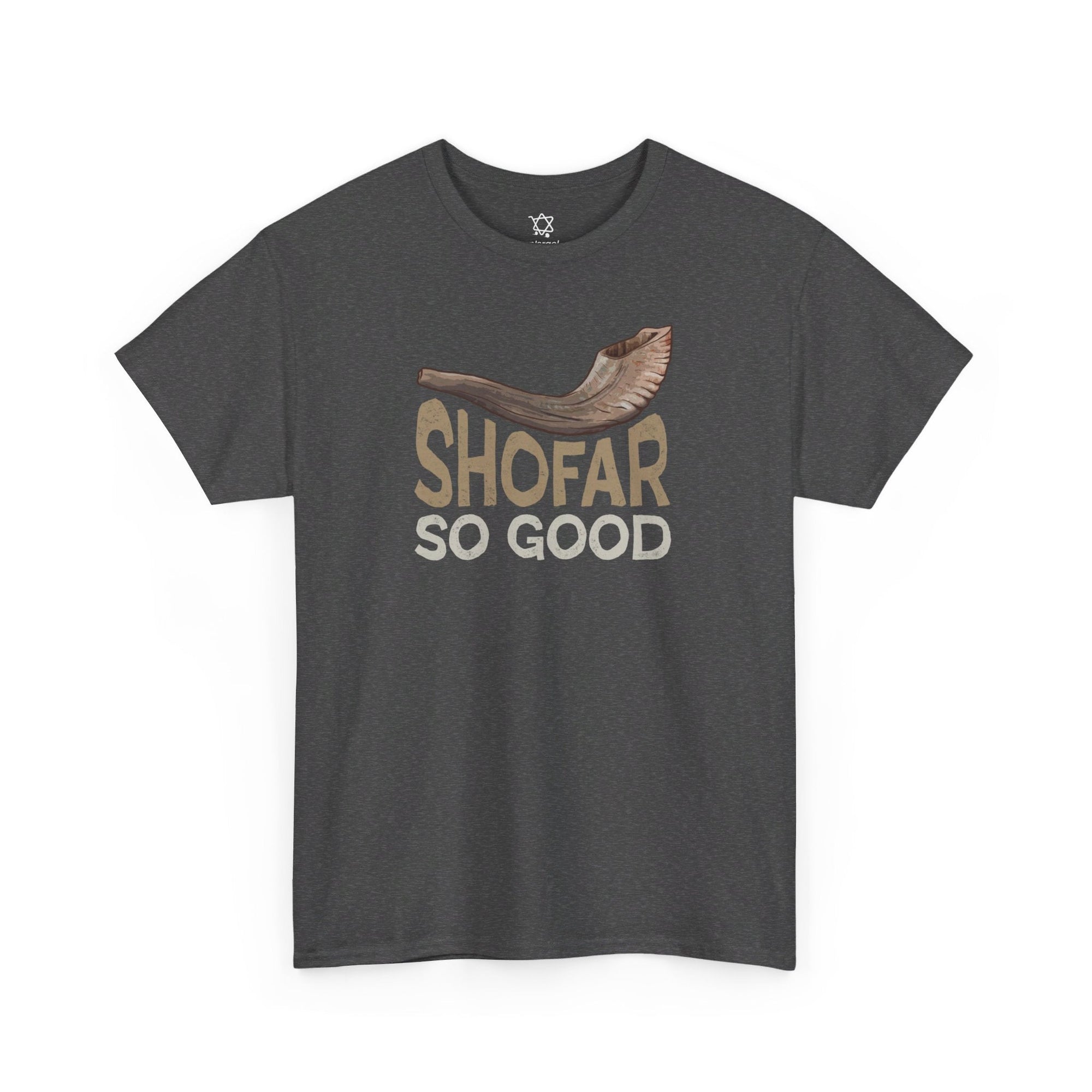
Once you understand what the shofar carries (revelation, mercy, repentance, and hope) it becomes easy to see why its imagery has traveled onto everyday keepsakes. If you love the sound but want something you can wear year-round, our playful Shofar So Good t-shirt puts the High Holidays into a casual piece, and it sits alongside the rest of our Jewish symbols jewelry collection for gifts that carry real meaning. Whether you are marking Rosh Hashanah, honoring a milestone, or simply celebrating your heritage, choosing a piece rooted in this tradition lets the shofar's message travel with you long after the last blast fades.
Related
- The shofar's historical and spiritual significance explained
- How the shofar shapes Jewish festival traditions and merchandising
- Shofar-inspired products: from tradition to trend
Last updated July 2026.