

Short answer: The shofar is an ancient Jewish ritual horn, traditionally a ram's horn (though the horn of any kosher animal except cattle may be used), hollowed and shaped to sound piercing, wordless blasts. It appears throughout the Hebrew Bible, at Mount Sinai, in war, at royal coronations, and for the Jubilee year, and today it anchors the High Holy Days of Rosh Hashanah and Yom Kippur. Its spiritual legacy is a call to awaken and repent, a proclamation of God's kingship, and a reminder of the ram offered in place of Isaac.
A horn shaped by breath alone
The shofar is a natural animal horn, hollowed of its inner cartilage, cleaned, then heated so it can be straightened or curved and fitted with a mouthpiece. It has no reeds, valves, or finger holes. Like a bugle, every note is shaped by the player's breath and lips. The classic High Holy Day shofar is a curved ram's horn, while the long, dramatic spiral shofars favored in some Sephardic and Yemenite communities come from the kudu antelope.
A common description calls the shofar simply a ram's horn, and that is the most familiar form. The more precise rule is that the horn of any kosher animal may be used, a ram, goat, ibex, kudu, or antelope, with one telling exception: cattle are disqualified. Tradition holds that the horn used to plead for mercy on the Day of Judgment should not evoke the sin of the Golden Calf, and Scripture reserves the word shofar for other horns, calling the ox horn keren instead (Chabad.org, Why Are Shofars from Rams' Horns; OK Kosher, The Laws of Shofar). The horn's first prominent appearance in the Torah is at Mount Sinai, where a very loud shofar blast grows louder and louder as God descends and the whole camp trembles, Exodus 19:16-19 (Sefaria, shofar sourcebook).
Four blasts, many meanings
On Rosh Hashanah the shofar sounds a fixed sequence: tekiah, one long blast; shevarim, three broken, wailing notes; teruah, a rapid staccato of short blasts; and tekiah gedolah, a single extended final blast. A long tekiah gedolah also traditionally marks the close of the Yom Kippur fast at the end of the Neilah service.
Jewish tradition hears several meanings in that sound at once. It crowns God as King, echoing coronation verses. It recalls the binding of Isaac, where a ram caught in a thicket was offered in his place, so the ram's horn evokes faith, mercy, and self-sacrifice. And it is a wordless alarm calling the soul to repentance. Maimonides makes that last reading explicit in the Mishneh Torah, writing that the shofar says, in effect, "Awake, you sleepers, from your sleep; inspect your deeds, repent, and remember your Creator" (Sefaria, Mishneh Torah, Repentance 3:4). The wordlessness is the point: a cry that reaches past language.
The Torah ties this one commandment uniquely to the day. It calls the first of the seventh month a day of loud blasts, Yom Teruah, the Day of Blowing, Leviticus 23:24 and Numbers 29:1, which the rabbis identify as the shofar of Rosh Hashanah (My Jewish Learning, Why Blow the Shofar).
From Jericho to the Jewish new year
Beyond revelation and repentance, the shofar runs like a thread through Israel's history. At Jericho, seven priests carried seven shofars around the city, and on the seventh day the walls fell after a long blast, the horn serving as a battle and rallying signal, Joshua 6 (Chabad.org, 12 Instances of Shofar-Blowing). It heralded kingship too: after Zadok the priest anointed Solomon, the shofar sounded and the people cried, "Long live King Solomon," 1 Kings 1:39 (same source). And it inaugurated freedom, for the Jubilee year was proclaimed by a shofar blast on Yom Kippur of the fiftieth year, when debts were released, land returned to its owners, and slaves went free, the Hebrew name yovel itself linked to the ram's horn, Leviticus 25:9-10 (My Jewish Learning, The Jubilee (Yovel) Year).
That legacy is not a museum piece. Writing in 2025 for The Conversation, a Jewish studies scholar described the shofar's wordless cry as a sound that shapes the Jewish new year, marks God's sovereignty, and stirs repentance, proof that the horn still does its ancient work every autumn (The Conversation / Religion News Service).
Bringing the shofar's legacy home
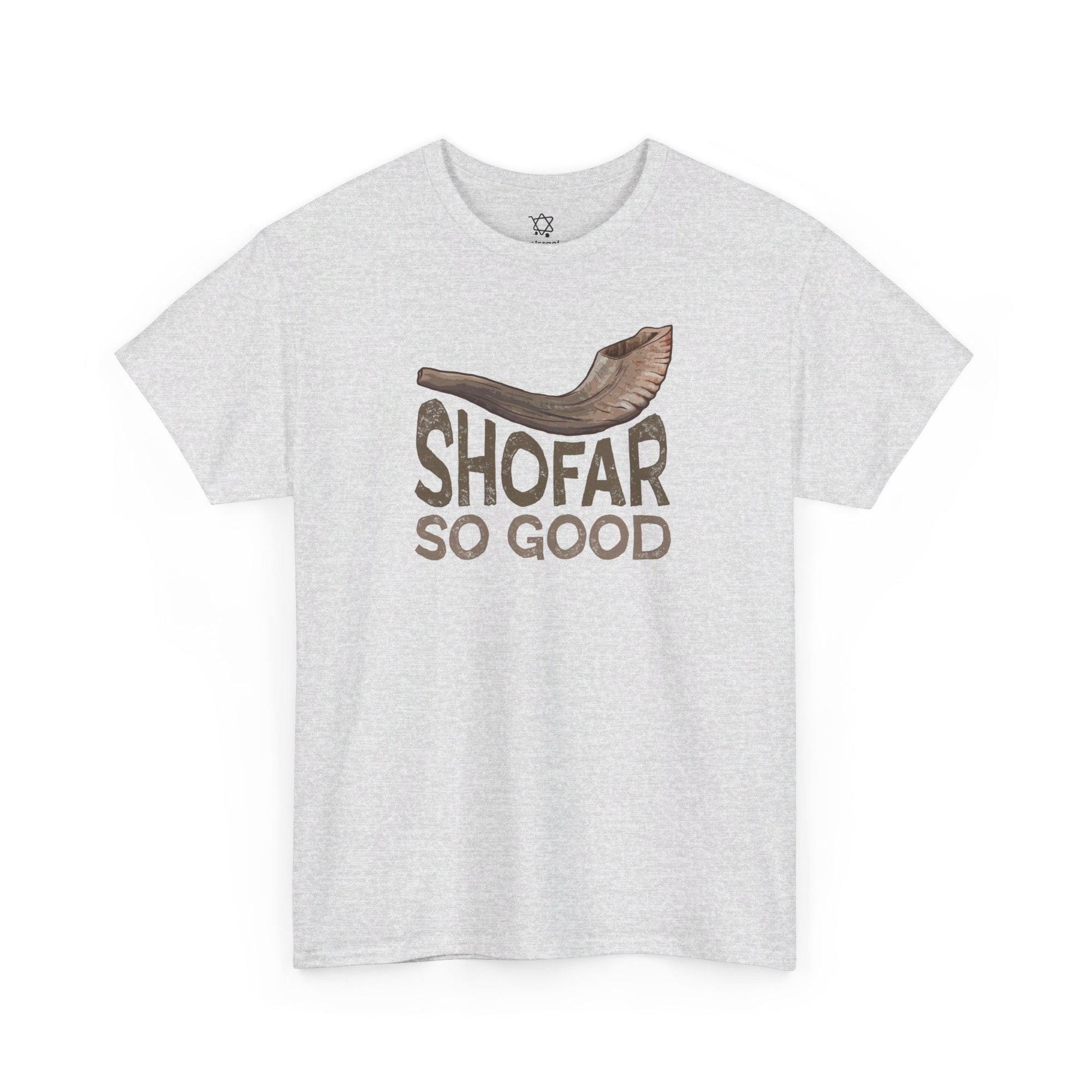
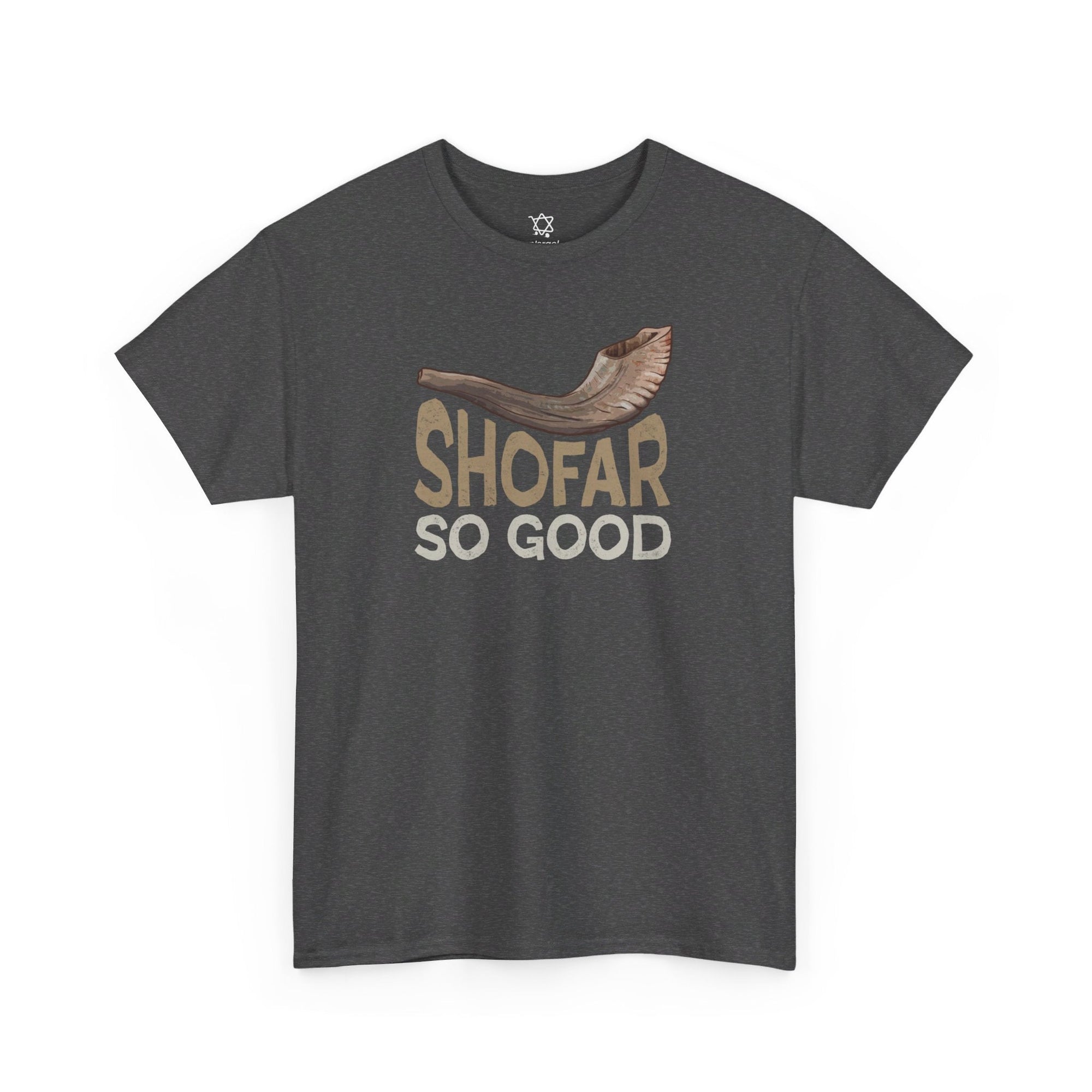
Because the shofar carries this depth of history and meaning, anything tied to it becomes a keepsake rather than a generic trinket. If you want to wear the tradition with a smile, the playful shofar-so-good tee turns the High Holy Days pun into everyday apparel, and our High Holy Days collection gathers shofar-season gifts for Rosh Hashanah and Yom Kippur in one place.
When you shop for an authentic shofar, the details that matter are the animal source (a curved ram's horn or a long kudu spiral), the finish (natural, semi-polished, or full-polished), and the length. Framing any of these around what the horn actually means, awakening, kingship, and the memory of Isaac's ram, is the honest reason it endures as a treasured piece of Judaica. For heritage you can wear year round, our Jewish symbols jewelry collection carries the same story in silver and gold.
Related
- The shofar's historical and spiritual significance explained
- How the shofar shapes Jewish festival traditions and merchandising
- Understanding the role of the shofar in Jewish culture and merchandise
Last updated July 2026.