

Short answer: The shofar is an ancient ritual instrument, most often a curved ram's horn, sounded chiefly during the Jewish High Holidays. Its blasts are the central commandment of Rosh Hashanah (called Yom Teruah, the "day of sounding," in the Torah), it closes the fast of Yom Kippur, and it is blown every weekday morning through the preceding month of Elul as a call to reflection and repentance. Today shofars are sold as kosher ritual objects in several traditions, the ram's horn, the flatter Moroccan style, and the long spiraled Yemenite kudu horn, with a kosher horn requiring a minimum length (about 10 cm, one tefach) and no paint or metal plating.
Where the shofar comes from
The shofar first appears at Mount Sinai. The Torah describes the sound of the horn growing louder and louder as God's presence descends and the Ten Commandments are given (My Jewish Learning). From that first blast the horn became a signal of revelation, gathering, and awe.
Its place on the calendar is fixed in the book of Leviticus, which designates the first day of the seventh month (Tishrei) as a sacred day "commemorated with loud blasts." That verse is the origin of the name Yom Teruah, the Day of Sounding, the holiday now known as Rosh Hashanah (TheTorah.com). A ram's horn also carried public, even civic weight: at the end of Yom Kippur every fiftieth year it was sounded to proclaim the Jubilee, the economic reset when debts were released and indentured servants went free across the land of Israel (Chabad.org).
Why a ram in particular? Halachic tradition, following Maimonides, holds that for Ashkenazi practice only a curved ram's horn is fit for the mitzvah, tying the choice to the ram offered in place of Isaac at the binding, the story read aloud on Rosh Hashanah (Religion News Service).
When the shofar is heard, and what the blasts mean
Most people associate the shofar with Rosh Hashanah alone, but its role runs across the whole season. It is blown every weekday morning throughout the month of Elul, the run-up to the High Holidays; it is the defining commandment of Rosh Hashanah itself; and it marks the close of the Yom Kippur fast with one final, extended blast. In biblical and Temple times it also announced the new moon and rallied people for war or assembly.
Three sounds are combined in set sequences during the service: tekiah, one long blast; shevarim, three medium blares; and teruah, at least nine short staccato notes, capped by the drawn-out tekiah gedolah (Chabad.org). The total is customarily 100 blasts in Ashkenazi custom and 101 among Sephardim, while Yemenite Jews sound 41 (My Jewish Learning; Religion News Service). Across these traditions the raw, wordless sound is understood as a call to spiritual awakening and repentance, a proclamation of God's kingship like trumpets at a coronation, and a reminder of both the binding of Isaac and the revelation at Sinai.
The shofar as merchandise: types, finishes, and kosher rules
A shofar is a natural animal horn, hollowed and shaped, with no reed or mouthpiece added. Three traditions dominate the market. The curved ram's horn is the most common and the halachically preferred type, warm and clear in tone. Sephardi and North African communities favor the flatter, straighter Moroccan style. Yemenite Jews use the dramatically long, spiraled horn of the kudu, an African antelope prized for its deep, thundering sound; after Yemenite immigration to Israel the kudu shofar spread to communities worldwide (Judaica Webstore).
If you are buying one for actual use, the kosher rules matter. A kosher shofar must be a single unbroken horn of at least roughly 10 cm (one tefach), with no paint or metal plating that would alter the sound. Hand-painted or silver-capped horns are beautiful, but they are decorative rather than fit for the mitzvah (Judaica Webstore Buying Guide). Horns are sold in polished, half-polished, and natural finishes, with price scaling by length and type (kudu horns run longer and generally cost more). Common companion products include stands in acrylic, wood, or metal, and protective carrying bags.
Bring the sound of the High Holidays home
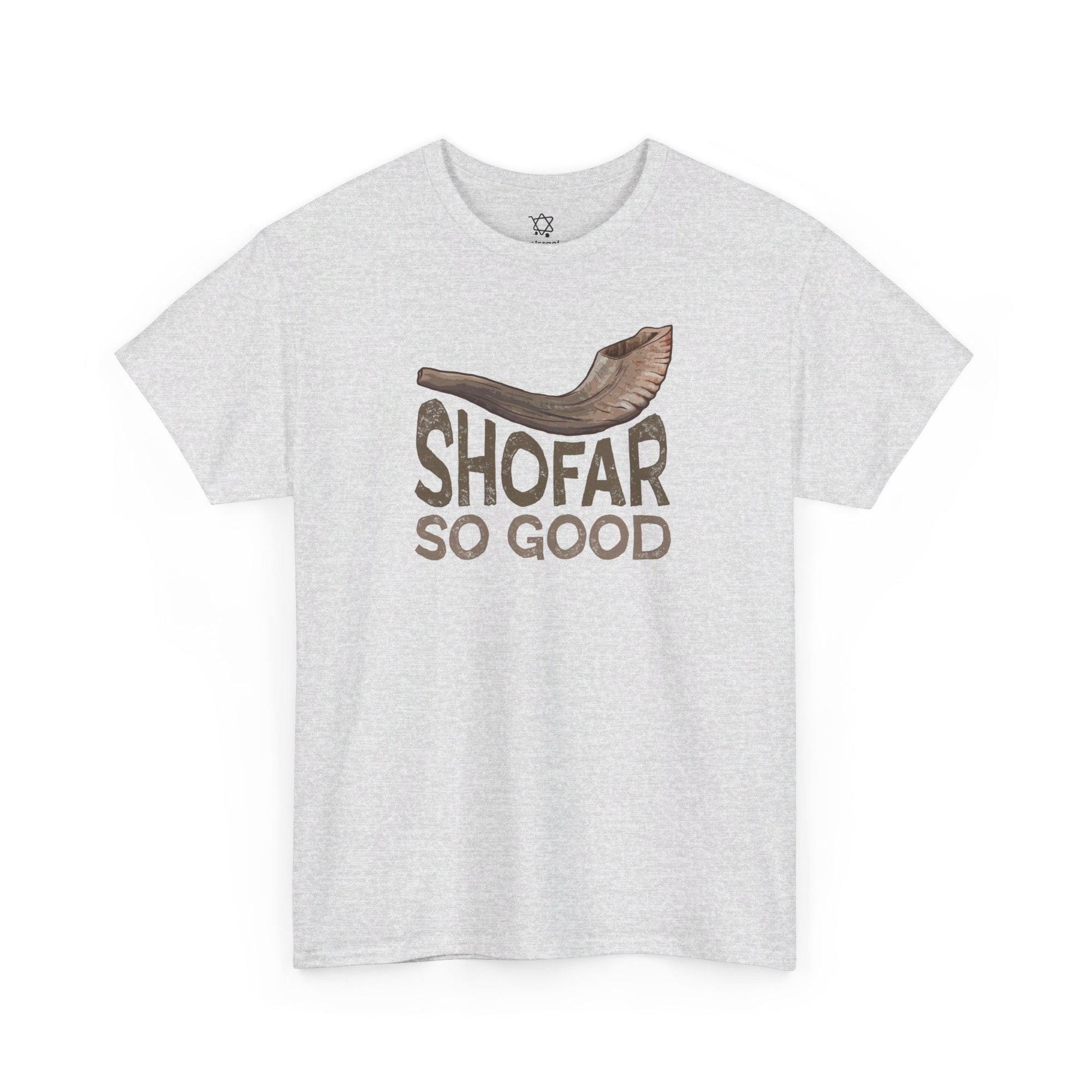
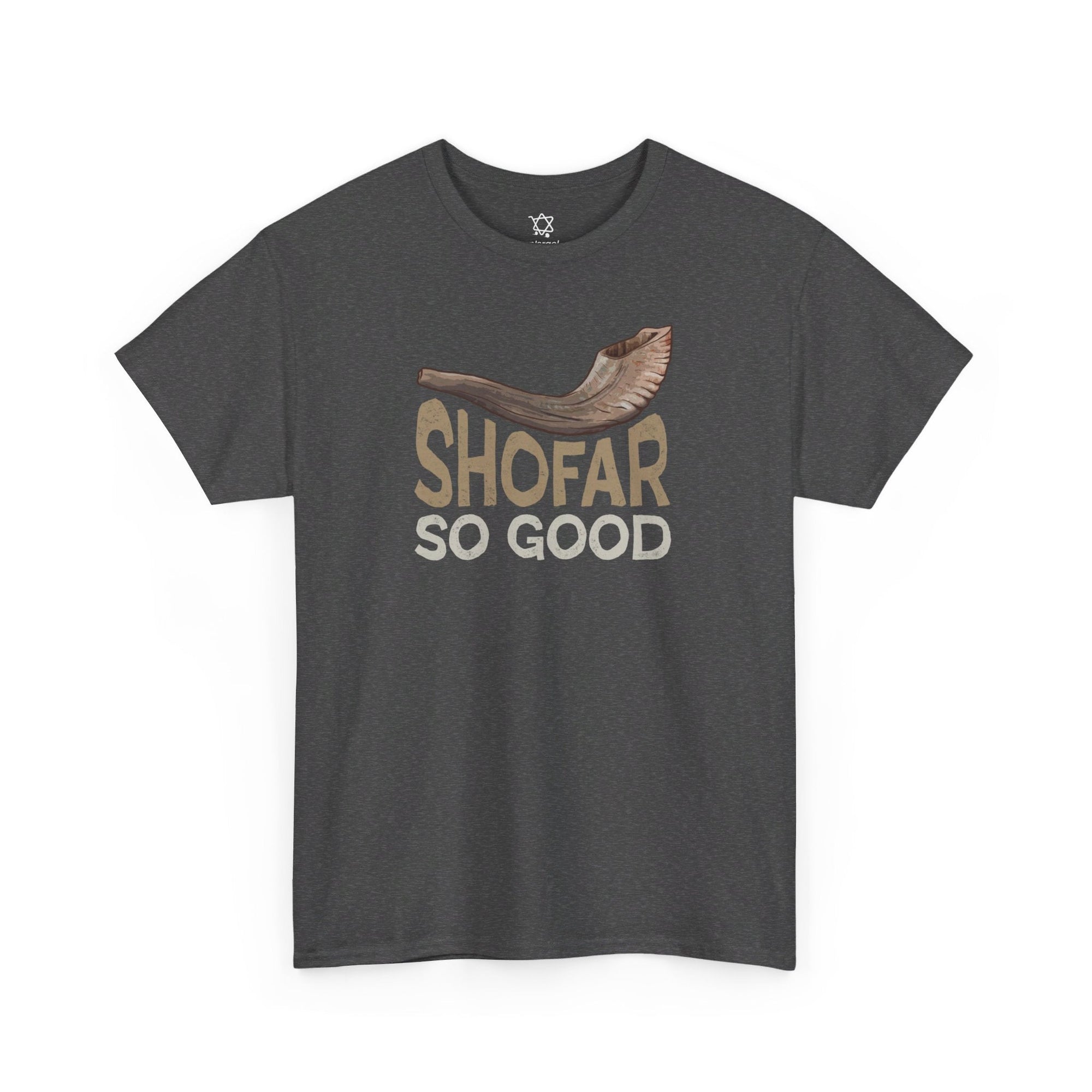
You do not have to be the baal tekiah, the one who blows, to carry the spirit of the season. If you want to wear the joy of the shofar rather than sound it, the Shofar So Good t-shirt turns the holiday's best-known pun into everyday Israel pride, a light way to nod to Rosh Hashanah wherever you happen to be.
Shopping for the season? Our High Holidays collection gathers Rosh Hashanah and Yom Kippur gifts in one place, so you can send the feeling of the shofar's call even to someone who lives far from a synagogue.
Related
- The shofar's historical and spiritual significance, explained
- How the shofar shapes Jewish festival traditions and merchandising
- Shofar-inspired products, from tradition to trend
Last updated July 2026.