

Short answer: The shofar is one of Judaism's oldest ritual instruments, a horn (traditionally from a ram, though the horn of almost any kosher animal except a cow may be used) that is hollowed and shaped, then sounded by lip vibration rather than played with keys or a reed. Its piercing blast runs straight through the Hebrew Bible: it sounded at Mount Sinai when the Torah was given, it helped bring down the walls of Jericho, and it proclaimed the anointing of kings. Today it is best known as the central sound of Rosh Hashanah (the "day of blowing") and the close of Yom Kippur, a wordless call to repentance, humility, and spiritual renewal, which is why it endures as both a sacred object and a beloved emblem of Jewish identity.
The horn itself: material, origin, and why a ram
A shofar is a natural wind instrument with no finger holes, reed, or mechanical mouthpiece; the player produces sound by vibrating the lips, the way one would with a bugle. To make one, the horn is separated from its bony core, the inner marrow is removed, and the horn is heated, straightened or shaped, and finished. According to Chabad.org, the ram's horn is preferred because it recalls the ram that Abraham offered in place of his son Isaac at the Akedah, the binding of Isaac (Genesis 22), so the horn itself becomes a symbol of humility and devotion before God.
Ram is traditional, but it is not the only option. Jewish law permits the horn of almost any kosher animal, with one pointed exception: the cow, whose horn is avoided because it recalls the sin of the Golden Calf. That is why you will see variety in the marketplace. Yemenite communities, for example, are known for long, dramatically spiraled kudu horns, as My Jewish Learning notes, while many Ashkenazi communities favor the shorter, curved ram's horn.
From Sinai to Jericho to the crowning of kings
Few objects have a biblical resume as rich as the shofar's. At Mount Sinai, the sound of the horn grew "louder and louder" as the people trembled at the giving of the Torah (Exodus 19:16-19), tying the instrument to the moment of divine revelation. In the Book of Joshua, Israelite priests blew shofarot as the people marched around Jericho for seven days, and on the seventh day the walls fell, the horn's most famous role in battle (My Jewish Learning).
The shofar also announced sovereignty. At Solomon's coronation the ram's horn was blown after his anointing while the people cried "Long live King Solomon" (1 Kings 1:39), linking the sound to kingship and to God's own sovereignty. And the Torah itself sets the calendar: it names the first day of the seventh month a "day of blowing" (Leviticus 23:24; Numbers 29:1), which the rabbis of the Mishnah (redacted around 200 CE) understood as the command to hear the shofar on Rosh Hashanah, carrying the practice from Temple times into synagogue life without a break (National Geographic).
The sound today: Elul, Rosh Hashanah, and Yom Kippur
In modern practice the shofar is not reserved for a single morning. It is sounded on Rosh Hashanah, at the very close of Yom Kippur, and daily through the preceding month of Elul, the traditional season of preparation and return. The ritual sequence is built from three basic sounds, as Encyclopaedia Britannica describes: tekiah, one long, unbroken blast; shevarim, three broken, sighing wails; and teruah, a rapid volley of nine or more staccato bursts, often closing with a single extended tekiah gedolah.
The meaning most sources agree on is straightforward: the sound works like a wordless alarm clock for the soul, a call to repentance (teshuvah), humility, and remembrance. Some teachers layer further readings onto the individual notes, hearing in them themes such as creation, prophecy, and redemption, but that note-by-note mapping is one traditional interpretation rather than fixed law. What is not in dispute is the effect: a raw, human cry that no melody could replace.
Choosing shofar merchandise and gifts
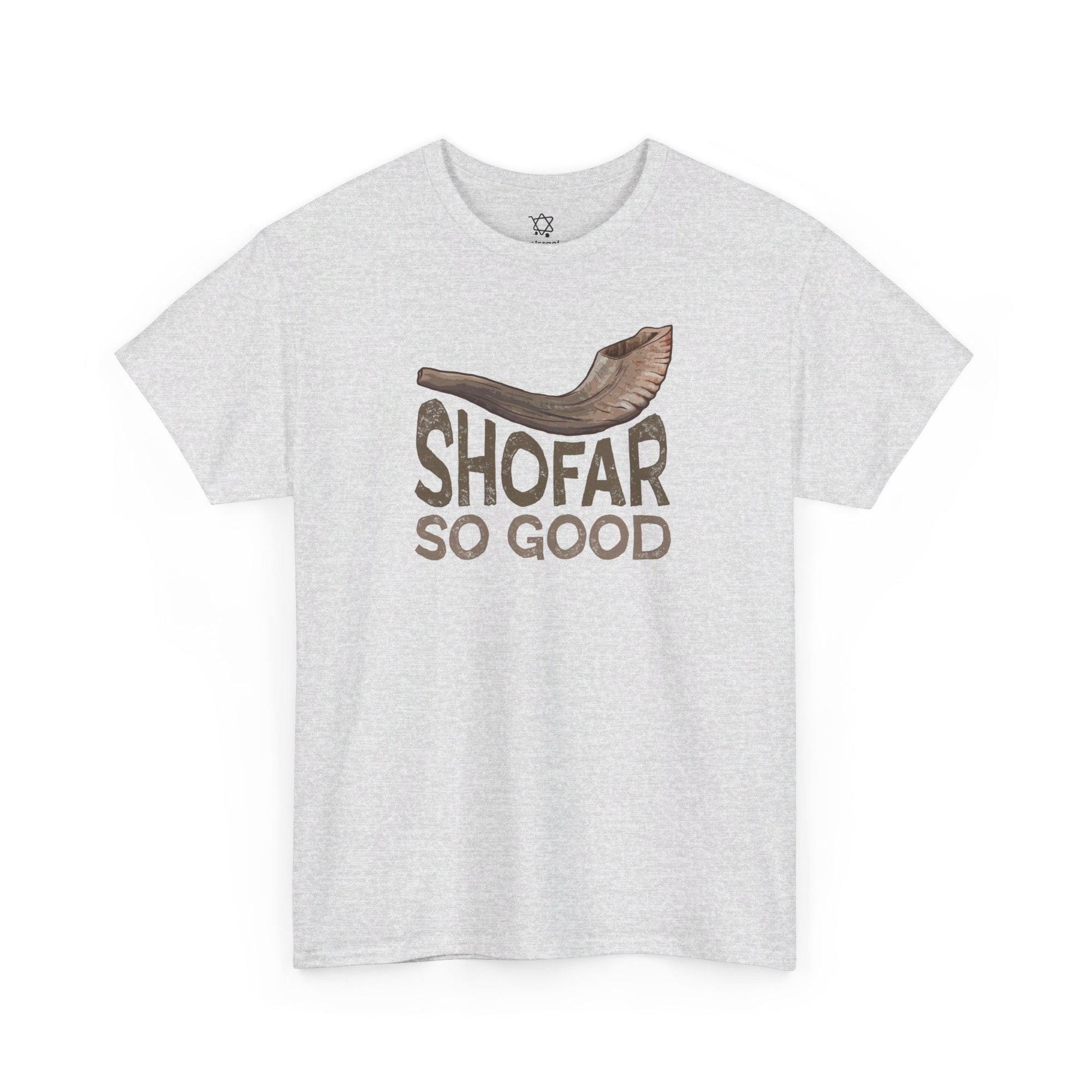
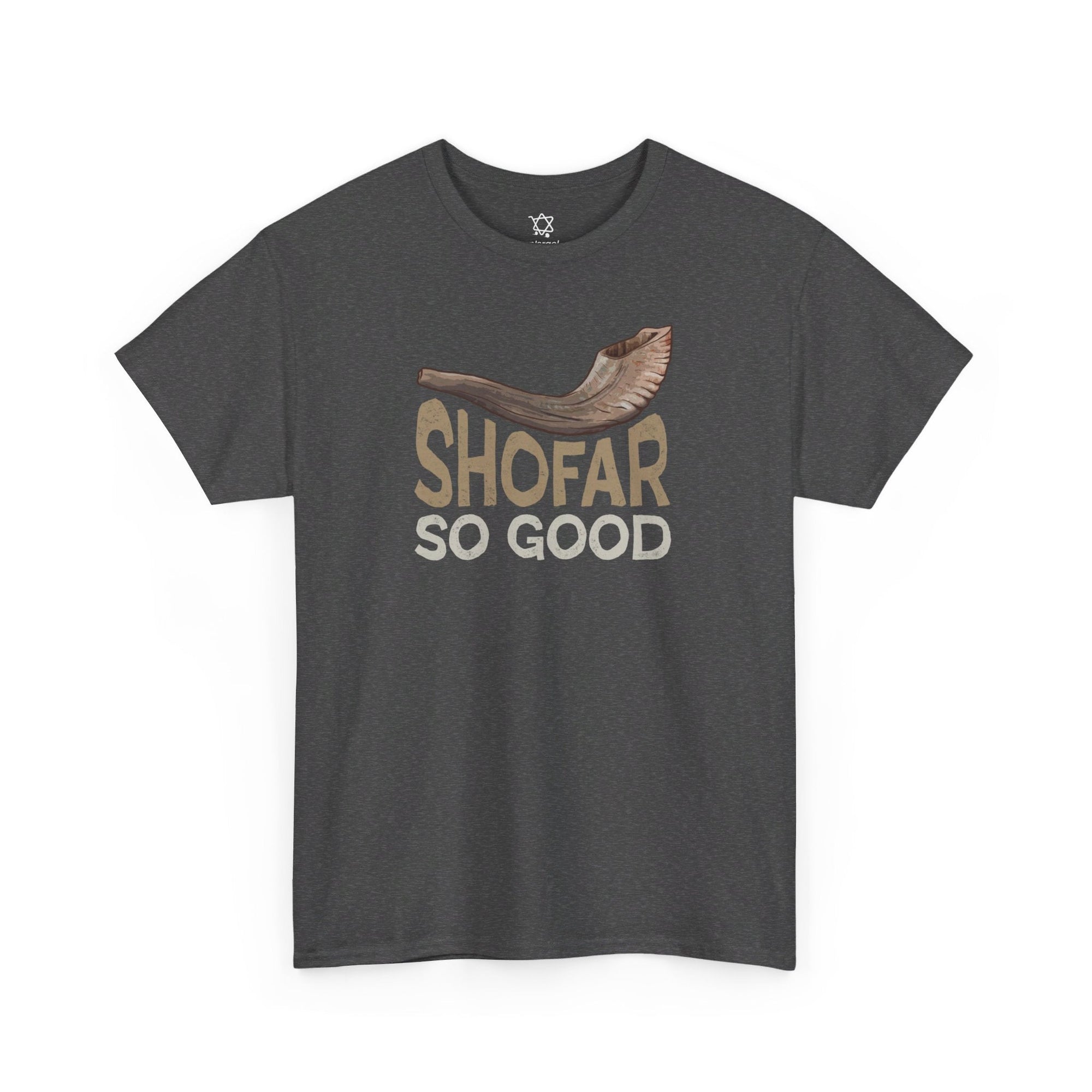
Once you understand the horn, the buying choices make more sense. For a shofar meant for actual ritual use, the factual anchors are material and origin (a genuine ram or kudu horn, often hand-finished in Israel), size and finish (natural, semi-polished, or fully polished), reliable sound, and halachic fitness, which is a separate question from a purely decorative display piece. For gifts and everyday pride, the shofar also lives on as a design motif. Our Shofar So Good tee turns the High Holiday icon into a wearable play on words, and it sits alongside candles, mugs, and cards in our High Holidays collection for the Rosh Hashanah season.
Related
- The shofar's historical and spiritual significance, explained
- Shofar-inspired products: from tradition to trend
- How the shofar shapes Jewish festival traditions and merchandising
Last updated July 2026.