

Short answer: The shofar is an ancient Jewish horn, most traditionally made from a ram's horn, that is sounded during the month of Elul, on Rosh Hashanah (the Jewish New Year), and at the close of Yom Kippur. Its blasts call listeners to repentance and spiritual awakening, and it carries layered biblical associations including the revelation at Mount Sinai, the fall of Jericho, and the ram of the Binding of Isaac. As a merchandise category it spans ritual-grade kosher horns (ram, Yemenite kudu, and Moroccan) and decorative or gift items tied to the High Holidays, which is why accurate labeling of animal source, kosher status, and origin matters.
What the shofar means and where it comes from
The shofar is an ancient horn instrument, and the Torah commands sounding it on Rosh Hashanah: Leviticus 23:24 calls the day "a sacred occasion commemorated with loud blasts," and Numbers 29:1 names it a day "when the horn is sounded" (Yom Teruah). The horn appears more than 70 times in the Torah, according to Sarah Pessin, a professor at the University of Denver, writing in The Conversation. Across those passages it carries several distinct roles: announcing God's presence at Mount Sinai, accompanying sacred moments, proclaiming the coronation of kings, and signaling on the battlefield, whose most famous martial episode is the fall of Jericho in the Book of Joshua.
Many people connect the ram's-horn shofar to the Binding of Isaac (the Akedah), when God provided a ram in Isaac's place. That link is real and meaningful, but it is worth stating precisely: it is a Midrashic (rabbinic) association layered onto the horn rather than its single biblical origin. Rabbinic tradition teaches that blowing the ram's horn recalls that merit and arouses divine mercy, while the Bible itself gives the shofar several independent roles, from Sinai to Jericho to the proclamation of kingship.
How the shofar is sounded, and why
On Rosh Hashanah the shofar sounds three blast types: tekiah (a long, unbroken blast), shevarim (three shorter wails), and teruah (at least nine staccato bursts). Across the service these add up to one hundred blasts, and the horn is also blown through the month of Elul and at the close of Yom Kippur, as Chabad.org explains. Rosh Hashanah is understood as the coronation of God as King and the start of the Ten Days of Repentance, and the shofar acts as a spiritual alarm calling the soul to teshuvah (repentance), an interpretation famously articulated by Maimonides.
One detail that surprises newcomers: horn-sounding rituals are older than Judaism itself. As My Jewish Learning puts it, Judaism "did not invent this ritual, but rather reinvented it, divesting it of all former pagan meaning and incorporating it into the framework of monotheism," so the sound that once belonged to older horn practices was reshaped for the worship of one God.
The shofar as a merchandise category
For anyone buying or gifting a shofar, the practical facts matter as much as the theology. A shofar is a natural horn, not a manufactured metal trumpet: authentic horns are boiled, hollowed, and shaped by heat. Jewish law requires the hollow horn of a kosher animal such as a ram, goat, or antelope, never an antler. A cow or ox horn is ruled out too, not because the animal is non-kosher (it is kosher) but because the Bible calls it a keren rather than a shofar, and because it recalls the Sin of the Golden Calf, as Sarah Pessin notes.
Within that rule there are several real-world types. The ram's horn is the ideal and most widely sold form, prized for its Binding of Isaac association and its symbolism of humility. The long, curled Yemenite kudu horn is a popular exotic alternative valued for its deep tone. The flatter Moroccan shofar reportedly developed its concealable shape during a period of persecution. Buyers and sellers should also separate ritual-grade, kosher-certified shofarot (where cracks, holes, or added coatings can invalidate the horn for use) from purely decorative or gift pieces. When a shofar is sold from Israel, provenance (an Israel-made horn) and clear labeling of animal source and kosher status are the credibility signals customers look for. Beyond the instrument itself, the shofar frequently appears as a broader emblem of Jewish identity, awakening, and hope for redemption on cards, art, apparel, and Judaica gifts, with demand peaking during the High Holidays from Elul through Yom Kippur.
Bringing the shofar home for the High Holidays
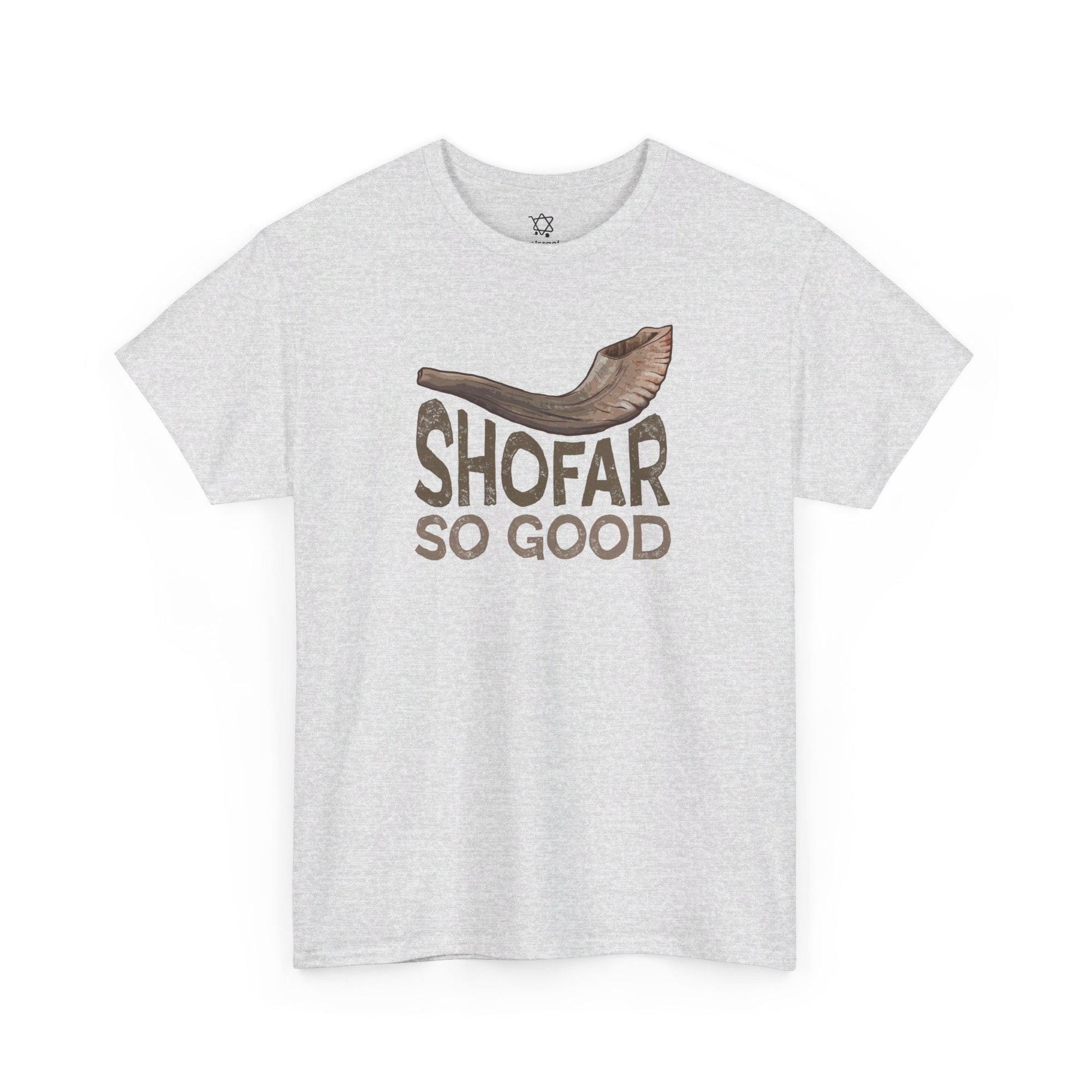
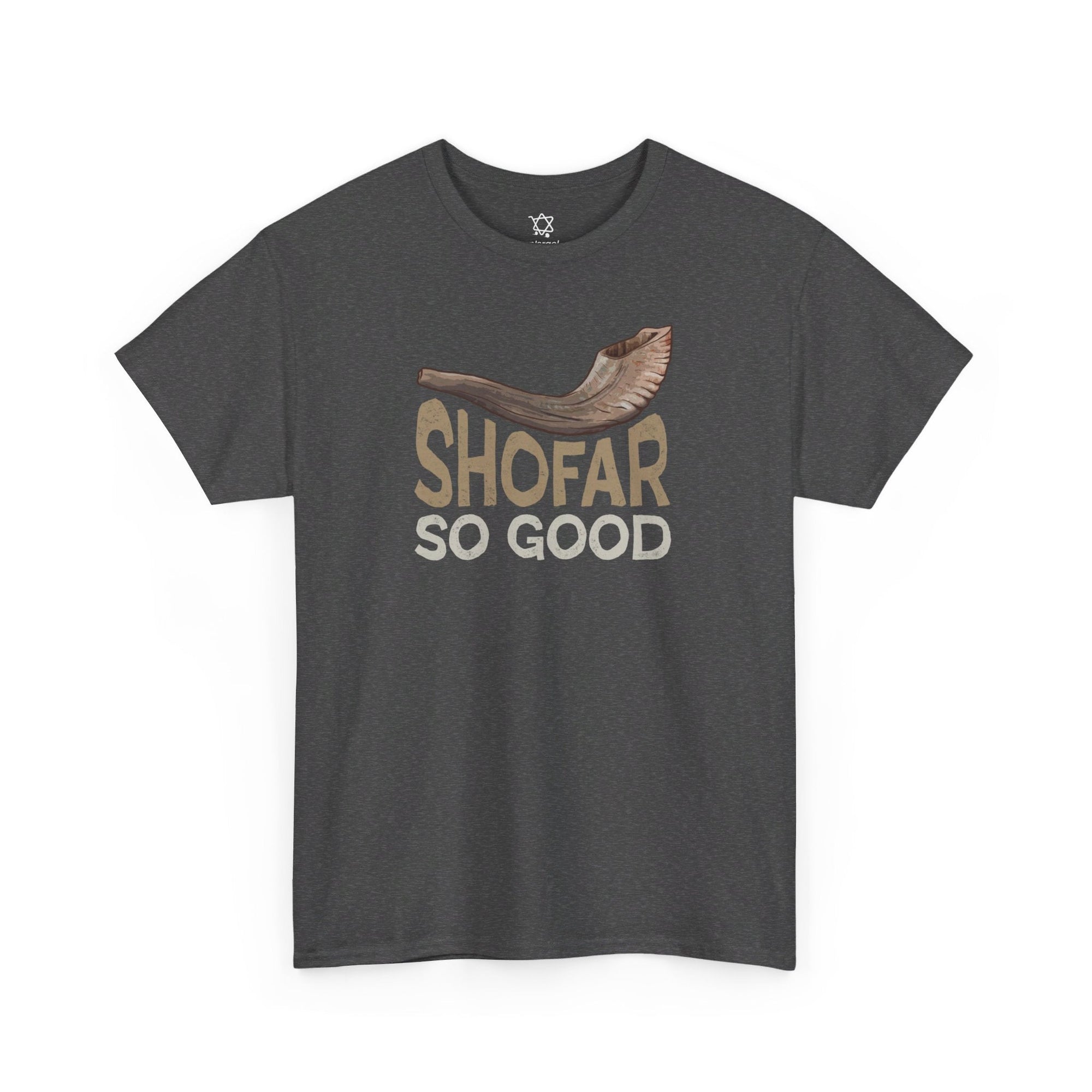
If the sound of the shofar is what stirs you toward the new year, our High Holidays collection gathers Rosh Hashanah and Yom Kippur pieces made in Israel, from festive apparel to home and gift items you can send to family before the holiday. A lighthearted favorite is the Shofar So Good t-shirt, which turns the season's signature sound into a wearable piece of Jewish humor, and you can browse more seasonal ideas in our Rosh Hashanah gifts. Whether you want a serious keepsake or a warm, everyday nod to the holidays, buying from Israel keeps the tradition close to its source.
Related
- The shofar's historical and spiritual significance explained
- Shofar-inspired products: from tradition to trend
- The enduring importance of the shofar in Jewish tradition and merchandise
Last updated July 2026.