

Short answer: The shofar is an ancient wind instrument made from the hollowed horn of a kosher animal, most often (and most preferably) a ram's horn, whose curved shape recalls the ram Abraham offered in place of his son Isaac at the Binding of Isaac (Genesis 22). It is sounded chiefly during the High Holidays: daily through the month of Elul in preparation, throughout the Rosh Hashanah morning service (known as Yom Teruah, "the day of sounding"), and in a single long blast at the close of Yom Kippur. Its blasts are a call to introspection, repentance, and spiritual renewal, and the shofar ranks among the oldest instruments still in continuous use. (Sources: My Jewish Learning, Chabad.org.)
What the Shofar Is, and Why the Ram's Horn
Jewish law permits a shofar from the horn of any kosher animal except the ox. The ox's horn is called a keren rather than a shofar, and it is tied to the sin of the Golden Calf, so it is set aside. Antlers cannot be used either, because they are solid rather than hollow. The ram's horn is strongly preferred for two reasons cited across rabbinic sources: it recalls the ram that Abraham offered in place of Isaac at the Binding of Isaac (Genesis 22, read on Rosh Hashanah), and its curved shape symbolizes bending oneself in humility before God, per Chabad.org. A shofar is made by removing the horn, hollowing the core, and drilling or sawing an opening at the narrow end. Coatings, cracks, or holes can invalidate it, which is why craftsmanship matters as much as symbolism.
The Shofar Across the Bible and Jewish History
The shofar appears many dozens of times in the Hebrew Bible, and its role reaches far beyond the High Holidays. It announced the new moon and the Jubilee year, summoned people for fast days, signaled the approach of battle or danger, proclaimed the reign of a new king, and marked public events, as the Judaica Webstore blog details. It is associated with the revelation at Mount Sinai and, in the Book of Joshua, with the fall of Jericho. Because it is still used today in essentially its original form, the shofar is often cited as among the oldest musical instruments still in use, according to the Organology instruments encyclopedia. Few objects connect a modern Jew so directly to the biblical past.
The Blasts and When They Are Sounded
Three blast types make up the shofar's voice. Tekiah is one long, unbroken blast. Shevarim is three medium "sighing" bursts, like a moan. Teruah is a rapid series of at least nine short staccato notes, like sobbing or wailing. Together, the sighing and sobbing sounds function as a wordless prayer, a cry that words cannot fully carry. These are sounded in set sequences, and the traditional minimum every adult is meant to hear is 30 blasts, though many communities hear 100 across the full service, per Chabad.org. As Exploring Judaism notes, the shofar is blown daily through the month of Elul (except on Shabbat), throughout the Rosh Hashanah morning service, and then in one final long blast at the conclusion of Yom Kippur, after the fast ends at nightfall.
From Sacred Sound to Everyday Style
Today the shofar lives two lives: as a functioning ritual object handcrafted and kosher-certified in Israeli workshops such as Kol Shofar, and as a motif that carries High Holiday spirit into everyday wear and gifts. The two most common shofars sold as Judaica are the shorter, curved ram's horn (roughly 10 to 22 inches, in natural, semi-polished, or fully polished finishes) and the larger, dramatically spiraled Yemenite shofar made from kudu antelope horn (commonly 20 to 40 inches or more, prized for its deep, multi-tonal sound). Kudu and other kosher-animal horns carry rabbinic kosher certification, so a modern shofar can be at once a working ritual object and a piece of Judaica artistry. A shofar's kosher validity rests on the horn and its construction, not on where it was made, though many are proudly Israeli-crafted.
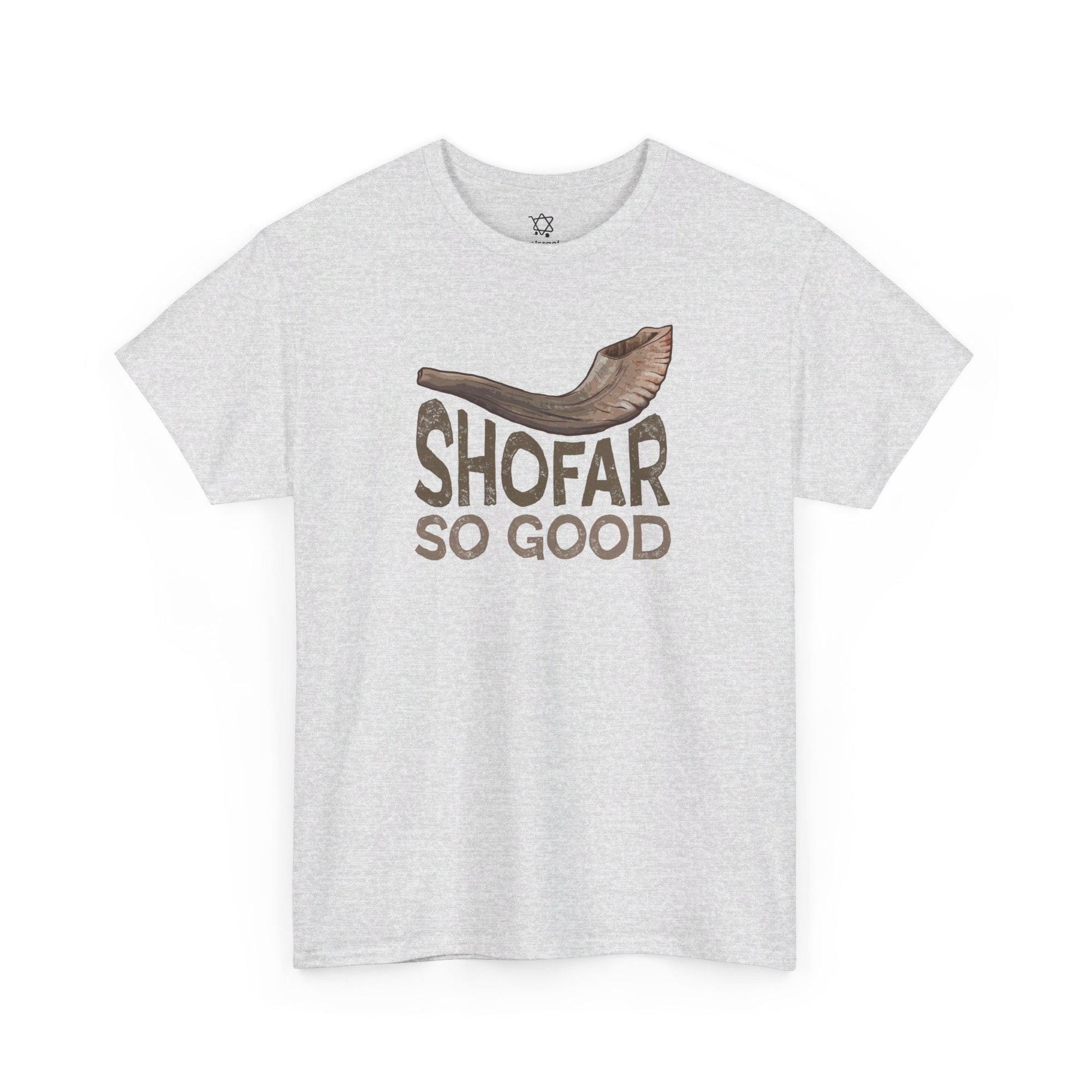
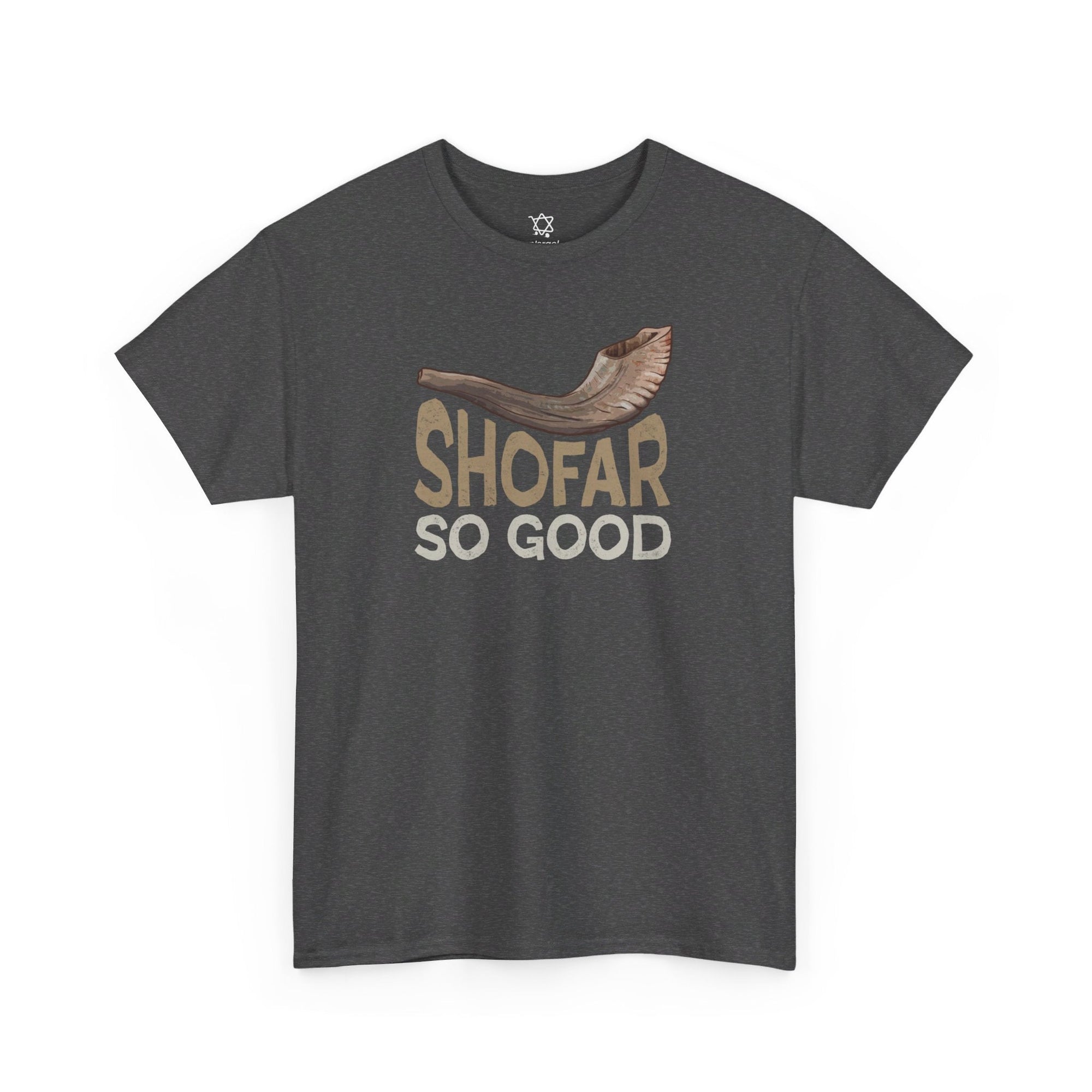
If you want to carry that spirit beyond the synagogue, our Shofar So Good t-shirt turns the season's signature sound into a warm, wearable nod to tradition. For more pieces built around the season of the shofar, browse the High Holidays collection, from Rosh Hashanah gifts to symbols of renewal you can give and keep. It is a small way to keep the shofar's message close all year, not only in the days of awe.
Related
- The Shofar's Historical and Spiritual Significance Explained
- Shofar-Inspired Products: From Tradition to Trend
- How the Shofar Shapes Jewish Festival Traditions and Merchandising
Last updated July 2026.