

Short answer: The Star of David (Hebrew: Magen David, "Shield of David") is a six-pointed star formed by two overlapping equilateral triangles, and it is the most widely recognized symbol of Judaism and the Jewish people. The bare shape is an ancient, geometrically simple motif that appeared decoratively across many cultures long before it carried Jewish meaning. It became a distinctly Jewish emblem in medieval Central Europe, was embraced by Kabbalah as a sign of protection, and in the modern era became the symbol of the Zionist movement and the flag of Israel (Wikipedia).
What "Magen David" means
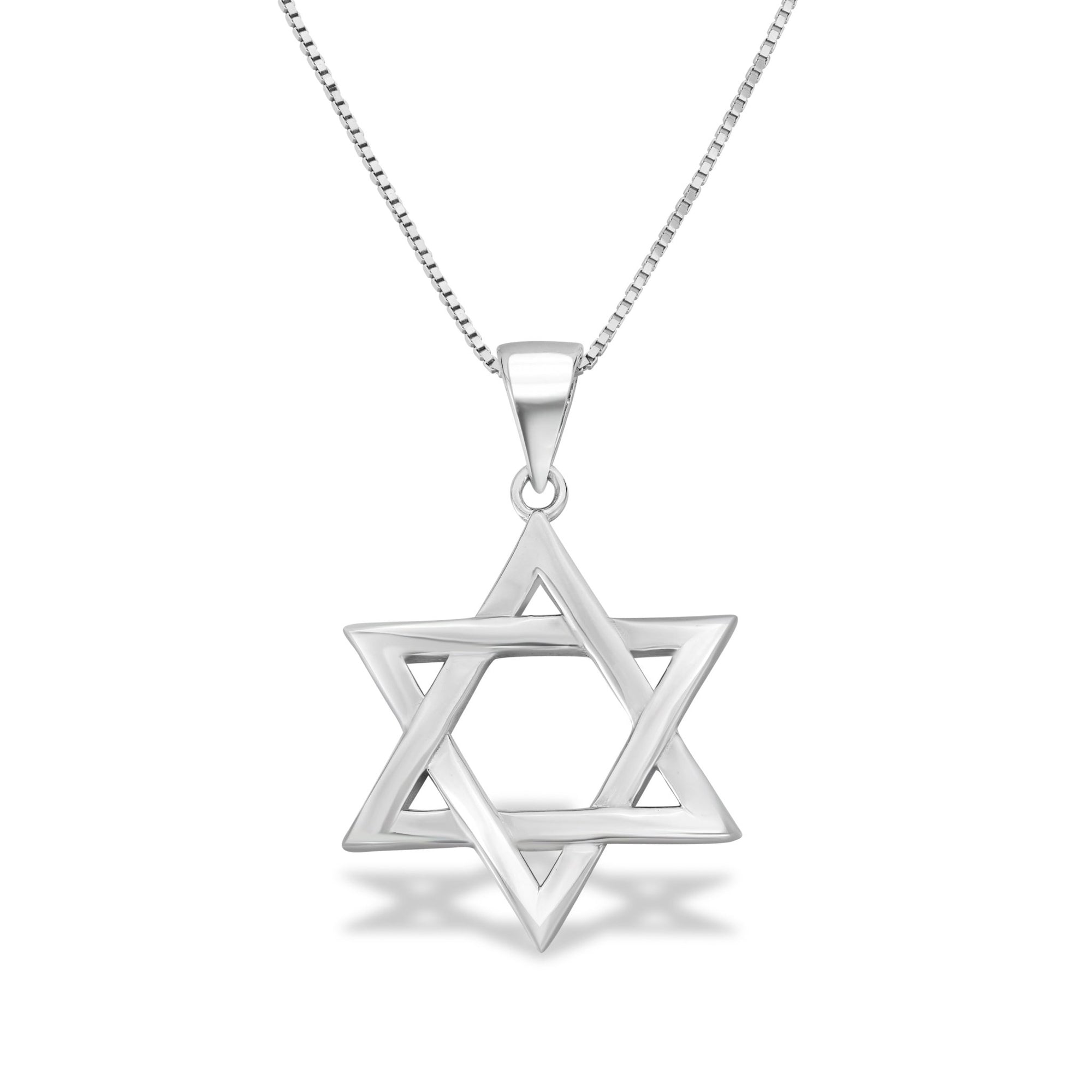
The Star of David is a hexagram: two interlocking equilateral triangles that form a six-pointed star with a hexagon at its center. Its Hebrew name, Magen David, means "Shield of David," a phrase that traditionally links it to King David. Scholars note there is no early evidence the symbol actually adorned David's shield, so that connection is beloved folklore rather than documented history (Wikipedia). The phrase "Shield of David" is older than the shape it later named: it appears in Jewish liturgy as a divine title from around the 11th century, well before it was attached to the hexagram.
Popular and mystical readings interpret the two triangles as a meeting of opposites: heaven and earth, the spiritual and the physical, or the upward reach of humanity meeting the downward flow of the divine. Kabbalistic tradition further embraced the shape as a sign of divine protection, which is part of why so many wear it as an amulet-like emblem of safeguarding and belonging. These are traditional, interpretive readings rather than a single fixed doctrine, and part of the star's power is that it holds many of them at once.
Where the six-pointed star comes from
The bare hexagram is a simple form that many unrelated cultures used decoratively across the ancient and medieval world, so no single tradition invented it. In Islamic art the same shape is known as the Seal of Solomon and appears on mosques and manuscripts, and variants show up as ornamental motifs in South Asian (Hindu and Buddhist) art and in some earlier pagan and Christian church decoration (EBSCO Research Starters). The shape appears in early Jewish contexts too, including coinage from the Bar Kokhba revolt around 135 CE and a later synagogue stone, but at that stage it carried no special or exclusive Jewish meaning (Wikipedia).
What changed was the meaning invested in the shape over time. In medieval Spain the hexagram entered Kabbalistic tradition as a protective amulet, a design most scholars believe passed into Kabbalah from Arabic sources where it was the Seal of Solomon (EBSCO). Then, in a landmark for the symbol's Jewish identity, Holy Roman Emperor Charles IV granted the Jews of Prague the right to bear a red flag displaying the hexagram in 1354 (Wikipedia; EBSCO). From Central Europe the star spread among Eastern European communities until, by the 19th century, it had become the near-universal sign of Jewish identity.
From Zionism to the flag of Israel
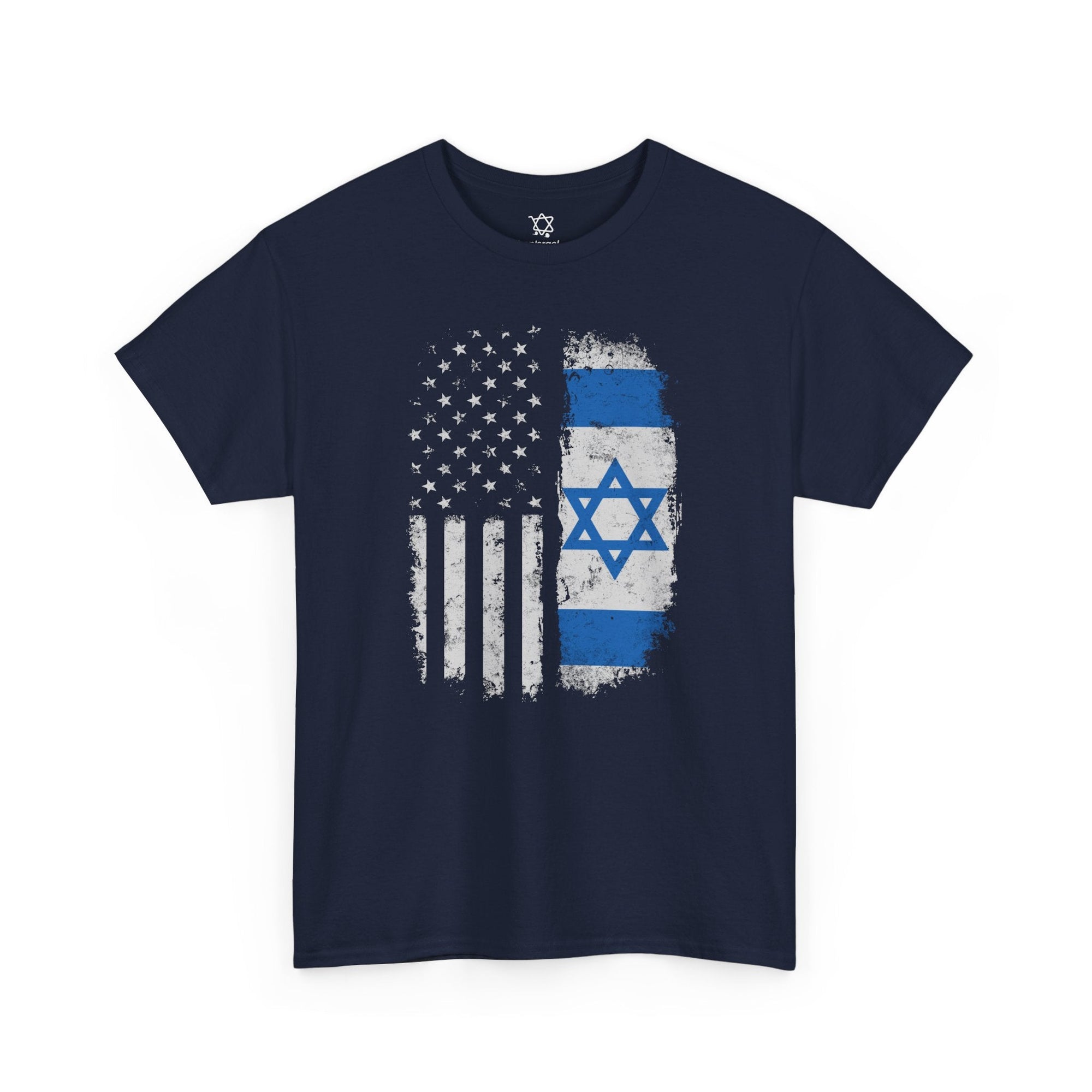
In the modern era the Star of David became a national symbol. At the First Zionist Congress in 1897, a blue-and-white flag bearing the star was embraced, with David Wolffsohn linking its colors to the tallit, the Jewish prayer shawl, cementing it as the emblem of Jewish national revival (Wikipedia). The symbol also carries a darker chapter. On September 1, 1941, SS General Reinhard Heydrich decreed that Jews over the age of six across the Reich must wear a yellow Star of David badge in public, weaponizing a mark of identity for persecution (World Jewish Congress; USHMM). Jews later reclaimed the star as a badge of pride and survival. On October 28, 1948, the reborn State of Israel adopted its flag, a blue Star of David between two blue stripes on a white field (Wikipedia). Today the same shape sits at the center of a nation's flag and on necklaces worn around the world.
Choosing a Star of David to wear
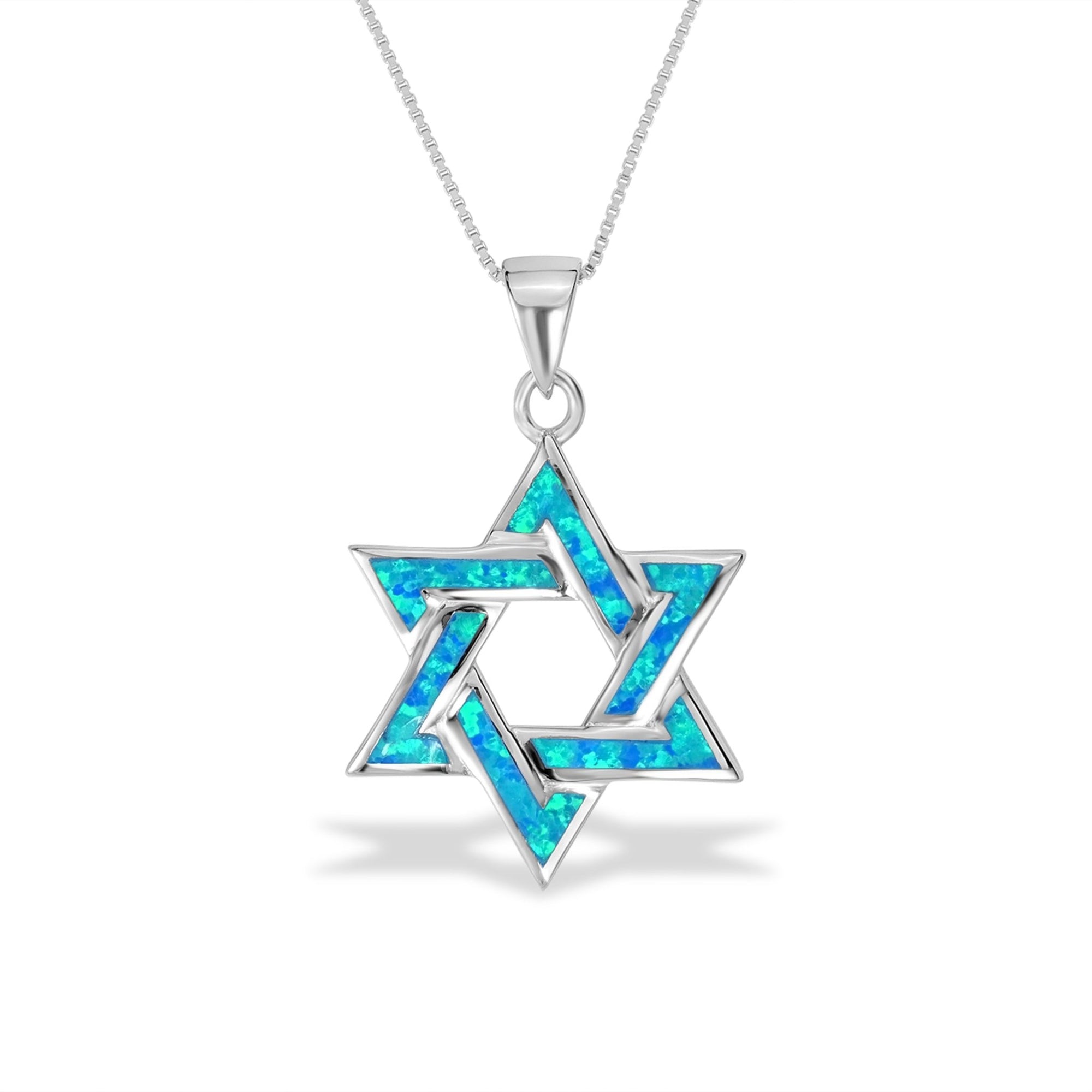
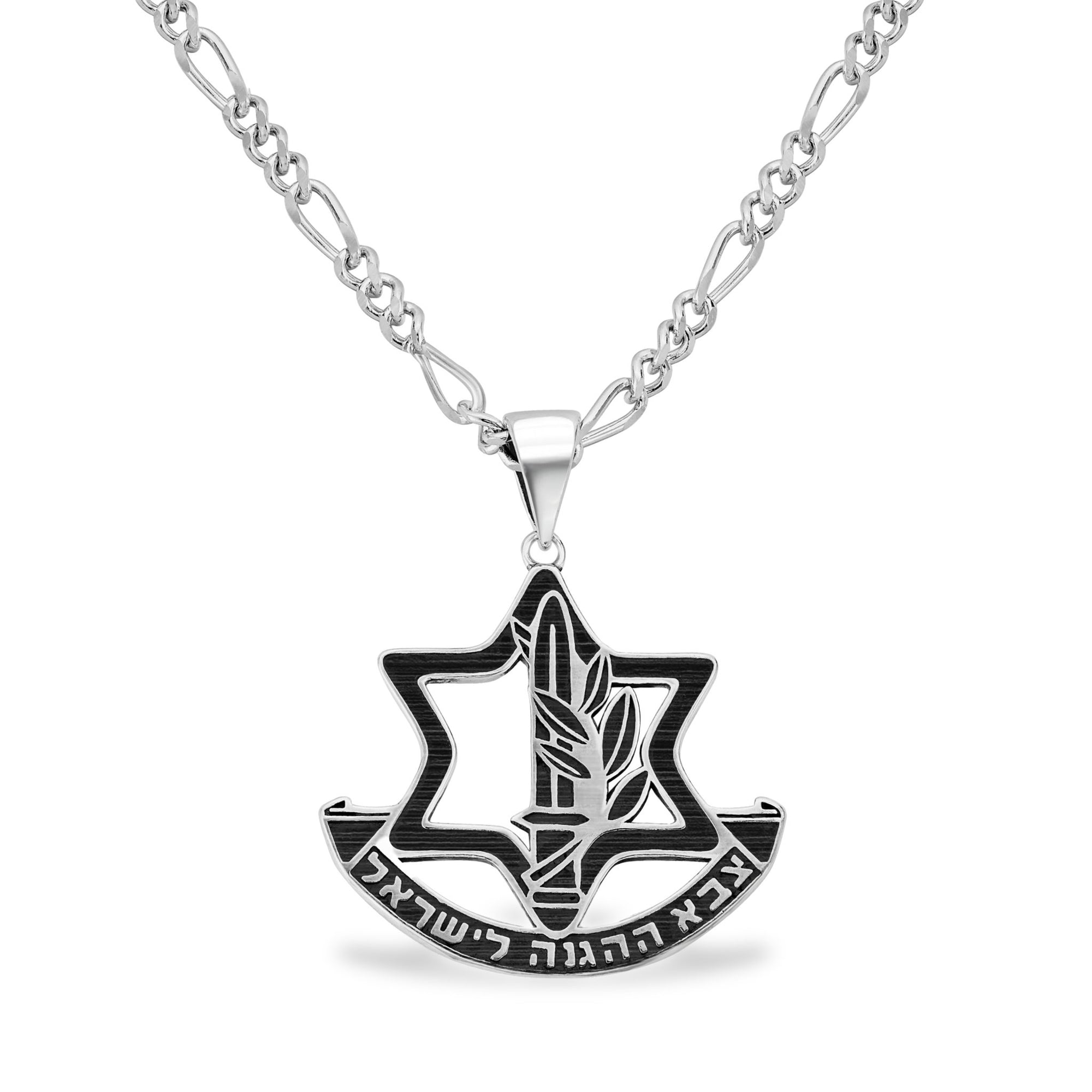
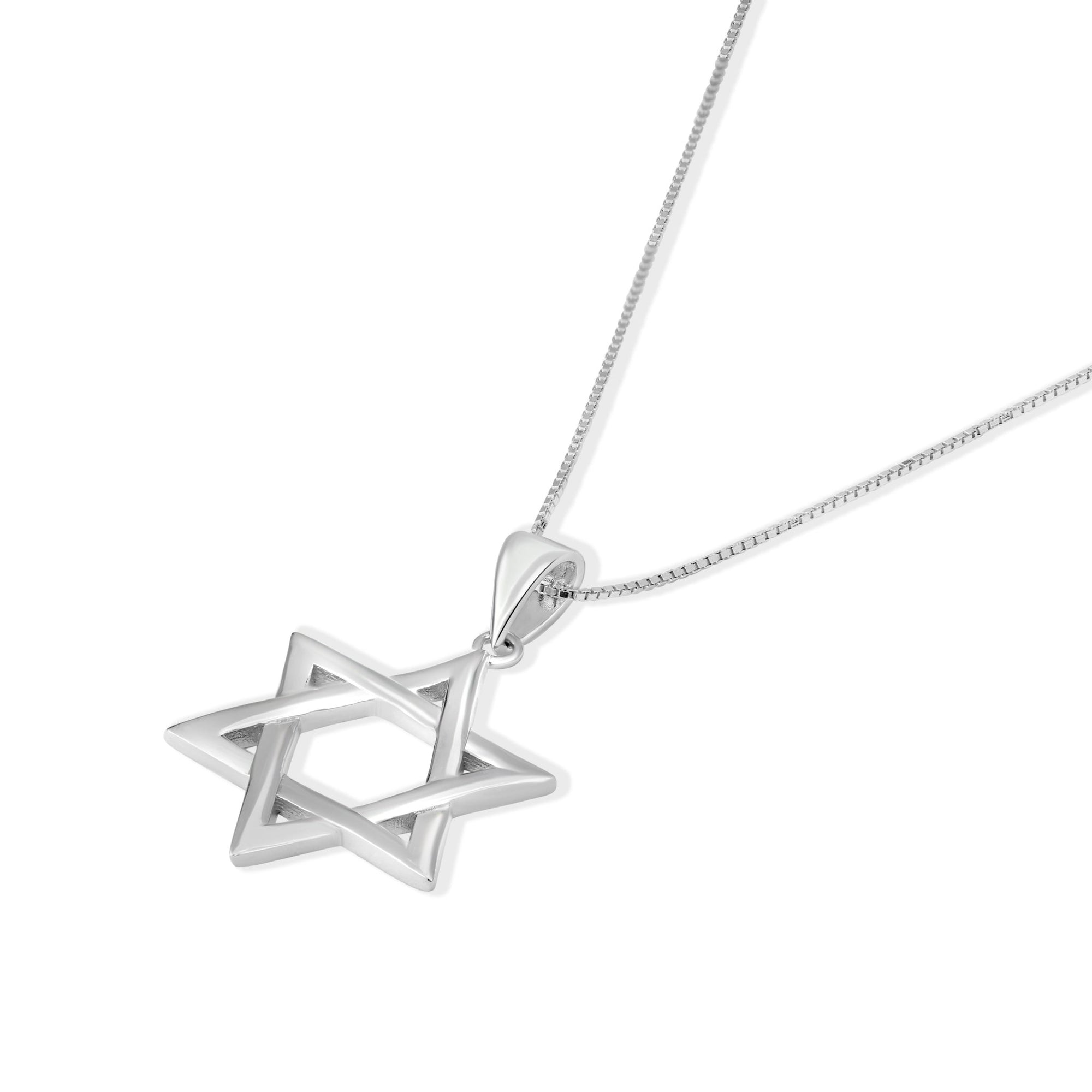
As jewelry, the Star of David is one of the most enduring pieces of Jewish adornment, worn as an open statement of faith, heritage, and belonging. Common styles include the classic outline (clean, polished lines, either a solid star or an open interwoven-triangle design), traditional Israeli filigree (fine threads of gold or silver twisted into lace-like patterns for a lightweight, intricate pendant), diamond- or gemstone-accented stars that add sparkle, and pieces that pair the star with other motifs such as a Chai, a Hamsa, or an opal center. Gold is the traditional heirloom choice, often passed down through generations, while sterling silver offers a lighter, everyday look that suits detailed filigree work. When choosing, most buyers weigh metal (gold karat versus silver), size and weight, solid versus openwork, and whether the piece was made in Israel.
Shop Israel's Star of David jewelry collection gathers these styles in one place, from a minimalist Shalom Star of David necklace to opal-centered pendants and eternal-band rings, in both gold and silver, so you can wear the symbol in the way that feels most like you.
Related
- Star of David meaning
- Top Jewish symbols and their meaning
- Star of David jewelry: designing with deep symbolism
Last updated July 2026.