

Short answer: The Star of David, known in Hebrew as the Magen David or "Shield of David," is a six-pointed star made of two interlocking equilateral triangles, and today it is the foremost symbol of Jewish identity and the emblem on Israel's flag. Its meaning is layered: the "Shield" name evokes divine protection, Kabbalistic tradition reads the upward and downward triangles as heaven and earth joined, and the six points stand for the six directions with the Divine at the center (Wikipedia; Unpacked). Worth knowing before you shop: the hexagram is an ancient geometric shape used across many cultures, and it became the distinctly Jewish symbol relatively recently, rather than dating to King David himself.
What the Star of David means
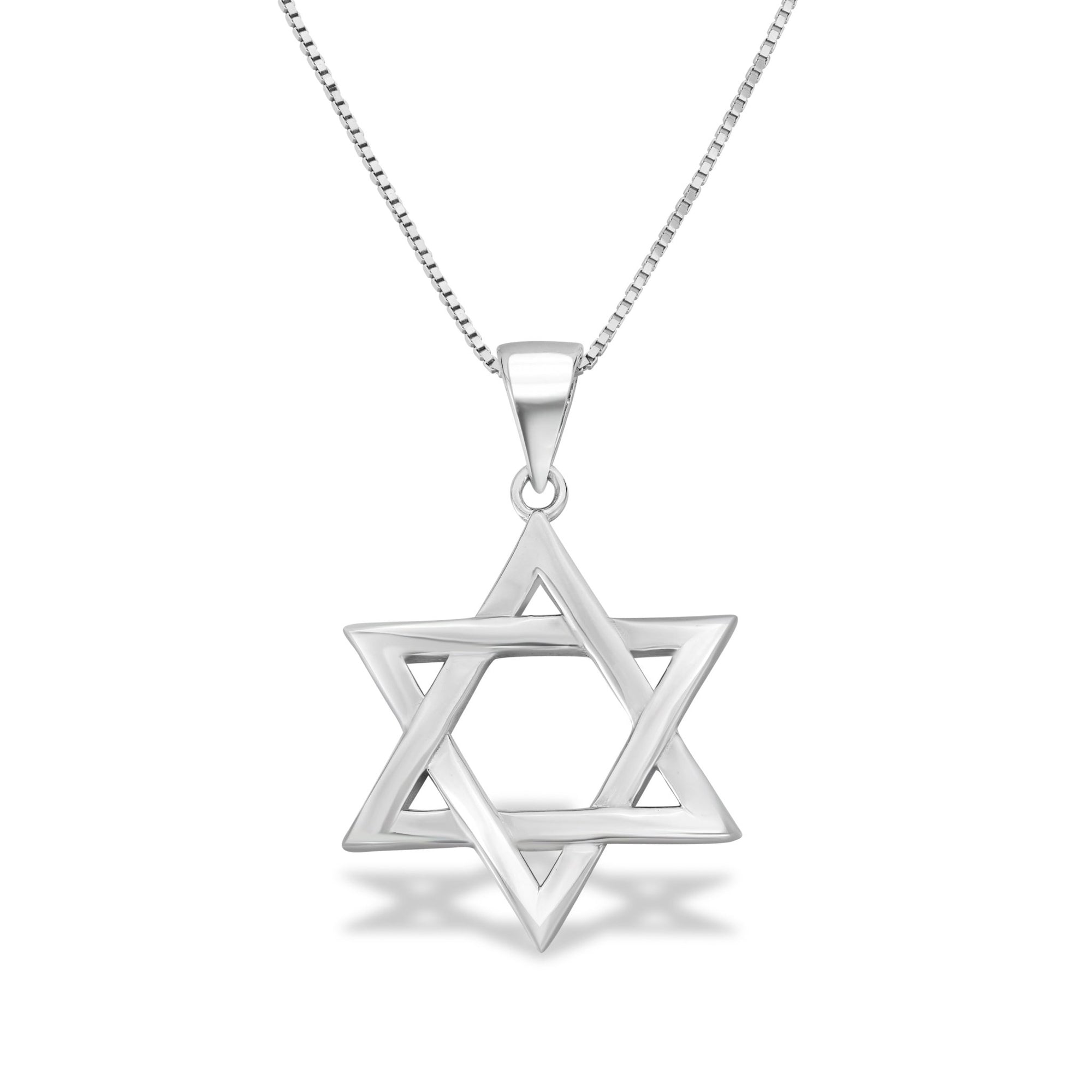
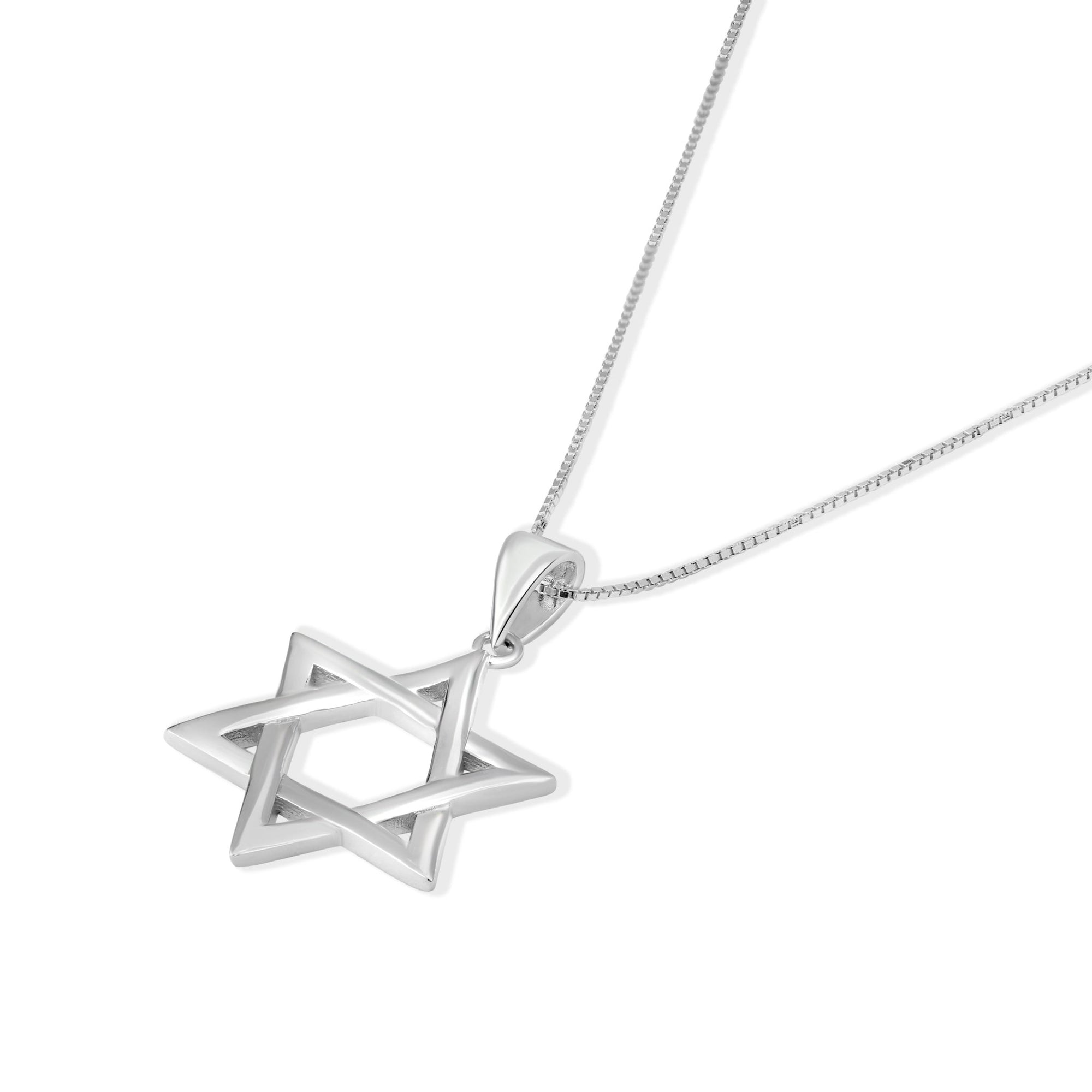
The structure is simple and deliberate: two overlapping equilateral triangles form a six-pointed star, with six outer points and a central hexagon. The Hebrew name Magen David translates literally as "Shield of David," after King David of ancient Israel, and the English "Star of David" comes from that phrase (Wikipedia).
For jewelry, the appeal is how much meaning is packed into that geometry. Several readings stand out:
- Divine protection. The "Shield" name and medieval Kabbalistic tradition tie the star to God's protection, and Jewish mystics inscribed hexagrams on amulets as protective signs (Unpacked).
- Heaven and earth united. One Kabbalistic reading sees the upward triangle as human deeds and yearning rising toward God, and the downward triangle as divine grace descending to the world, the physical and spiritual always connected.
- The six directions. The six points are read as north, south, east, west, up, and down, with the Divine at the center, and also as the six days of creation.
- The sefirot. In Kabbalah the points map to the six emotional attributes (kindness, severity, harmony, perseverance, splendor, and foundation), the inner qualities a person is meant to refine.
None of these is the single "official" meaning. They are a tradition of interpretation, which is part of why the symbol wears so well: you can hold whichever reading speaks to you.
Where the symbol really comes from
Here the real story makes a piece more meaningful, not less. The hexagram is an old, widely used geometric ornament that appears across many cultures, from Mesopotamia to the Mediterranean world, and it was not originally a uniquely Jewish sign. A hexagram shows up on an ancient seal tied to a Jewish context as early as the seventh century BCE, and as a decorative motif in the second- and third-century synagogue at Capernaum in the Galilee, though scholars believe those early uses were ornamental rather than a defining Jewish emblem (Wikipedia; Unpacked).
The mystical, protective meaning grows in the medieval period. In the early fourteenth century, a Spanish Kabbalistic text tied the six-pointed star to the legendary protective shield of King David, an early source for the "Shield of David" idea (Unpacked). Note the timing: that association is first traced to a fourteenth-century text, not to David's own era, so the battle-shield story is legend rather than settled history.
The symbol became a Jewish communal emblem in Prague. In 1354, Holy Roman Emperor Charles IV granted the city's Jewish community the right to bear its own flag showing a hexagram, the first documented official use of the star as a Jewish emblem, and from seventeenth-century Prague it spread through Eastern Europe (Wikipedia; Unpacked).
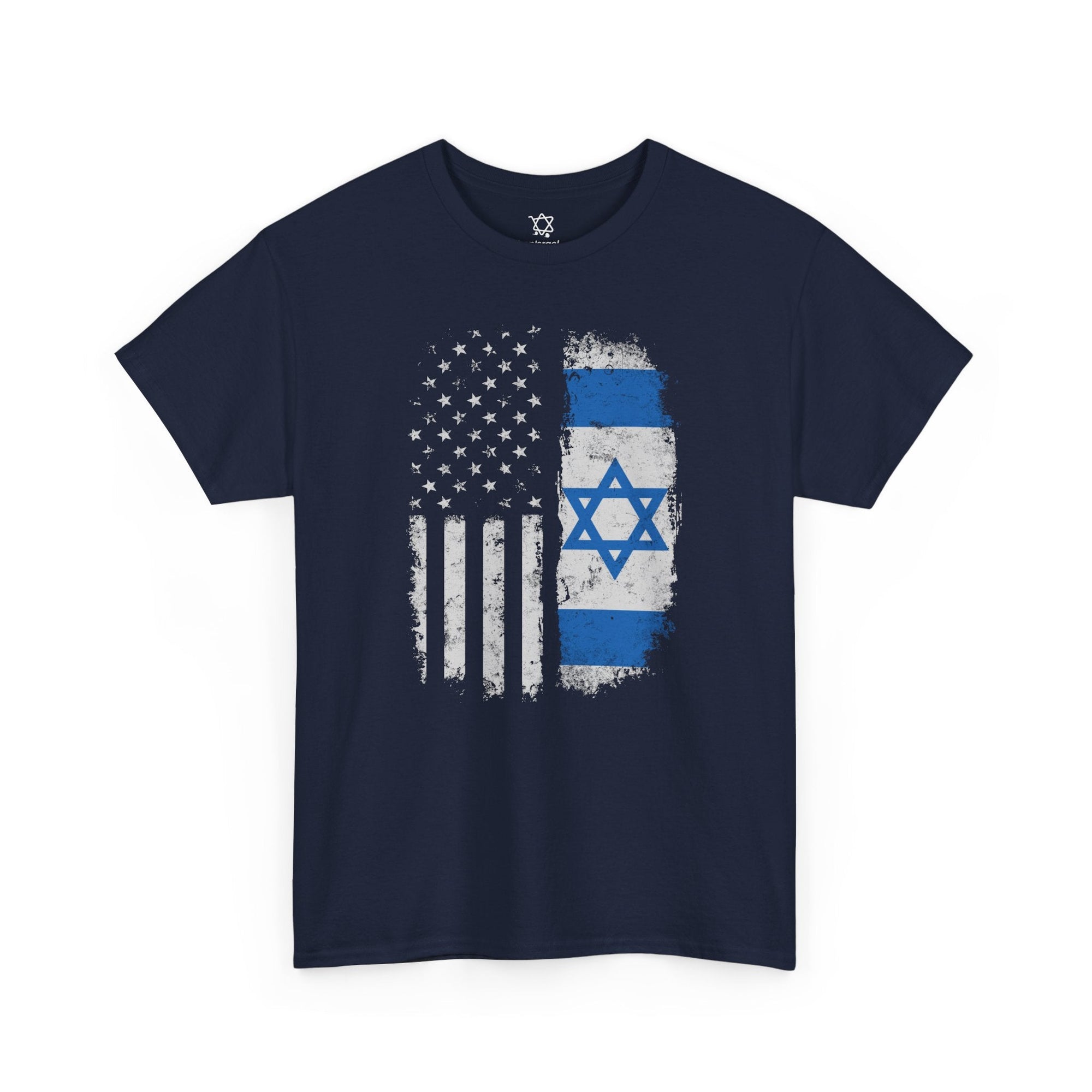
Its modern status was cemented in three steps. In 1897, the First Zionist Congress in Basel, chaired by Theodor Herzl, adopted a blue-and-white banner with a central Star of David, chosen partly because it was already widely recognized (Wikipedia). During the Holocaust, Nazi Germany forced Jews to wear a yellow Star of David badge, and the attempt to mark and shame paradoxically deepened the star's meaning as a sign of solidarity and endurance (Wikipedia). Then in 1948, the new State of Israel adopted the Zionist banner, a blue Star of David between two blue stripes on white, as its national flag (Encyclopaedia Britannica).
Wearing the Star of David: choosing a piece
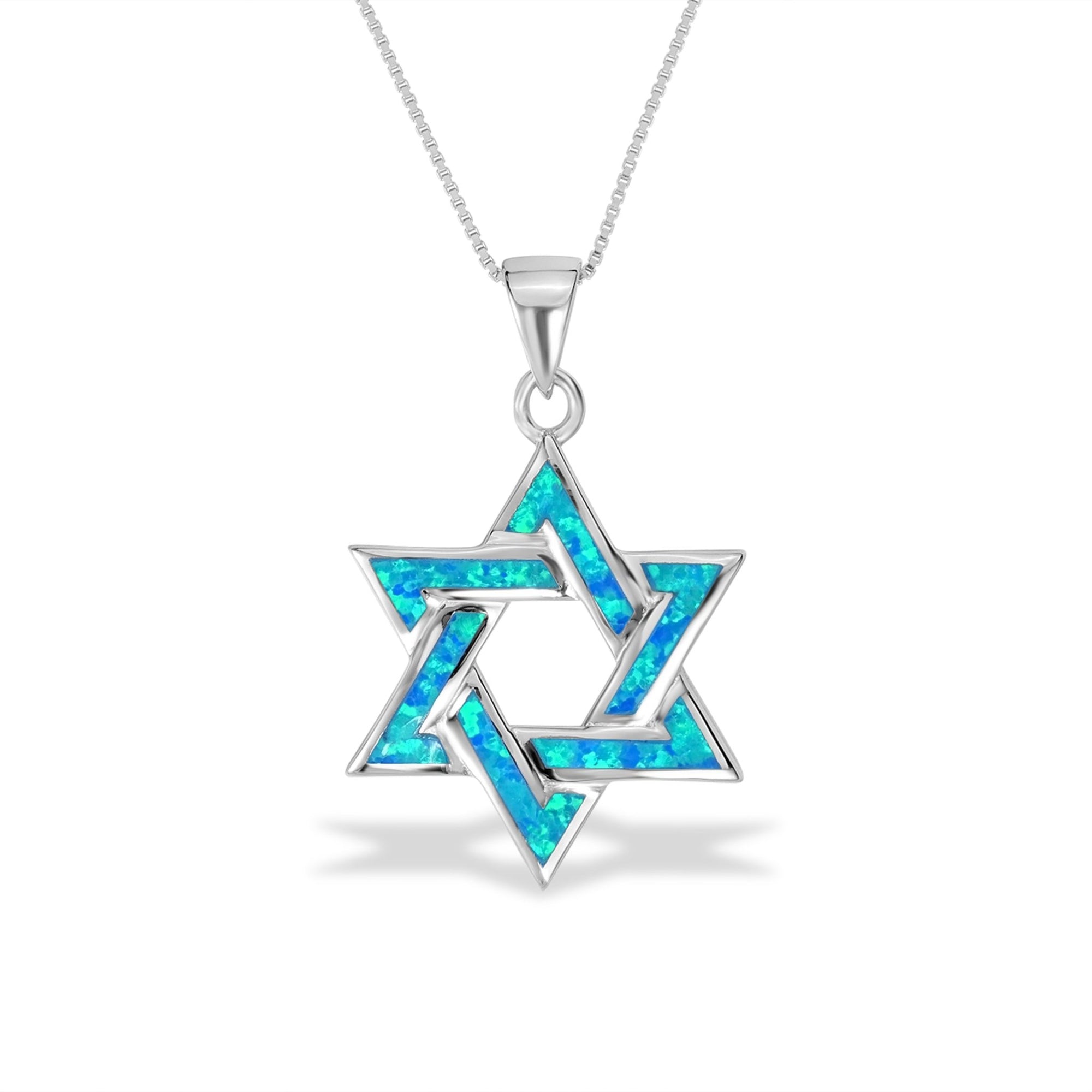
That journey, from ancient ornament to mystical sign to the emblem of a people and a state, is exactly what you carry when you wear one. A Magen David pendant is not a generic charm; it is a symbol Jewish history has shaped and reclaimed across centuries. Let the meaning guide the design: an openwork star reads clean and modern, an opal or gemstone center draws the eye to the central hexagon (the "foundation" point that grounds the others), and a simple polished star keeps the pure geometry front and center.
Our Star of David jewelry collection gathers necklaces, rings, and pendants in that spirit, made in Israel and designed to be worn every day or given to mark a milestone. If you want the symbol paired with an added note of protection, look for designs that combine the star with a hamsa; for a bolder statement of identity, an eternal-style band carries the same meaning in a ring. Whichever you choose, you are wearing a small piece of a very long story.
Related
- The meaning of the Star of David
- The spiritual meaning behind Star of David jewelry
- What the Israeli flag means
Last updated July 2026.