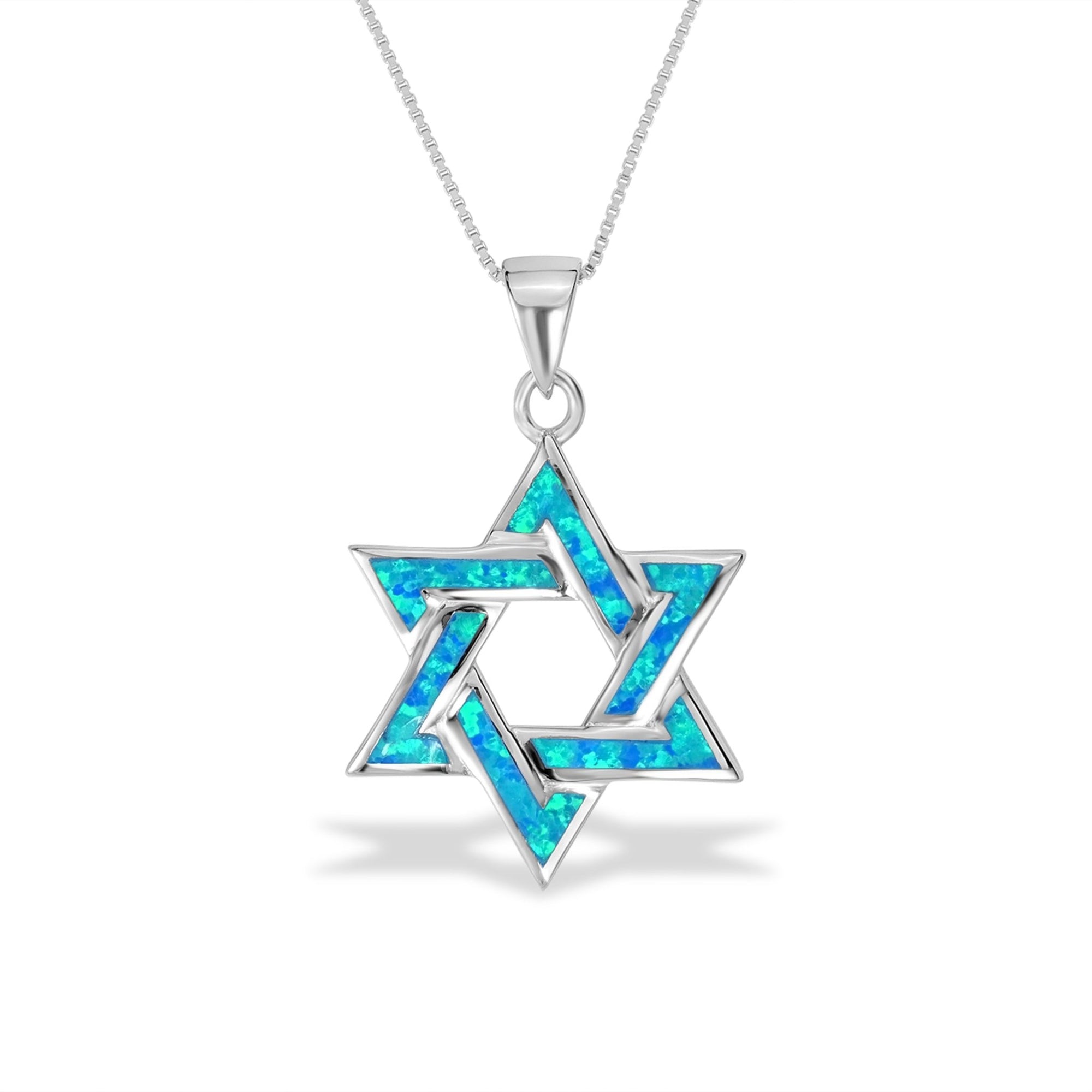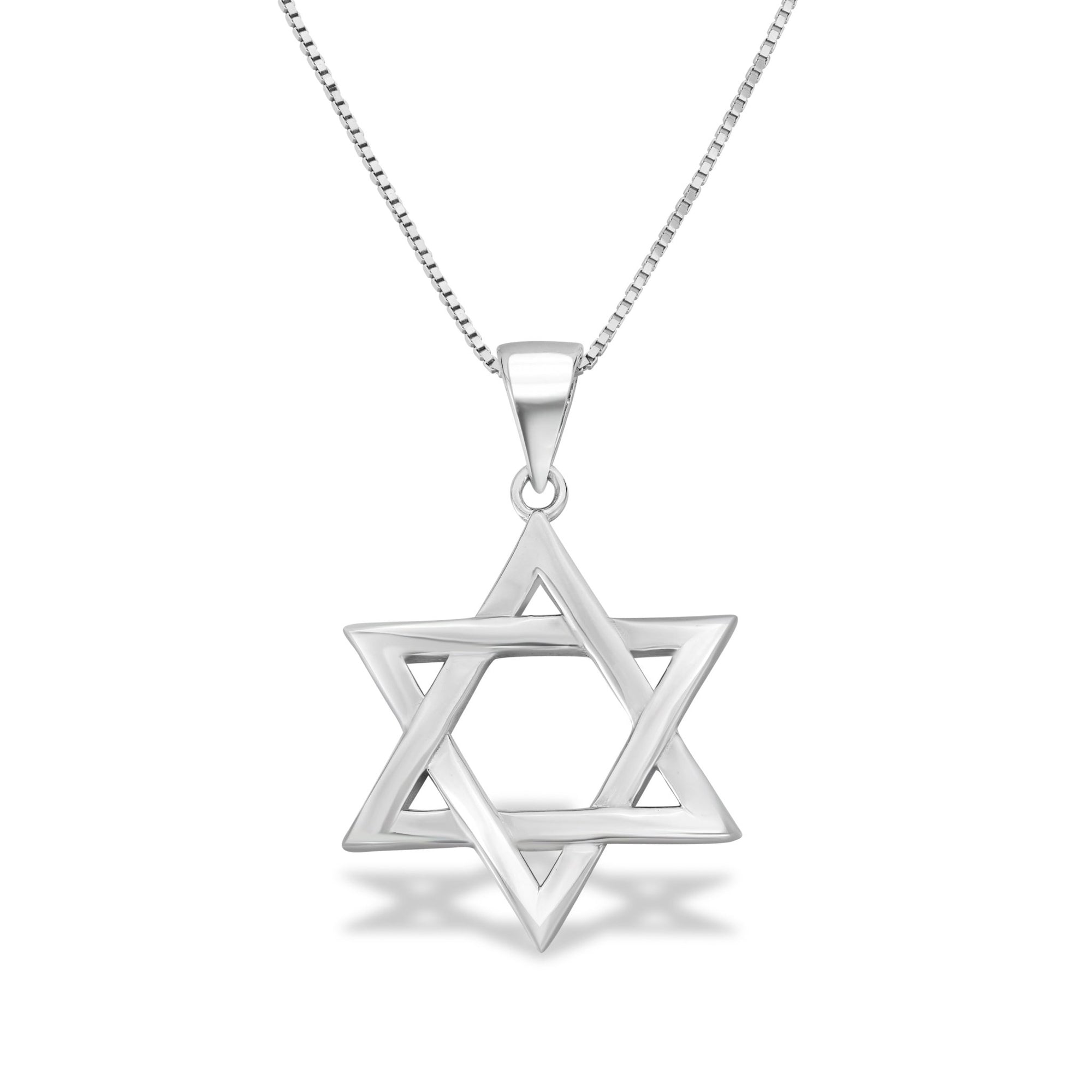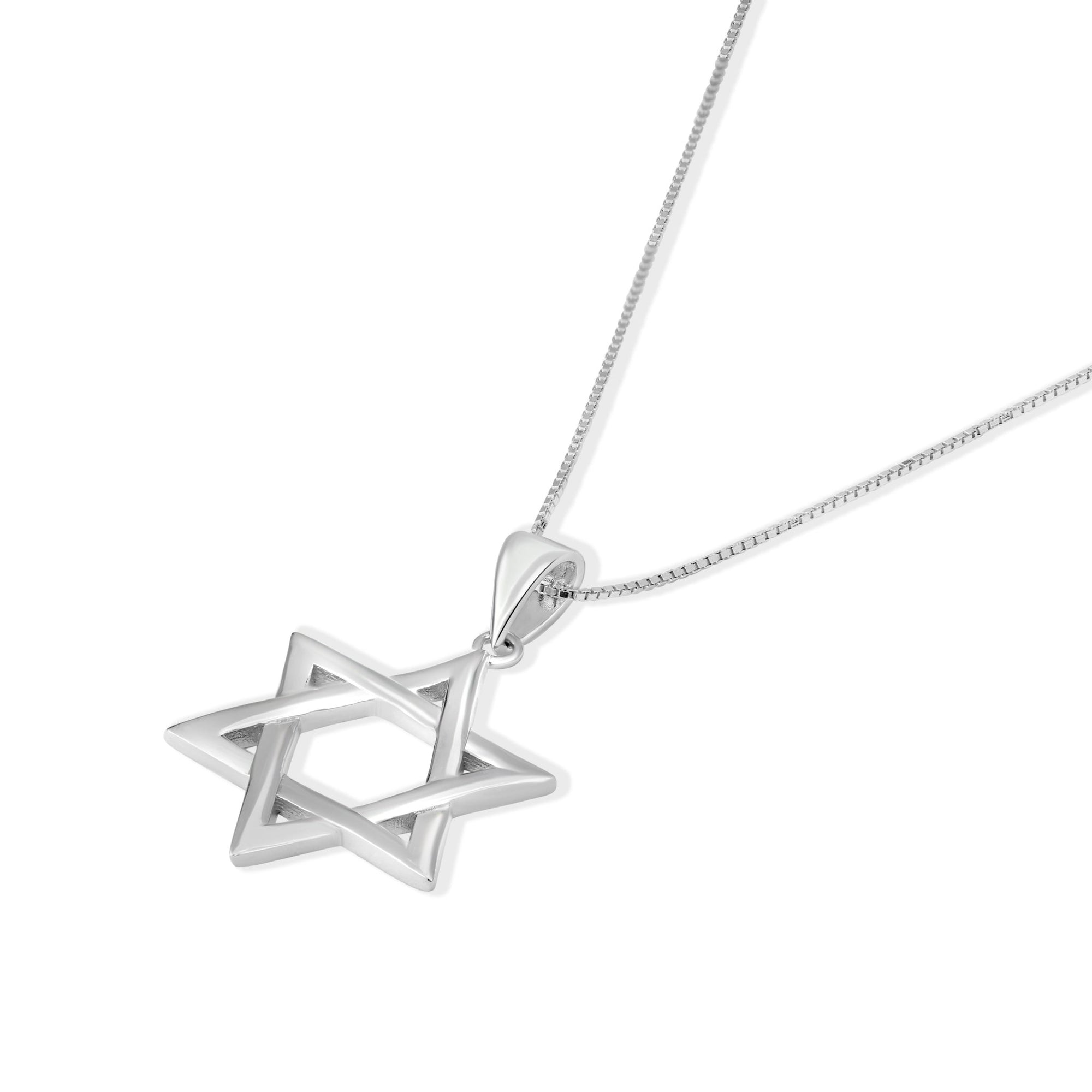


Short answer: The Star of David, known in Hebrew as the Magen David or "Shield of David," is a hexagram formed by two interlocking equilateral triangles, and it is today the most widely recognized symbol of Judaism and the Jewish people (Wikipedia). Worn as a necklace, ring, or pendant, it becomes a wearable statement of Jewish identity, continuity, and belonging, a small piece that carries centuries of shared heritage close to the heart.
What the Star of David means
Its Hebrew name, Magen David, means "Shield of David," and popular tradition ties it to King David of the Bible. Historians add an important note: there is no biblical or archaeological evidence that David actually carried such a shield, and the royal association developed much later (Wikipedia). Unlike the menorah, which the Torah describes in detail, the six-pointed star does not appear in the Bible at all. That does not make it less meaningful. It means the symbol earned its place through generations of Jewish life rather than through a single scriptural verse.
Several layers of meaning are commonly cited. In Kabbalah the two triangles are read as a bond between opposites: heaven and earth, the spiritual and the physical, God and the Jewish people, with the Torah sometimes added as a third strand of that relationship. The star's twelve outer edges are often linked to the twelve tribes of Israel united as one nation, and some Kabbalists connected the six points to God's rule over every direction. The "shield" in its name carries a steady theme of divine protection. These readings are traditional and devotional rather than fixed doctrine, which is part of why the symbol resonates so widely across Jewish communities.
From ancient motif to the emblem of a people
The six-pointed shape is old, but it did not begin as an exclusively Jewish sign. In antiquity it served as a decorative and even magical motif across many cultures, and it appears in early Jewish contexts as ornament rather than emblem, including on Bar Kokhba Revolt-era coinage and on a stone from the Khirbet Shura synagogue in the Galilee around the third to fourth century (Wikipedia). What made it Jewish was centuries of communal adoption.
A key turning point came in 1354, when Holy Roman Emperor Charles IV granted the Jewish community of Prague the privilege of bearing its own flag displaying a hexagram, one of the earliest official uses of the symbol by a European Jewish community (Commentary, Gershom Scholem; Wikipedia). From Prague the Shield of David spread outward through Moravia and Austria over the 17th and 18th centuries, appearing on book covers, title pages, and cemetery headstones as more communities embraced it (Commentary). By the 19th century many communities had adopted it as a simple counterpart to the Christian cross.
The star became national in 1897, when the First Zionist Congress in Basel chose it as the central emblem of the Jewish national flag. David Wolffsohn's blue-and-white design, inspired by the stripes of the tallit (prayer shawl), later became the basis for Israel's flag (Wikipedia). During the Holocaust the Nazis weaponized the symbol, forcing Jews to wear it as a badge of persecution, first by armband decree in occupied Poland in 1939 and then as the yellow star across the Reich in 1941 (US Holocaust Memorial Museum). Worn again by choice after the war, the star was reclaimed as a mark of survival and pride. On October 28, 1948, the new State of Israel officially adopted its flag, a blue Star of David between two blue stripes on a white field, cementing the symbol as a marker of Jewish national identity (Wikipedia).
Wearing the Star of David today
Put that history against your collarbone and a Star of David necklace stops being mere ornament. It becomes a visible expression of who you are, a link to ancestry and continuity, and for many a quiet token of protection and faith. That layered combination, instant recognizability, resilience reclaimed after the Holocaust, and personal meaning, is exactly what gives the piece its emotional weight. It is why a Magen David is such a natural gift for a bar or bat mitzvah, a wedding, or simply a moment when someone wants to carry their heritage with them.
If you are looking for a piece that fits your style, our Star of David jewelry collection gathers pendants, rings, and necklaces in classic, opal, and modern designs, so you can choose the version of this symbol that speaks to you. Each one is a small, wearable way to say where you come from and what you stand with.
Related
- The meaning of the Star of David
- Star of David jewelry: designing with deep symbolism
- Top Jewish symbols and their meaning
Last updated July 2026.