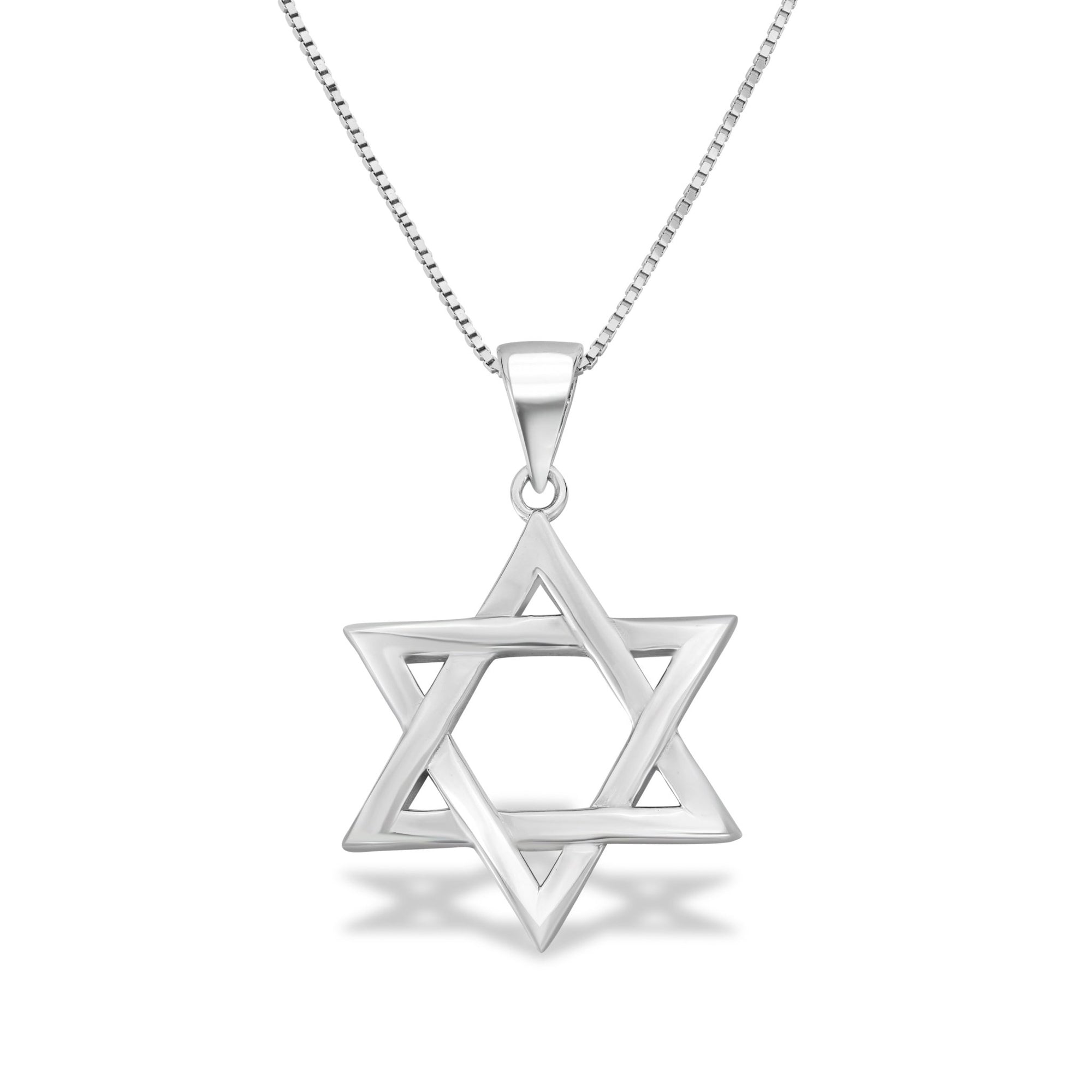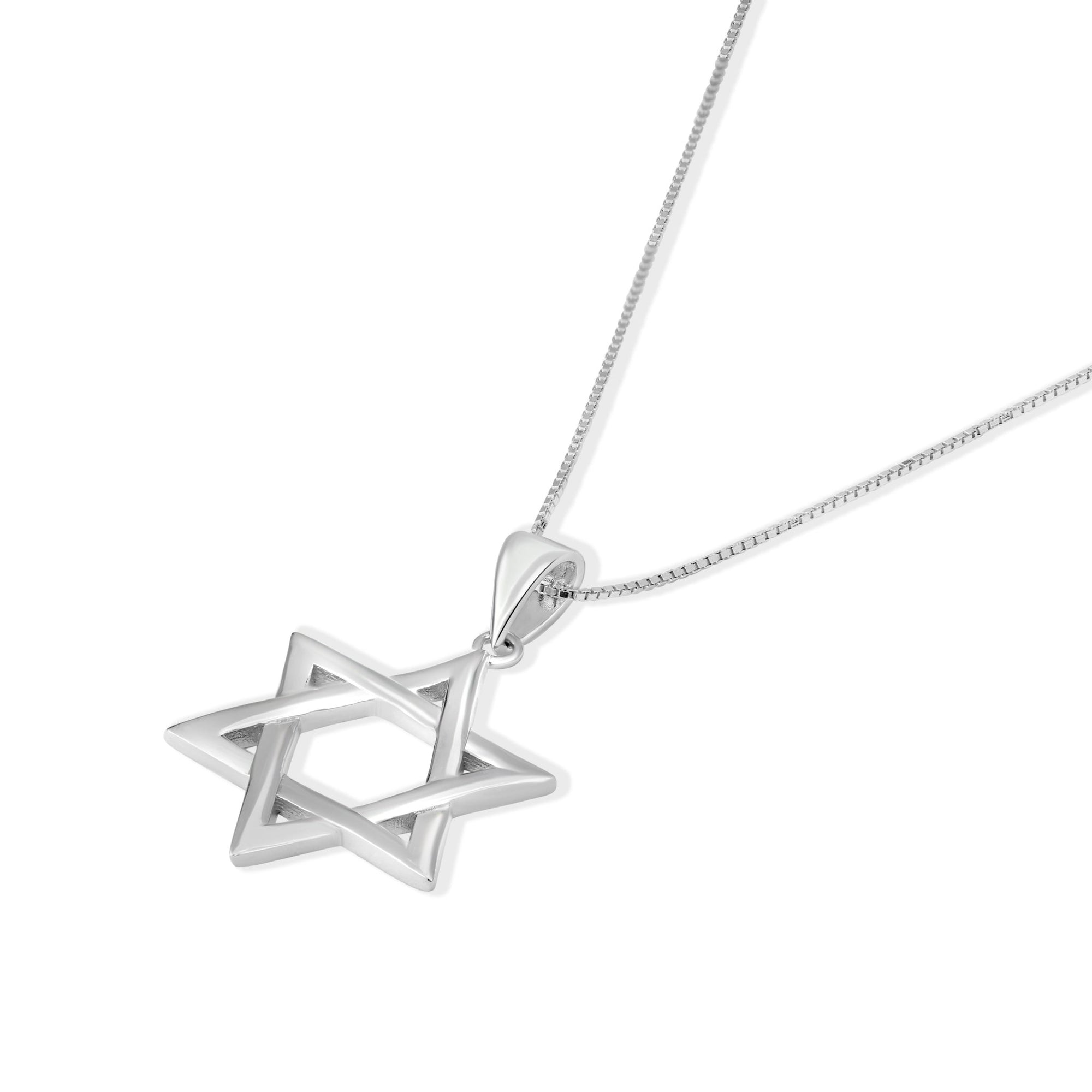


Short answer: The Star of David (Hebrew: Magen David, "Shield of David") is a six-pointed star formed by two interlocking equilateral triangles, and it is the most widely recognized symbol of Judaism and the Jewish people. In Kabbalistic tradition the two triangles are read as the meeting of opposites: humanity's ascent toward God and the descent of divine grace into the world, a harmony between the spiritual and physical realms and a symbol of the bond between God, the Torah, and Israel. In modern jewelry it is worn less as a formal religious command than as a personal declaration of Jewish faith, identity, heritage, and pride, a role that surged sharply after October 7, 2023.
What the Star of David means
The clearest spiritual reading comes from Jewish mysticism. The upward-pointing triangle represents humanity reaching toward God, good deeds and prayer rising to heaven, while the downward-pointing triangle represents divine grace flowing back down into the world. Read together, the interlocking triangles express the union of opposites: heaven and earth, giving and receiving, spirit and matter. In this tradition the Zohar links the star's points to the sefirot (the divine attributes) and to the knot that binds God, the Torah, and the Jewish people together.
A separate popular interpretation holds that the six points stand for God's rule over the universe in all directions: north, south, east, west, up, and down. This "six directions" idea circulates widely in jewelry writing, but it is a folk or secondary reading rather than the primary Kabbalistic one. Sources such as Chabad explicitly favor the sefirot explanation. It is also worth being precise about the name: "Shield of David" and the protective associations are traditional and legendary, not historically documented. There is no record that King David ever used this emblem, so the connection to his shield or banner is best treated as cherished legend rather than fact.
Where the six-pointed star comes from
As a geometric shape, the hexagram is ancient and appears across many cultures, from Mesopotamia to India, often as decoration or a protective sign, and it was not originally Jewish. Its identity as a distinctly Jewish symbol is comparatively recent. A hexagram appears as a decorative element in the Leningrad Codex around 1008 CE, one of the oldest complete Hebrew Bible manuscripts, though without fixed symbolic meaning at that stage (Wikipedia).
The first time a Jewish community formally adopted the star as its emblem was in 1354, when Holy Roman Emperor Charles IV granted the Jews of Prague the right to bear their own flag and they chose a red banner with a six-pointed star (Commentary, Gershom Scholem). By the 17th century the symbol had spread across central Europe: in Vienna a boundary stone marked the Jewish quarter with a hexagram on one side and a cross on the other, an early case of the star standing for Judaism as a whole (Jewish Virtual Library). The scholar Gershom Scholem argued that it became the near-universal marker of Jewish peoplehood only in the 19th century, when emancipation-era Jews wanted a single unifying symbol parallel to the Christian cross.
From the yellow star to the national flag
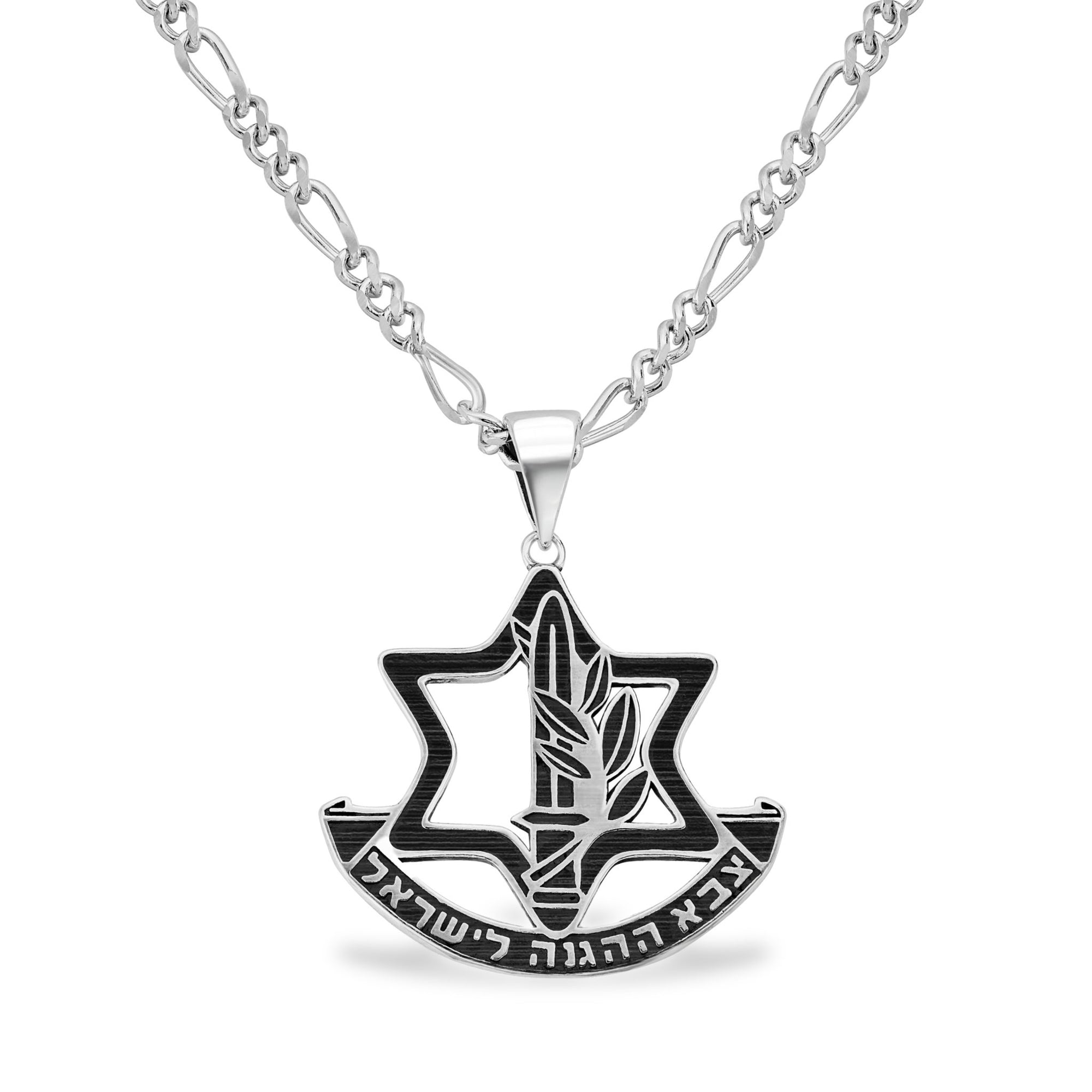
The star's rise to prominence accelerated in the modern era. In 1897 the First Zionist Congress in Basel adopted the Star of David as the central symbol of the Zionist flag, drawing on its existing use in Eastern European communities and its relatively non-sectarian character. The 20th century then gave the symbol two heavy and opposite layers of meaning. The Nazis forced Jews to wear a yellow star to mark them for persecution, and after the Holocaust that same star became the proud centerpiece of the Israeli flag adopted at independence in 1948, a blue star on a white field between two blue stripes, and of Magen David Adom, Israel's emergency medical service (Wikipedia).
That layered history is why the symbol still carries so much weight. After the October 7, 2023 Hamas attacks and a spike in antisemitism, sales of Star of David jewelry surged in the US and UK, with some retailers reporting increases of 300 to 400 percent, worn as a defiant expression of Jewish pride and solidarity (Jewish News; Forward). Notably, that demand came not only from observant Jews but from secular Jews and Christian allies choosing to wear it openly.
Wearing the Star of David today
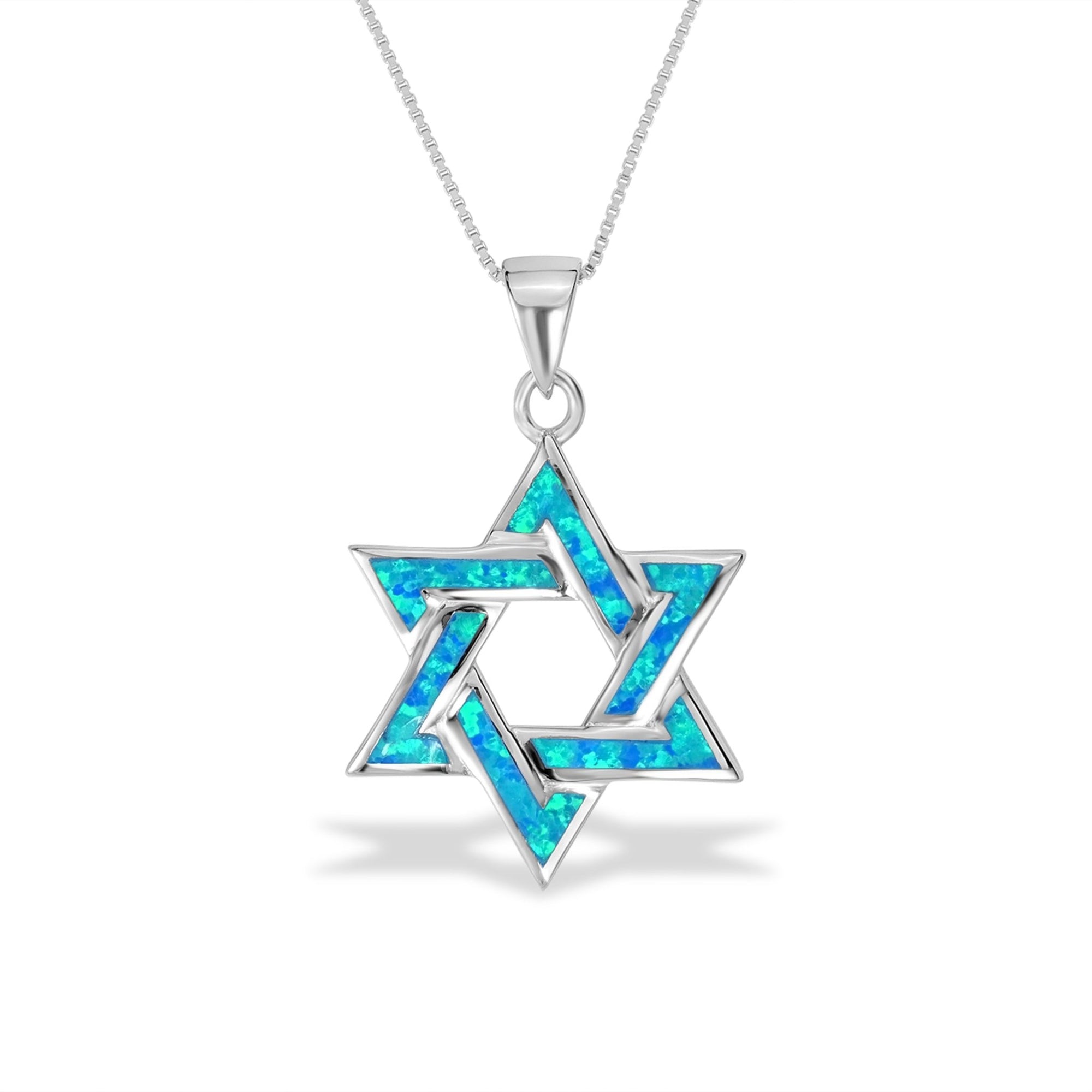
Unlike a commanded religious object such as tefillin, the Magen David functions in jewelry as a personal emblem: faith, belonging, heritage, and pride worn close to the skin. That is exactly why so many people reached for it after October 2023, and why a pendant, ring, or charm can feel like a quiet daily statement of who you are. If you want to wear the meaning above, our Star of David jewelry collection gathers necklaces, rings, and pieces in silver, gold tones, and opal, made in Israel and designed to be worn every day, from an understated pendant to a statement piece. Choosing one is less about following a rule and more about carrying the union of heaven and earth, and the bond of God, Torah, and Israel, wherever you go.
Related
- The Star of David Meaning
- Star of David Jewelry: Designing With Deep Symbolism
- Top Jewish Symbols and Their Meaning
Last updated July 2026.