

Short answer: The Star of David, known in Hebrew as the Magen David ("Shield of David"), is a six-pointed star formed by two overlapping equilateral triangles, and it is the most widely recognized symbol of Judaism and the Jewish people. The shape itself is ancient and was not originally Jewish (it appears as decoration and as a protective sign across many early cultures), but Jews adopted it as their emblem in the medieval and modern eras, the Zionist movement embraced it in 1897, and today it sits at the center of the flag of Israel (Britannica).
What the Star of David means
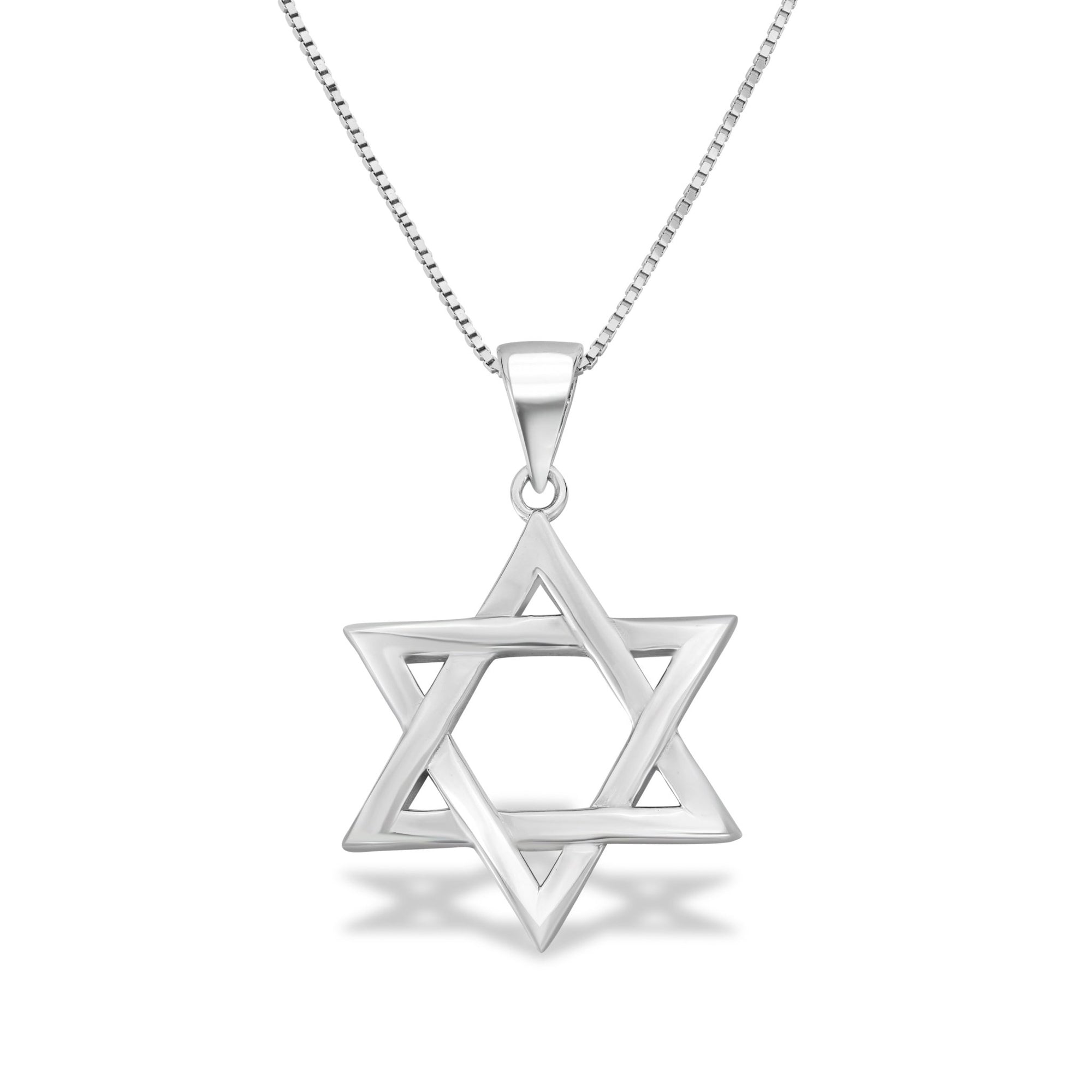
The Star of David is a hexagram: two interlocking equilateral triangles that share a center and point in opposite directions. Its Hebrew name, Magen David, means "Shield of David." Later scholarship links that name less to a literal shield carried by the biblical King David (for which there is no archaeological or scriptural evidence) and more to the idea of God as David's protective shield, an association carried in medieval amulets (Britannica).
Much of the symbol's spiritual meaning developed in the medieval period and in Kabbalah rather than in the Bible. A central interpretation holds that the six points express God's rule over the universe in all six directions: north, south, east, west, up, and down, around the center. Kabbalistic readings also read the two triangles as a union of opposites, for example the upward and downward flow between the human and the divine. Popular devotional phrases like "divine protection," "the connection between the human and the divine," and "unity within duality" reflect these mystical traditions, though they are interpretive rather than fixed doctrine (New World Encyclopedia).
Where the six-pointed star came from
Unlike the menorah or the shofar, the Star of David has no biblical reference and does not appear in early Jewish texts. The six-pointed star is not uniquely Jewish in origin: from as early as the Bronze Age it shows up as an ornament or a magical sign across many civilizations, from Mesopotamia to Britain, with Iron Age examples known from India and the Iberian peninsula. For centuries it appeared on Jewish lamps and seals without any special significance (New World Encyclopedia).
The earliest widely accepted Jewish use is a seal attributed to Joshua ben Asayahu, dated to around the 7th century BCE, the oldest undisputed Jewish example. Even then it carried no fixed religious meaning and served mainly as decoration. Through the Middle Ages the hexagram spread in Jewish contexts, appearing on amulets, protective mezuzot, manuscripts, and synagogue decoration, often as a talisman for protection, and its Hebrew name tied it to divine protection rather than to any biblical text (Britannica).
From medieval Prague to the flag of Israel
A turning point came in 1354, when Holy Roman Emperor Charles IV granted the Jewish community of Prague the right to bear a red flag with the Star of David, making Prague's Jews the first community in Europe to use it as an official, legal emblem (Kafkadesk; New World Encyclopedia). After Jewish emancipation in the 19th century, the star was adopted almost universally across synagogues, prayer books, and tombstones as the visible counterpart to the Christian cross, becoming the mainstream emblem of Judaism (Britannica).
In 1897 the First Zionist Congress in Basel, chaired by Theodor Herzl, cemented the star as the movement's symbol. David Wolffsohn's blue-and-white design, with the star set between two stripes that evoke the tallit prayer shawl, became the emblem of the World Zionist Organization (Israel Hayom). The symbol's darkest chapter came on September 1, 1941, when Nazi security chief Reinhard Heydrich decreed that all Jews aged six and older in the Reich wear a yellow Star of David marked "Jude," turning the emblem into a tool of stigmatization, segregation, and deportation during the Holocaust (U.S. Holocaust Memorial Museum). Then, on October 28, 1948, Israel's Provisional Council of State voted unanimously to adopt the blue Star of David between two horizontal blue stripes on white as the flag of the new state (Wikipedia). Today the symbol also gives its name to Magen David Adom, Israel's national emergency medical service.
Wearing the Star of David
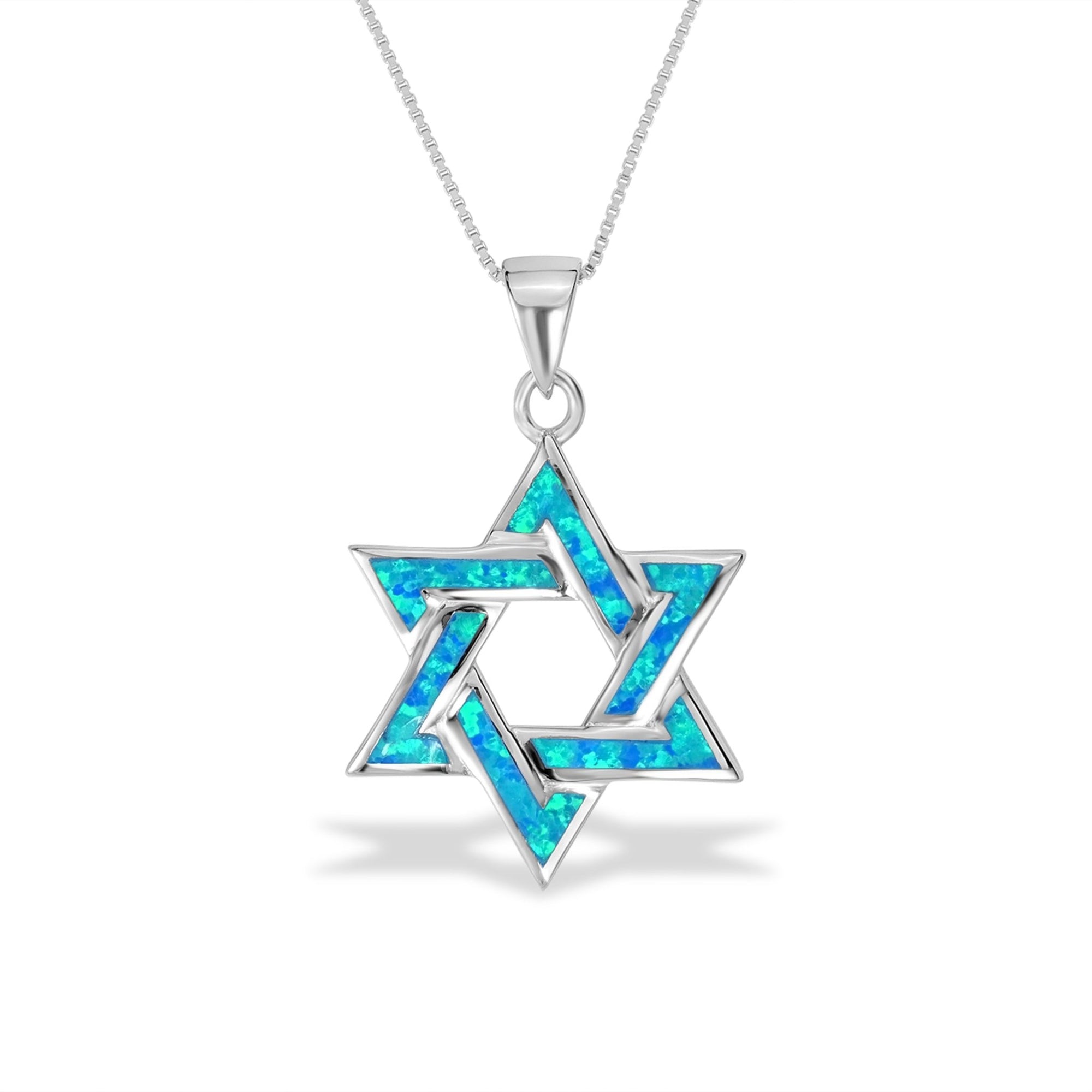
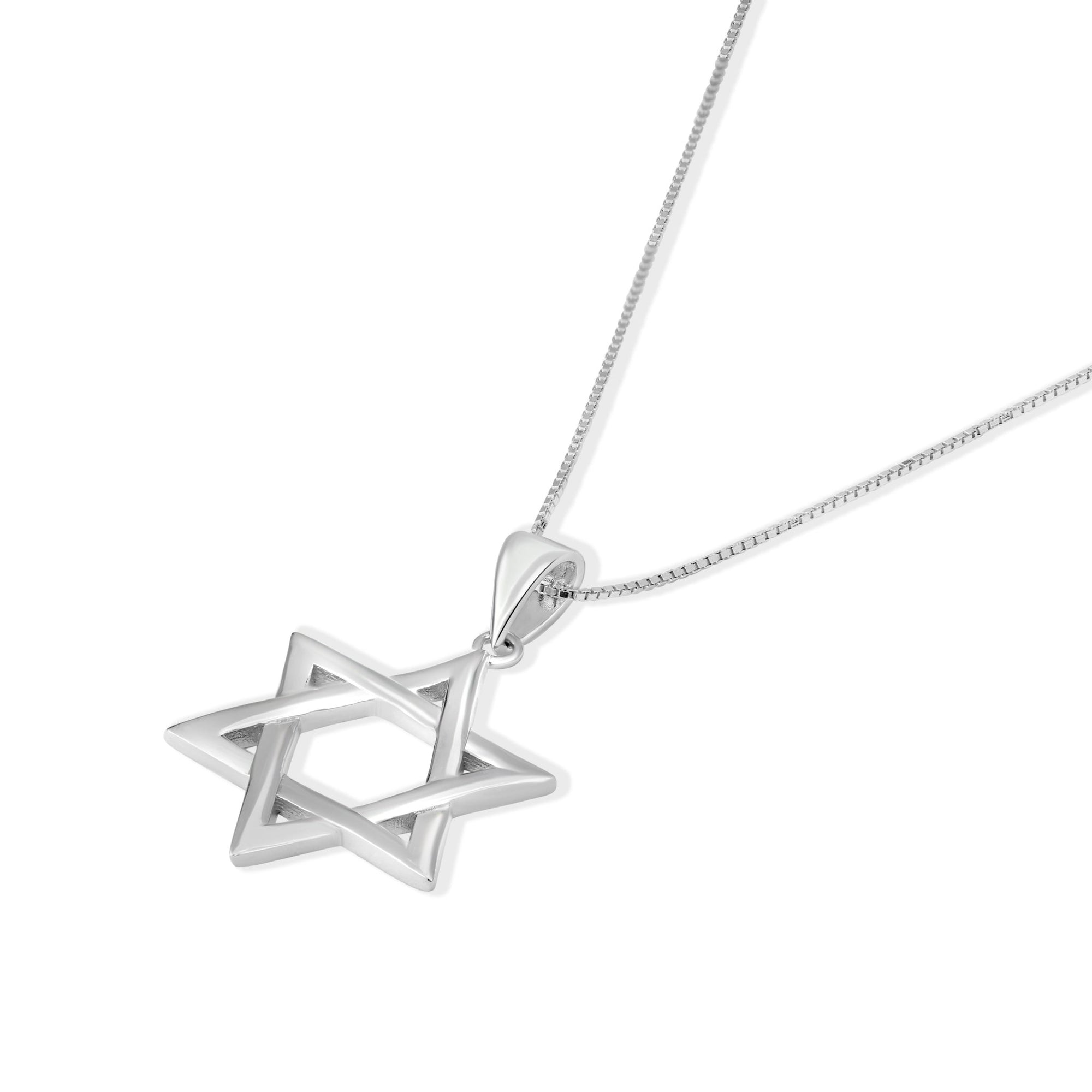
For many Jews and friends of Israel, wearing the Magen David is a quiet, everyday way to carry that whole history: faith, peoplehood, and connection to Israel in a single shape. At Shop Israel our Star of David jewelry collection gathers pieces made in that spirit, from a simple Shalom Star of David necklace to rings and pendants meant to be worn daily. If you are exploring Jewish symbols more broadly, the same care runs through our hamsa and other symbol designs.
Related
Last updated July 2026.