

Short answer: The shofar is a ritual horn, most traditionally a ram's horn, that Jews have sounded for more than three thousand years. Hearing it blown is the central commandment of Rosh Hashanah, where its raw, wordless cry calls listeners to reflection and repentance. Today authentic shofarot (ram's horn, kudu, and other kosher-animal horns) are hand-crafted mainly in Israel and prized both as ritual instruments and as meaningful gifts, with genuine ritual shofarot carrying a rabbinical kosher certificate, or hechsher.
What the shofar is, and why its sound matters
Unlike a trumpet or a flute, the shofar plays no fixed melody. Its power is in a primal, wordless sound. On Rosh Hashanah the service centers on three shofar calls: tekiah (one long blast), shevarim (three broken blasts), and teruah (nine or more staccato notes), sounded in sets that traditionally total 100 blasts. The broken sounds are often likened to weeping, a cry that words cannot carry. The horn also marks the close of Yom Kippur with a single long tekiah, and it has long sounded at moments of communal urgency, celebration, and hope.
From Sinai to the Western Wall
The shofar first appears in the Torah at Mount Sinai, where a loud shofar blast accompanies the giving of the Ten Commandments, tying the horn to divine revelation from its earliest mention. The preference for a ram's horn traces to the Binding of Isaac, the Akedah: a ram caught in a thicket was offered in Isaac's place, so the ram's horn is said to recall Abraham's merit before God. In the book of Leviticus, a ram's-horn blast on Yom Kippur announced the Jubilee (Yovel) year once every fifty years, proclaiming liberty across the land as property returned to its original owners and indentured servants went free.
The horn's modern resonance is just as vivid. On June 7, 1967, during the Six-Day War, IDF Chief Rabbi Shlomo Goren sounded the shofar at the newly liberated Western Wall, a moment later recounted in Israeli media as one of the most iconic images of the nation's reconnection to Jerusalem.
Choosing an authentic shofar
Halachically, a kosher shofar comes from a kosher animal and is ideally a bent ram's horn, the curve symbolizing a humbled heart. Cow and calf horns are disqualified, tradition says, so as not to recall the sin of the Golden Calf, while other kosher horns such as kudu may be used when a ram's horn is unavailable. Buyers usually meet a few types. The classic ram's horn is shorter, comes in natural, half-polished, and polished finishes, and has a bright, piercing tone. The Yemenite shofar, made from a kudu (an African antelope), is recognizable by its long spiral twists and its deeper, echoing sound; per the Rambam's view, its natural curved shape is preserved rather than straightened. Exotic kosher horns like gemsbok and ibex also appear on the market.
Most shofarot are crafted in Israel: the horn is softened in boiling water, straightened enough to hollow out, drilled from mouthpiece to bell, polished, and sound-tested. For ritual validity, what matters is not exotic looks but kosher status. A genuine ritual shofar is drilled as one continuous cavity with no added mouthpiece, free of holes or cracks that would disqualify it, and ideally curved. Decorative or novelty horns sold as souvenirs may not be ritually kosher, which is why a physically attached hechsher (a kosher-certification sticker or certificate) is the reliable signal. Being "made in Israel" alone does not guarantee it; the hechsher does. Care is simple: keep the horn dry and cool, and clean only the mouthpiece rather than soaking the whole horn.
Bringing the shofar's spirit home
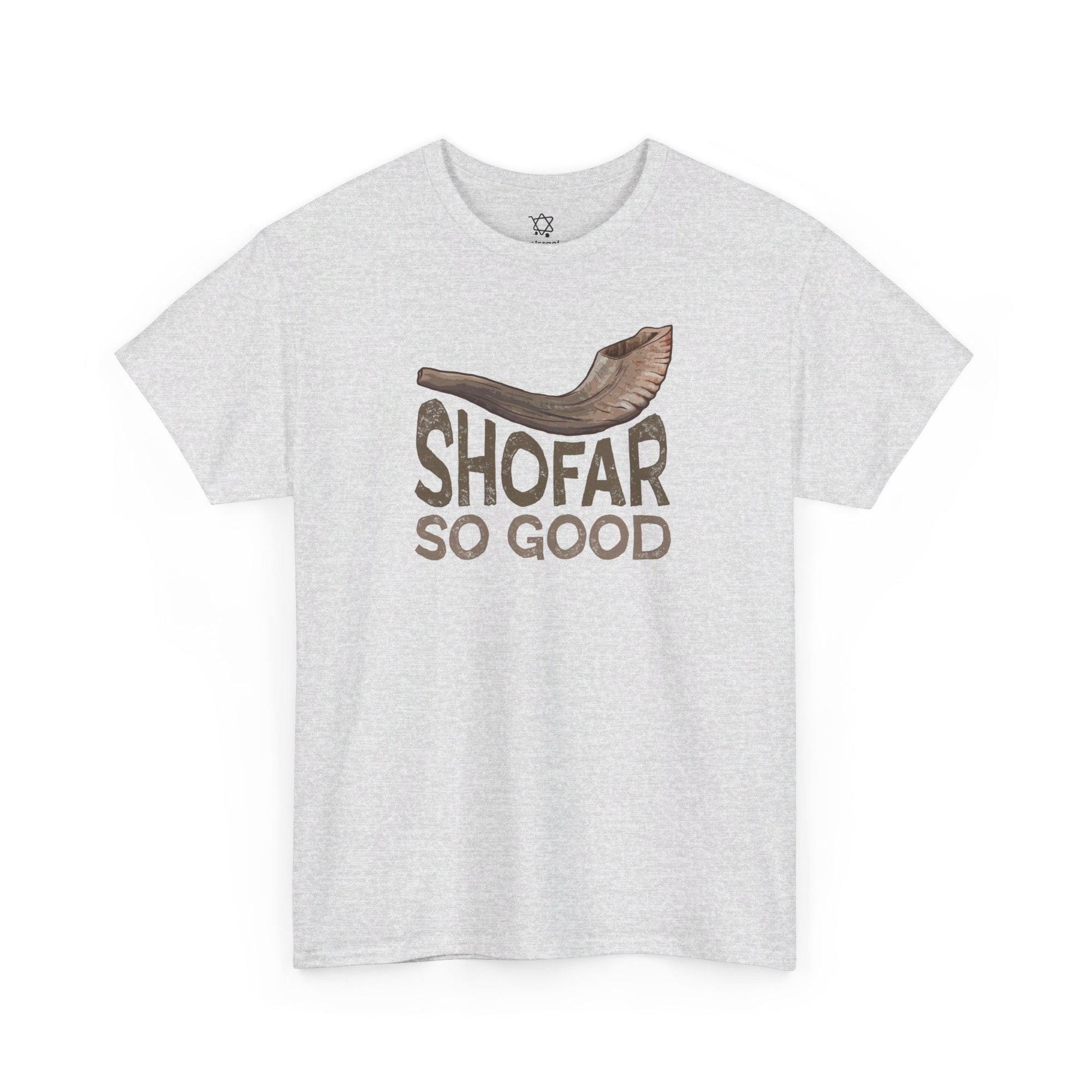
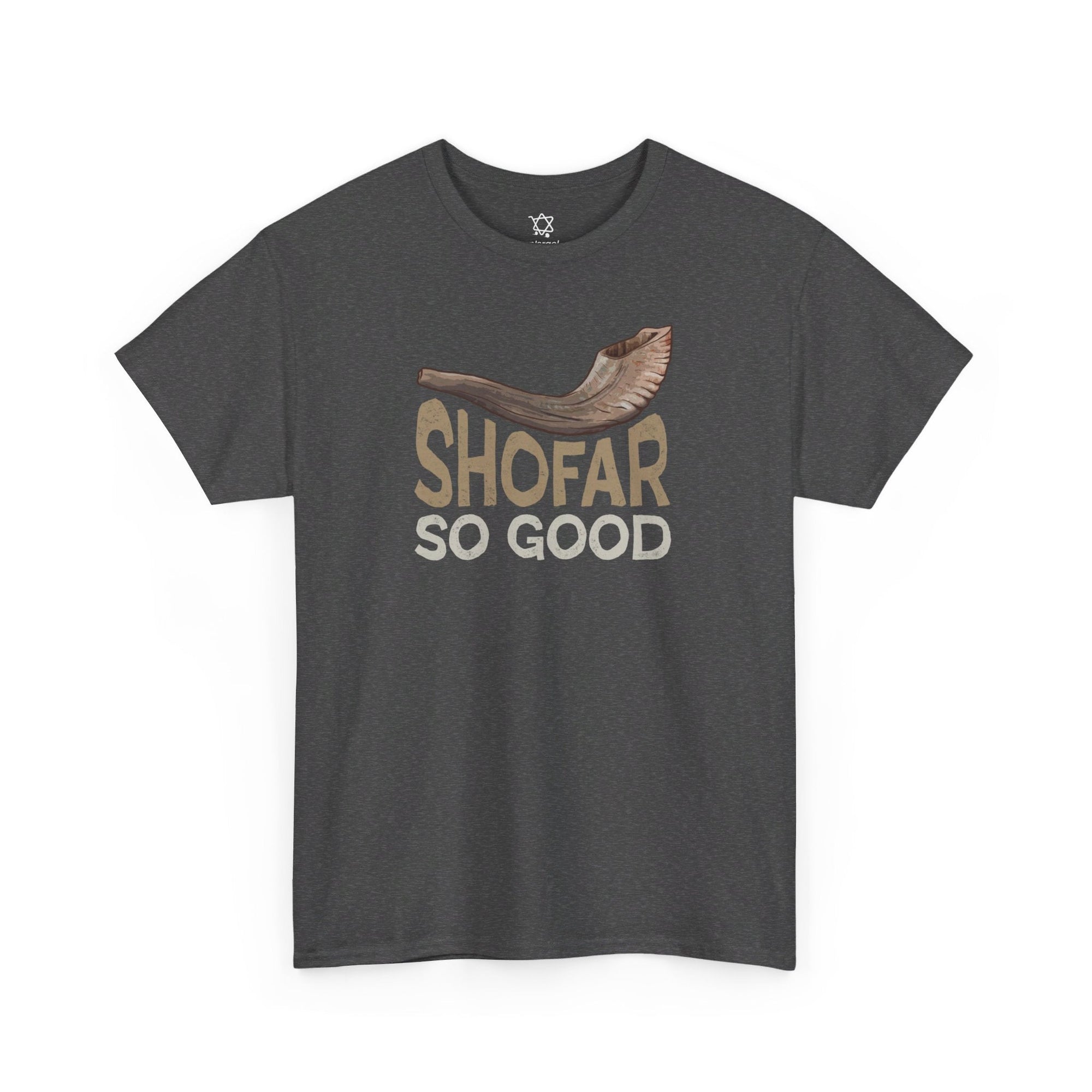
The shofar's call belongs first to the synagogue, but its imagery has become a warm way to carry Rosh Hashanah and Yom Kippur through the year. If you want to mark the season, our high holidays collection gathers gifts built around the sound and spirit of the days of awe, including the playful Shofar So Good tee for fans who love a good pun with their heritage. For an actual ritual horn, look for that attached hechsher first; for everyday pride in the tradition, a piece of shofar-inspired merchandise keeps the season close.
Related
- The shofar's historical and spiritual significance, explained
- How the shofar shapes Jewish festival traditions and merchandising
- Shofar-inspired products: from tradition to trend
Last updated July 2026.