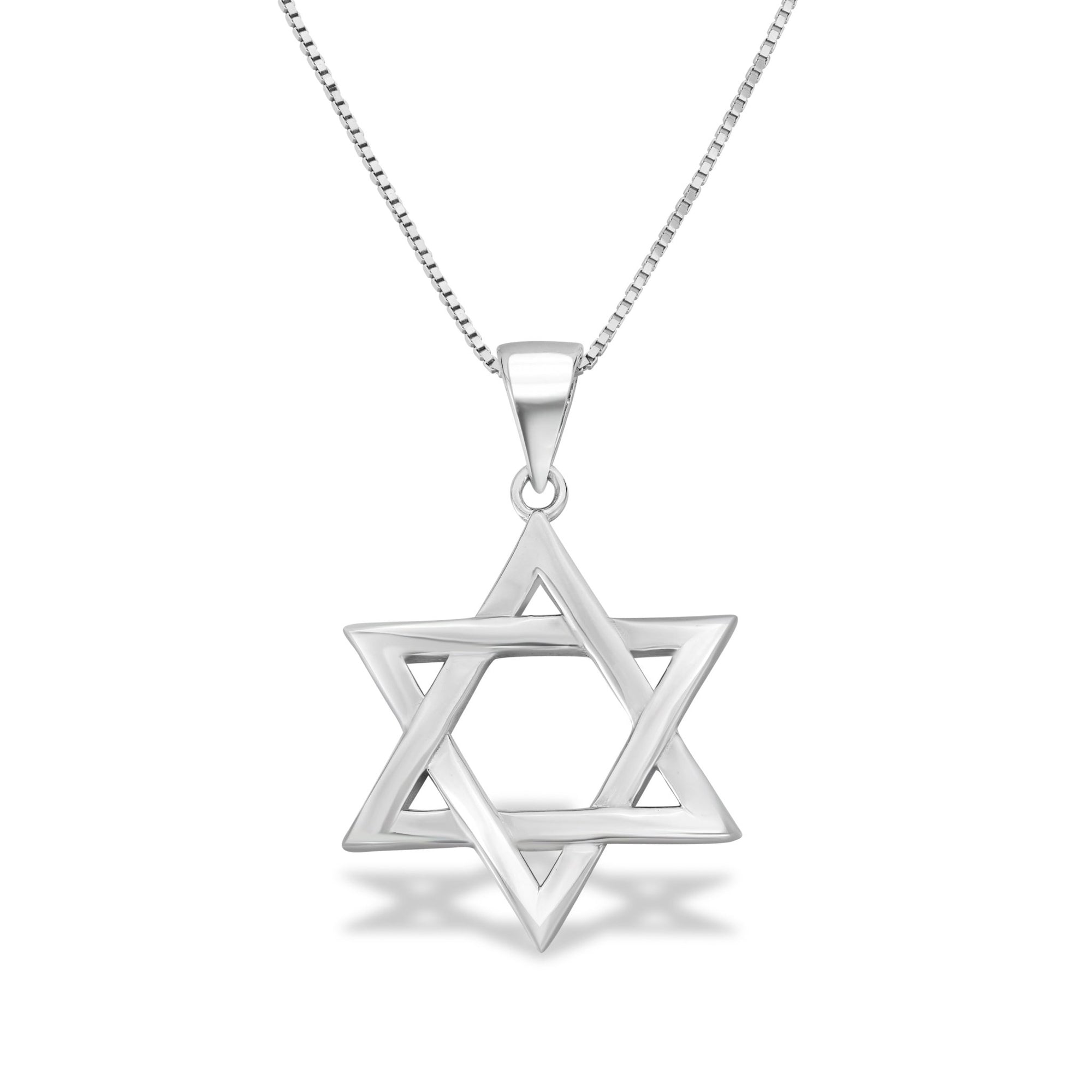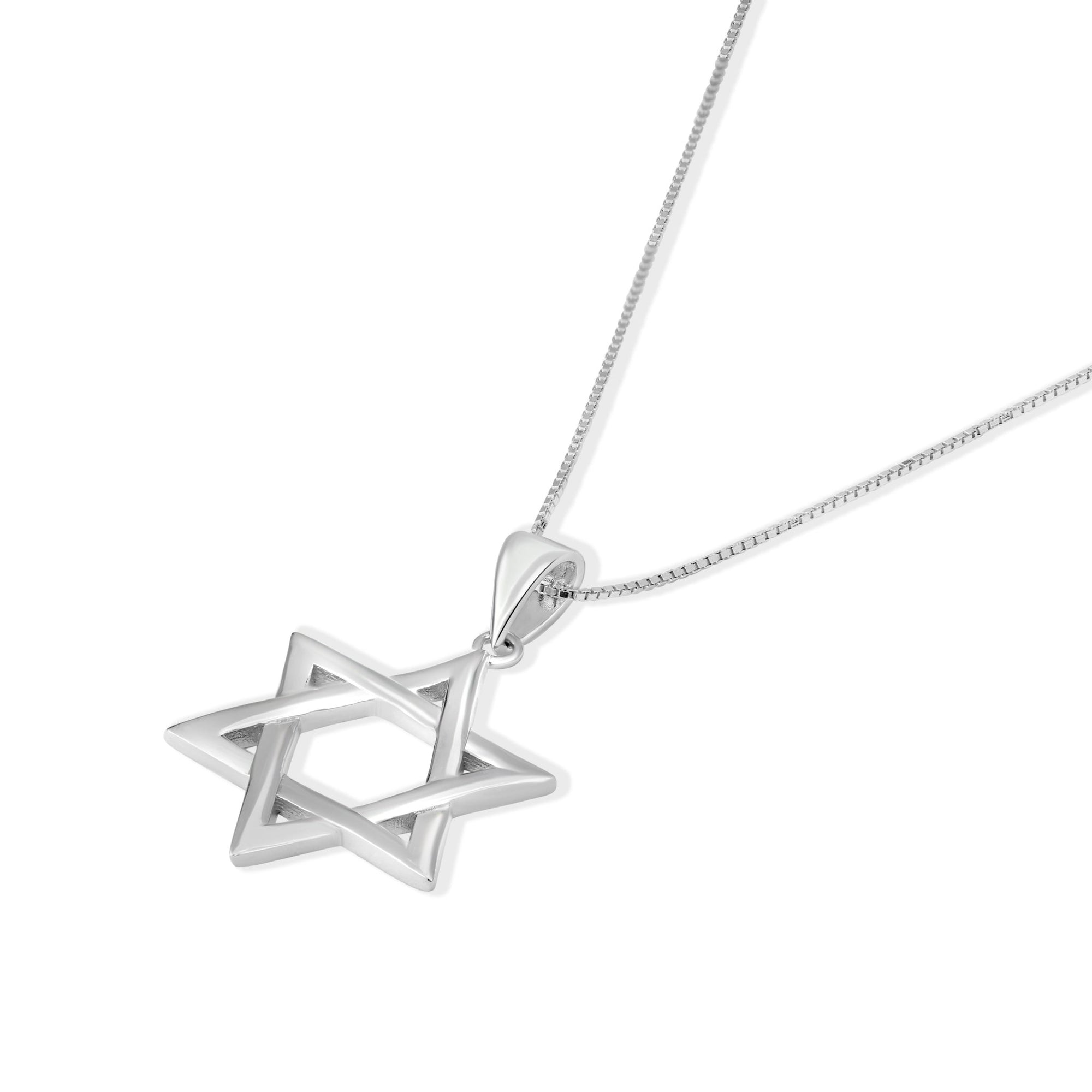


Short answer: The Star of David, known in Hebrew as the Magen David or "Shield of David," is a six-pointed star (a hexagram) formed by two overlapping equilateral triangles. Today it is the most widely recognized symbol of Jewish identity, faith, and peoplehood, and it sits at the center of the flag of Israel. As a specifically Jewish emblem it is relatively young: the hexagram is an ancient, cross-cultural shape, but its adoption as a Jewish sign is documented from 14th-century Prague and became near-universal only between the 17th and 20th centuries.
What the Star of David means
The Magen David is built from two equilateral triangles superimposed in opposite directions around a shared center. Its Hebrew name translates as "Shield of David," and that phrase carries a longer history than the shape itself. Historians note that "Shield of David" first served as a divine title in Jewish prayer, invoking God as a protective shield in the spirit of Psalm 18, before it was ever attached to a geometric sign. The earliest documented use of the term for a physical protective symbol appears in the 12th-century Karaite work Eshkol Ha-Kofer. There is no archaeological evidence that King David's army ever carried hexagram shields; the name reflects spiritual and legendary association, not a documented royal emblem (Wikipedia).
There is no single official meaning to the star, and that is part of its appeal. Popular and Kabbalistic readings treat the six points as God's rule over the universe in all six directions (north, south, east, west, up, and down), drawing on the description of space in the Sefer Yetzirah. Others read the two interlocking triangles as the meeting of heaven and earth, or of the divine and the human, and connect the figure to the twelve tribes of Israel. The philosopher Franz Rosenzweig, in The Star of Redemption, saw the triangles as creation, revelation, and redemption joined to God, humanity, and the world. These are meaningful interpretations rather than a fixed religious ruling (My Jewish Learning).
From a Prague flag to the flag of Israel
The hexagram is far older than its Jewish meaning. A version appears on a Jewish seal from Sidon in the 7th century BCE, sitting alongside non-Jewish symbols, one of the earliest examples of the shape in a Jewish context, though the scholar Gershom Scholem stressed it carried no distinctive religious meaning at the time. As a decorative and supposedly protective sign, the six-pointed star turns up across many Bronze Age and later cultures, from Mesopotamia to Britain, which is why its early appearances on Jewish lamps and coins do not by themselves make it a Jewish emblem (Commentary).
The turning point came in Central Europe. In 1354, Holy Roman Emperor and King of Bohemia Charles IV granted the Jews of Prague the right to bear a red flag featuring the hexagram, the first documented adoption of the symbol as an official Jewish communal emblem. By the 17th century it was firmly established as the official symbol of Prague's Jewish community and had spread through Moravia, Austria, and Vienna, appearing on synagogues and the boundary stones of the Jewish quarter (Wikipedia).
In 1897, the six-pointed star was adopted as the emblem of the First Zionist Congress in Basel, chaired by Theodor Herzl, and David Wolffsohn's blue-and-white design, inspired by the tallit (prayer shawl), placed the star at the center of what would become the national flag. Between 1933 and 1945, Nazi Germany forced Jews to wear a yellow Star of David badge, turning the emblem into a mark of persecution and, in time, of endurance. On October 28, 1948, the Provisional Council of State voted unanimously to adopt the Zionist flag, with its central blue Star of David, as the flag of the new State of Israel (Jewish Virtual Library).
Wearing the Star of David
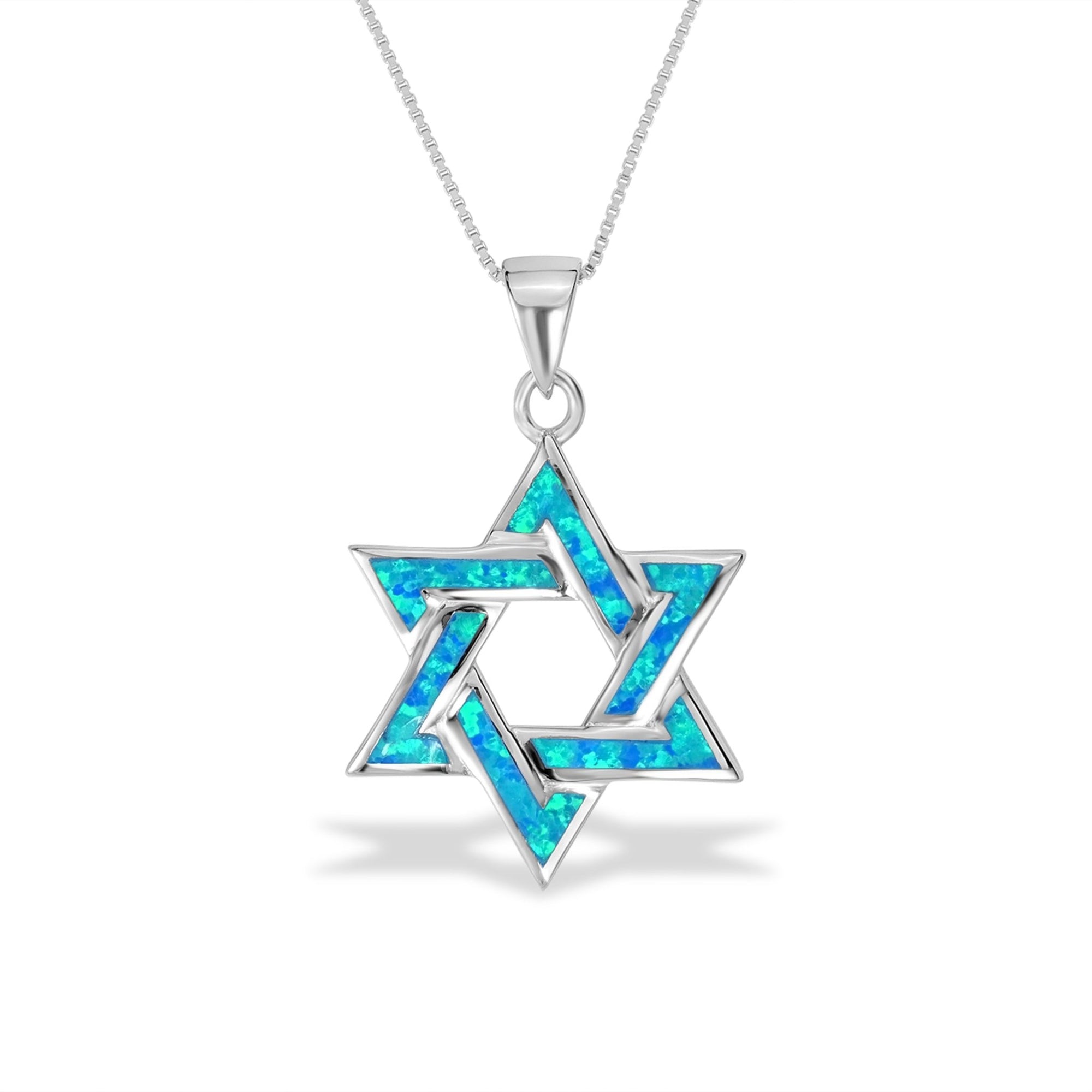
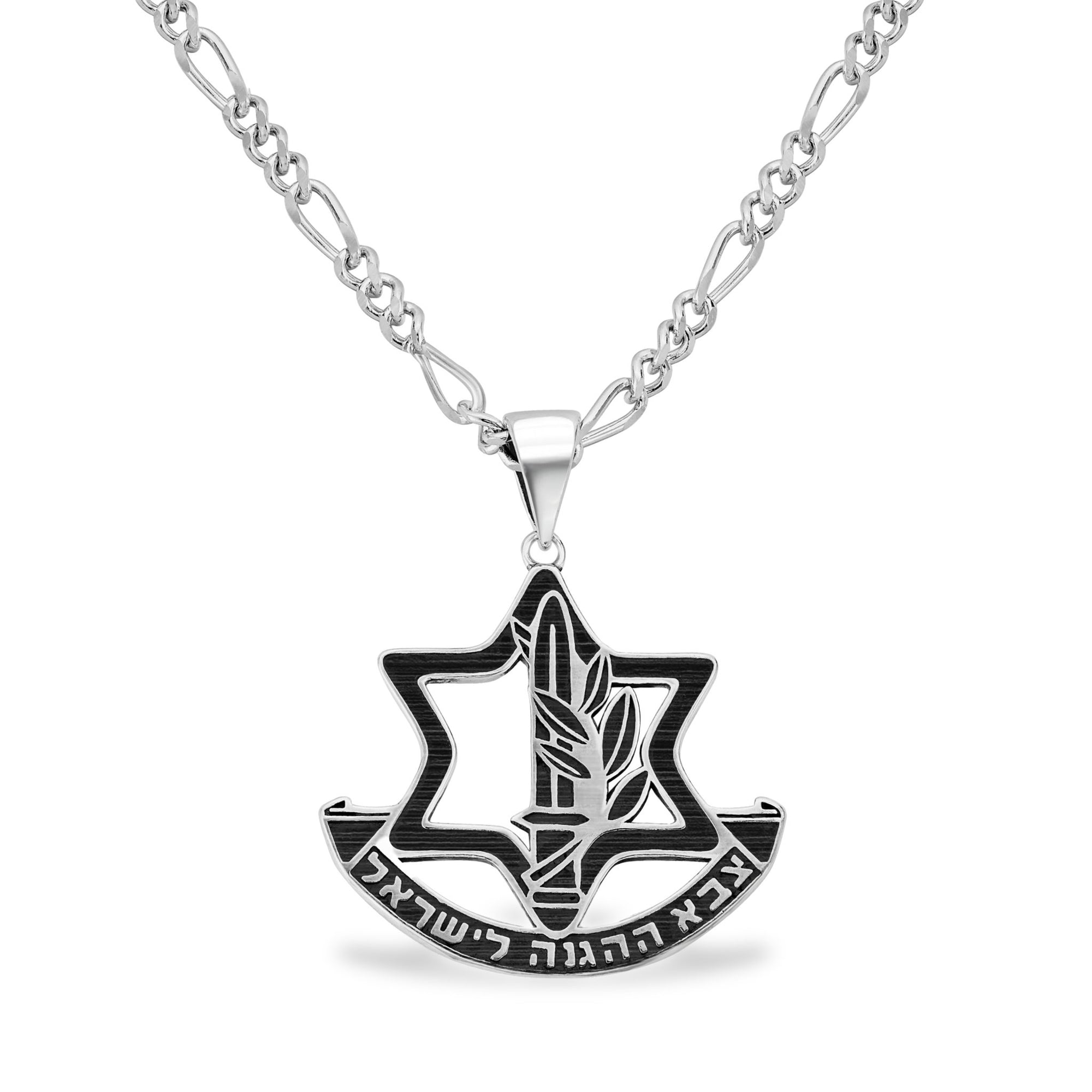
Because the Magen David carries identity, faith, heritage, and a sense of the "Shield of David" protection all at once, it has become a favorite far beyond the strictly observant. In jewelry it is most often worn as a necklace or pendant, in styles that range from dainty gold and sterling-silver outlines to bold statement pieces, diamond-set designs, rose gold, and distinctly Israeli materials like Roman glass and Eilat stone. It is a classic gift for milestones such as bar and bat mitzvahs, weddings, and anniversaries (Judaica Web Store).
Wear the story. If you want a piece that carries this history close, explore our Star of David jewelry collection, from minimalist everyday pendants to opal and diamond-accented designs made to be handed down. It is a simple, personal way to signal Jewish pride and a connection to Israel.
Related
- Star of David meaning
- Star of David jewelry: designing with deep symbolism
- Top Jewish symbols and their meaning
Last updated July 2026.