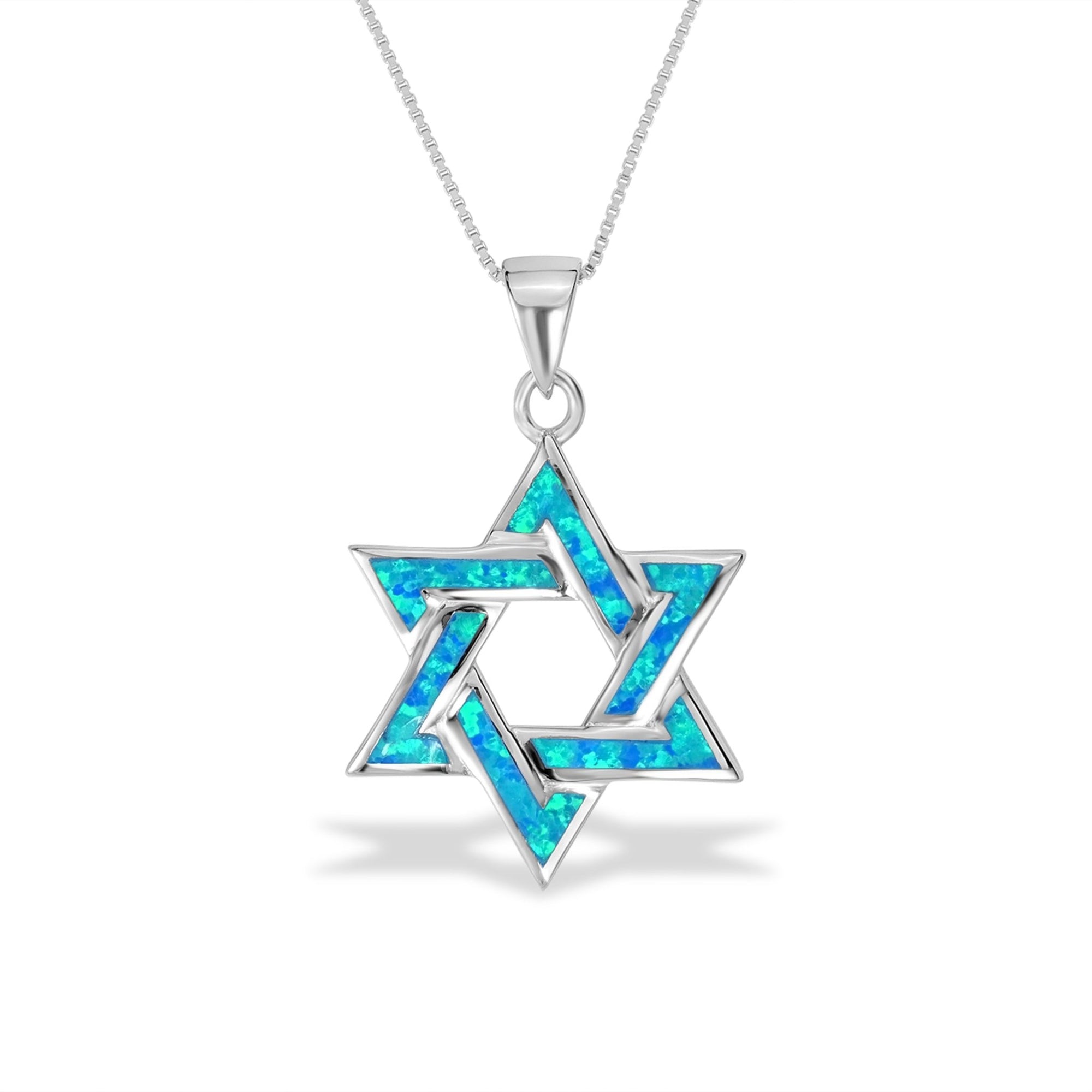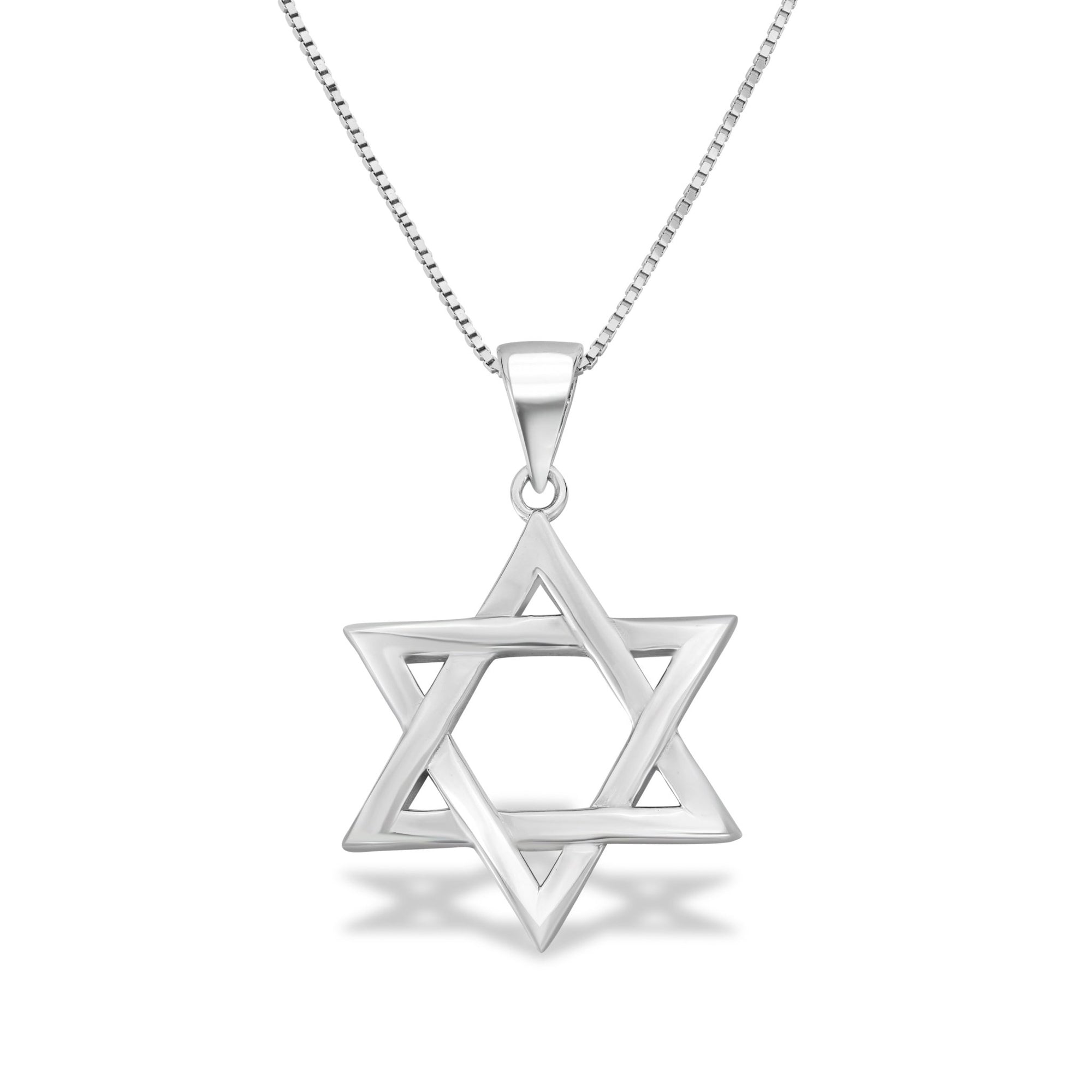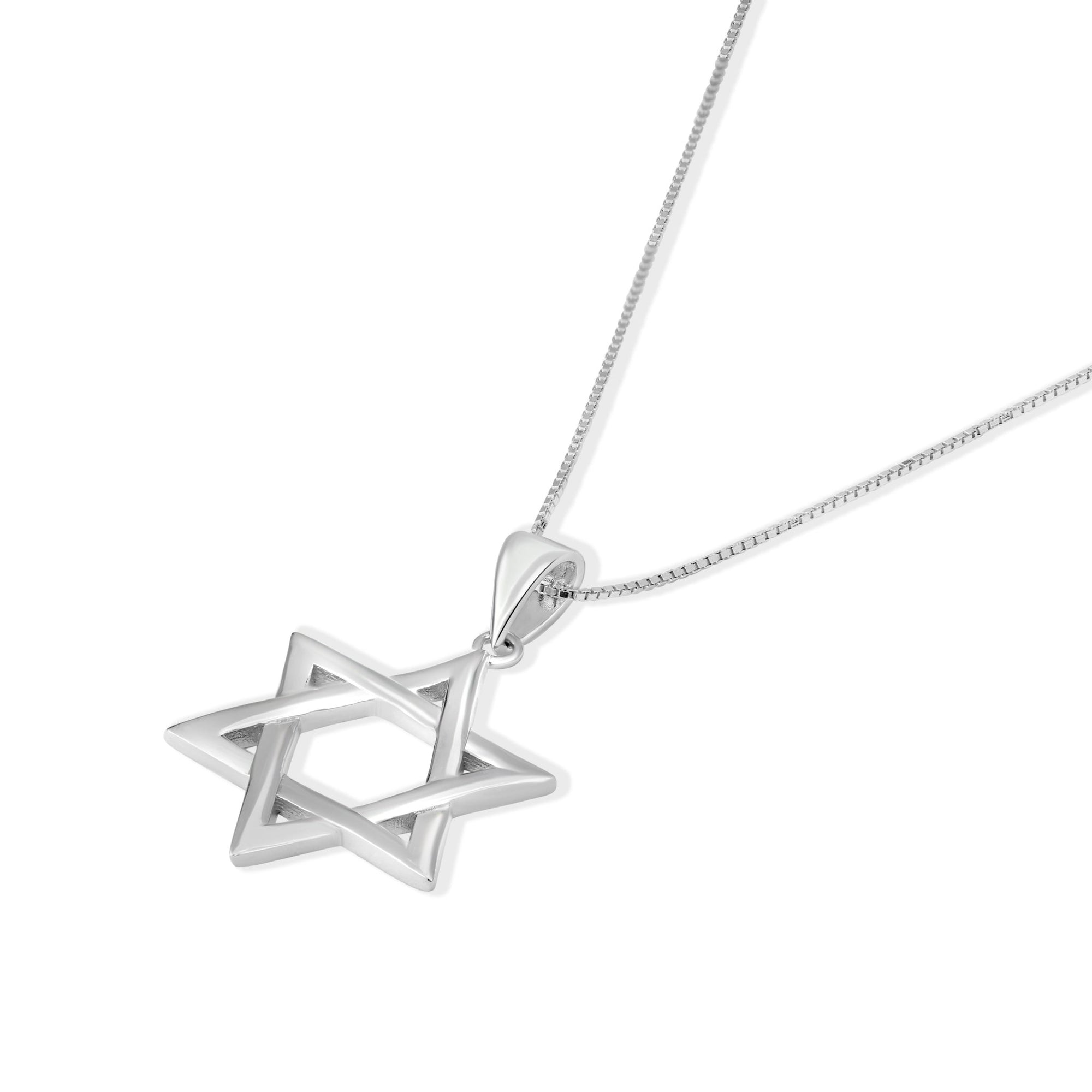


Short answer: The Star of David (Hebrew: Magen David, "Shield of David") is a six-pointed star formed by two interlocking equilateral triangles, and it is the most widely recognized symbol of the Jewish people, sitting at the center of Israel's flag. The name refers to divine protection (God as the shield of King David), and Kabbalistic tradition reads the two overlapping triangles as the meeting of the spiritual and earthly realms and God's presence in all directions. A Star of David pendant or ring worn today carries that heritage of identity, faith, and continuity.
What the Star of David means
The Hebrew name Magen David translates as "Shield of David," and the "shield" here is theological rather than literal. As Aish explains, "Shield of David" was a poetic title for God, acknowledging that King David the warrior prevailed through God's protection rather than his own might. The popular idea that David or his army carried a hexagram-shaped shield into battle is a later legend, not documented history.
In Kabbalistic tradition the symbol is read on several layers at once. The upward-pointing triangle is understood as good deeds rising toward heaven, and the downward-pointing triangle as blessing flowing back down to the world, so the interlocking form expresses the meeting of the spiritual and the physical ("as above, so below"). The six points are also read as God's rule over the six directions of space (up, down, north, south, east, and west) around a center, an idea rooted in the ancient text Sefer Yetzirah (Aish). None of these are a single fixed doctrine; the Star of David works less like a talisman with one meaning and more like a marker of Jewish identity and belonging.
Where the symbol comes from
The hexagram itself is an old and widely shared geometric motif that appears in many civilizations long before it was distinctly Jewish. It shows up on coinage from the Bar Kokhba revolt period around 135 CE and in later medieval Jewish manuscripts and mezuzah scrolls, though at that stage it was decorative and cross-cultural rather than a unique Jewish emblem (Wikipedia). One of the first textual references to "the sign, called the Shield of David" appears in Judah Hadassi's Eshkol Ha-Kofer in the mid-12th century.
Its emergence as the symbol of Jewish community is usually traced to medieval Prague. In 1354, Holy Roman Emperor and King of Bohemia Charles IV authorized the Jews of Prague to bear a red flag featuring the Star of David, making Prague's community the first in Europe to use it as an official legal emblem (Wikipedia; Kafkadesk). By the 17th century it functioned as an official communal symbol, appearing for example on a Vienna community seal in the 1650s and spreading through Moravia, Austria, and southern Germany.
From there the symbol carried into the modern era. The blue-and-white flag bearing the Star of David was flown at the First Zionist Congress on August 29, 1897 (Wikipedia). Under Nazi persecution from 1939 to 1945, Jews were forced to wear a yellow Star of David badge, and the symbol later became one of resilience and remembrance. On October 28, 1948, the State of Israel adopted its flag: a blue Star of David centered on a white field between two blue stripes that evoke the tallit prayer shawl (Britannica).
From symbol to jewelry: choosing a Magen David piece
Because the Star of David reads instantly as a marker of Jewish identity and continuity, it is one of the most natural symbols to wear. As a general matter of style (rather than any historical rule), simple silver pendants and rings tend to suit everyday wear, while gold and gem-set pieces are often chosen for celebrations, milestones, and gifts. The right piece is the one that fits how you want to carry your heritage day to day.
At Shop Israel our Star of David jewelry collection gathers pendants, rings, and necklaces made in Israel, from understated silver designs to opal and gold pieces for special occasions. A classic like the Shalom Star of David necklace pairs the six-pointed star with the Hebrew word for peace, turning two of the tradition's most beloved symbols into one everyday piece you can wear close.
Related
Last updated July 2026.