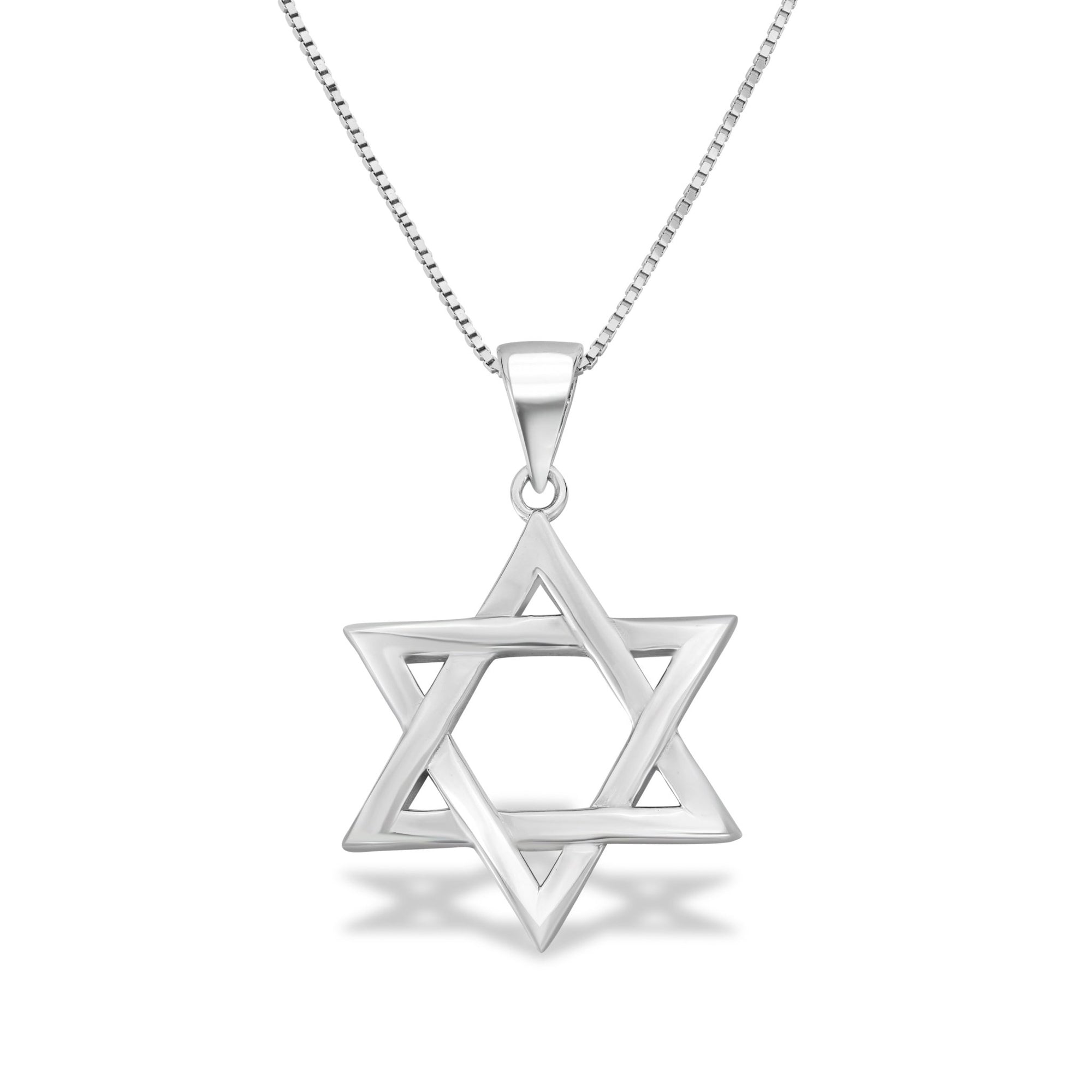


Short answer: The Star of David (Hebrew: Magen David, "Shield of David") is a six-pointed star formed by two interlocking equilateral triangles, and today it is the most widely recognized emblem of Judaism and the Jewish people. Worn as jewelry, it carries three layers of meaning that resonate: protection (the "shield" in its name), the bond between God and the Jewish people (the two triangles held in balance), and pride in Jewish identity and survival (its modern history). In Kabbalah, its points are read as the six directions, signifying that God's presence fills all of creation (Chabad.org).
The three meanings people actually wear it for
The first meaning lives in the name. Magen David translates as "Shield of David," which is why protection is so often read into the star. There is no historical evidence that King David carried a shield of this shape; that link is folklore rather than record, and it is worth telling as tradition, not fact (Jewish Virtual Library).
The second meaning is unity. The two interlocking triangles are read as pairs held in balance: heaven and earth, spiritual and physical, the good deeds we send upward and the blessing that flows back down, and above all the reciprocal bond between the Jewish people and God (Chabad.org).
The third is spiritual presence. In Kabbalah the six points are understood as the six directions (north, south, east, west, up, and down), with the center representing God at the heart of everything, so the whole shape signifies that God's presence fills all of creation. Each point is also associated with one of the six emotional sefirot, the divine attributes of Kabbalistic thought (Chabad.org).
Where the symbol comes from
The hexagram itself is ancient, and it was not originally Jewish. From the Bronze Age onward it appears as a decorative or protective sign across many cultures, from Mesopotamia to India, and it even turns up on some medieval churches. What makes it Jewish is adoption over time, not a biblical command (Jewish Virtual Library). The oldest complete Hebrew Bible manuscript, the Leningrad Codex of 1008, includes a hexagram in its decoration, and the star surfaces here and there on early lamps, seals, and tombstones as ornament rather than as a symbol with fixed religious meaning (Wikipedia).
The phrase Magen David shows up in a 12th-century Karaite document, one of the earliest Jewish sources to name the symbol that way (Wikipedia). Its career as a communal emblem is easier to trace: in 1354 King Charles IV granted the Jews of Prague the right to a red flag bearing the hexagram, the first documented official use of it as a Jewish emblem, and from the 1600s onward the Prague community's use spread until the six-pointed star became the seal of many Jewish communities (Wikipedia). The one caveat worth stating plainly: the star has no biblical or Talmudic authority, and its role as the defining Jewish symbol is relatively recent, gaining real prominence only in the modern era (Jewish Virtual Library; Commentary, Gershom Scholem).
How it became the emblem of a people
The modern emotional weight comes from history moving fast. In 1897 the First Zionist Congress placed the six-pointed star at the center of its flag, chosen partly because it was already widely used yet carried no narrowly religious connotation, which gave the Magen David international prominence as a sign of Jewish peoplehood and revival (Wikipedia). Then came its darkest chapter: on September 1, 1941, Reinhard Heydrich decreed that all Jews over the age of six across the Reich and occupied territories wear a yellow Star of David in public, weaponizing the symbol to stigmatize, segregate, and track Jews ahead of deportation (US Holocaust Memorial Museum). In 1948 a blue Star of David on a white field became the national flag of the State of Israel (Wikipedia). That arc, from communal seal to badge of persecution to reclaimed symbol of survival and a national flag, is exactly why the star now reads as pride, resilience, and belonging rather than as a narrow religious icon.
Choosing a Star of David to wear
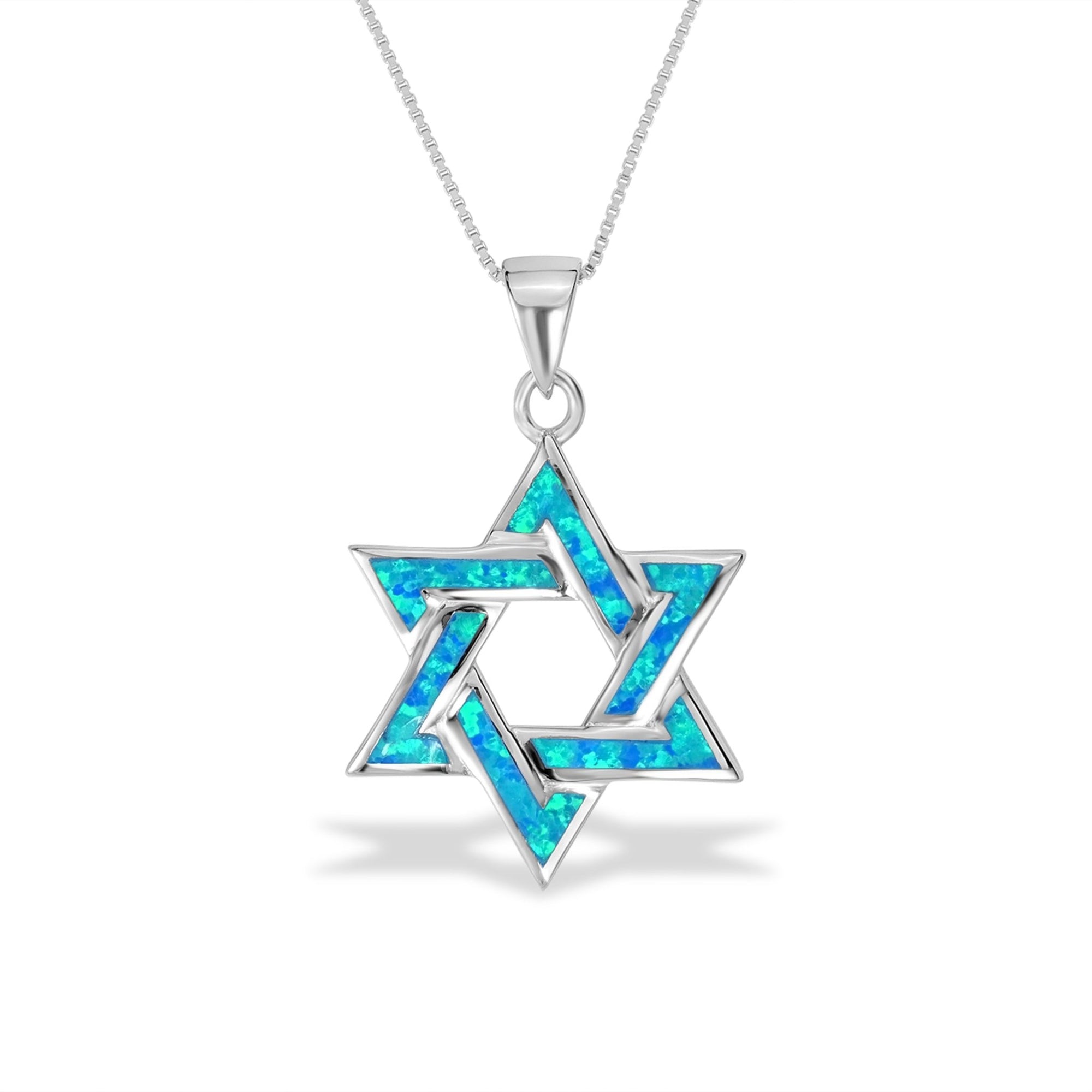
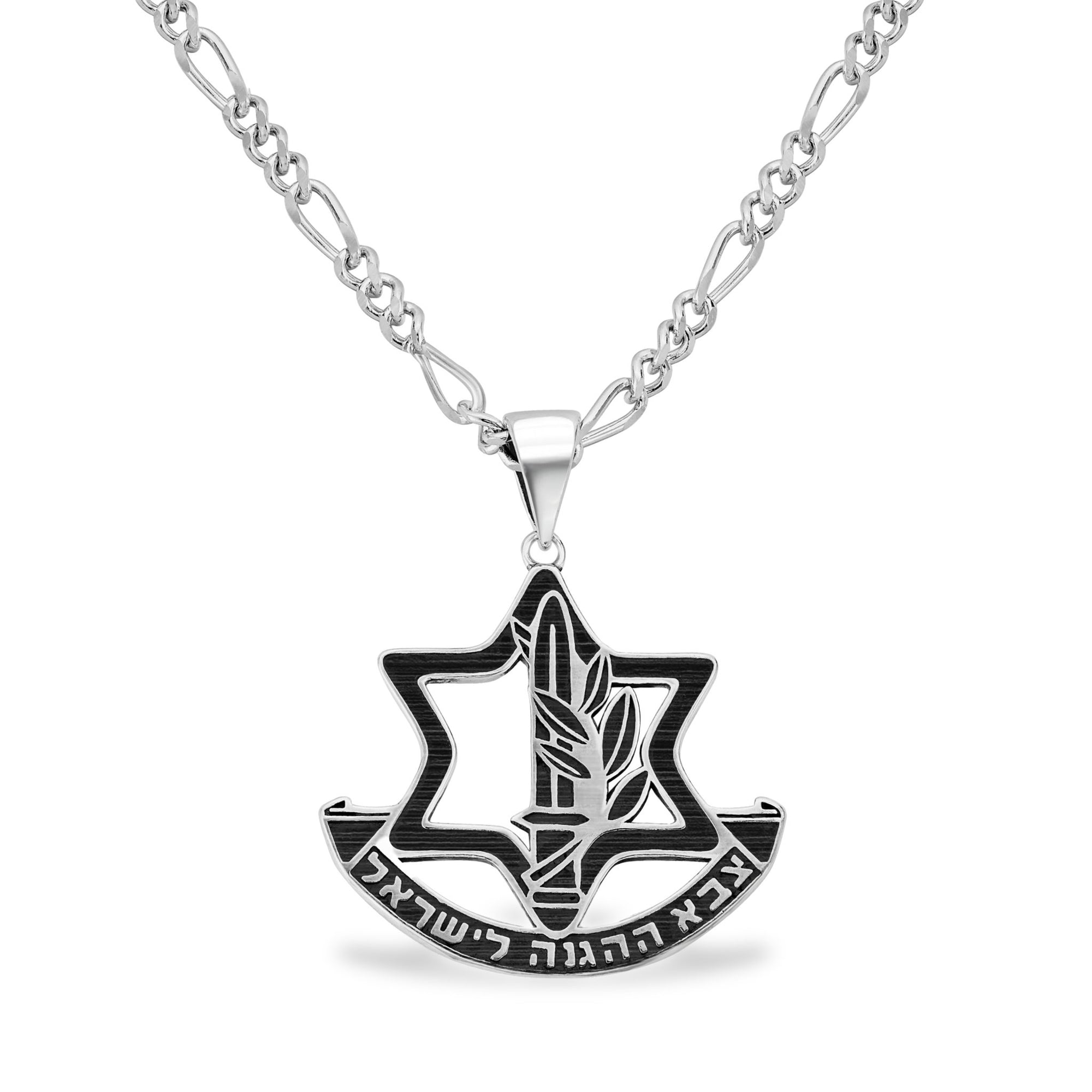
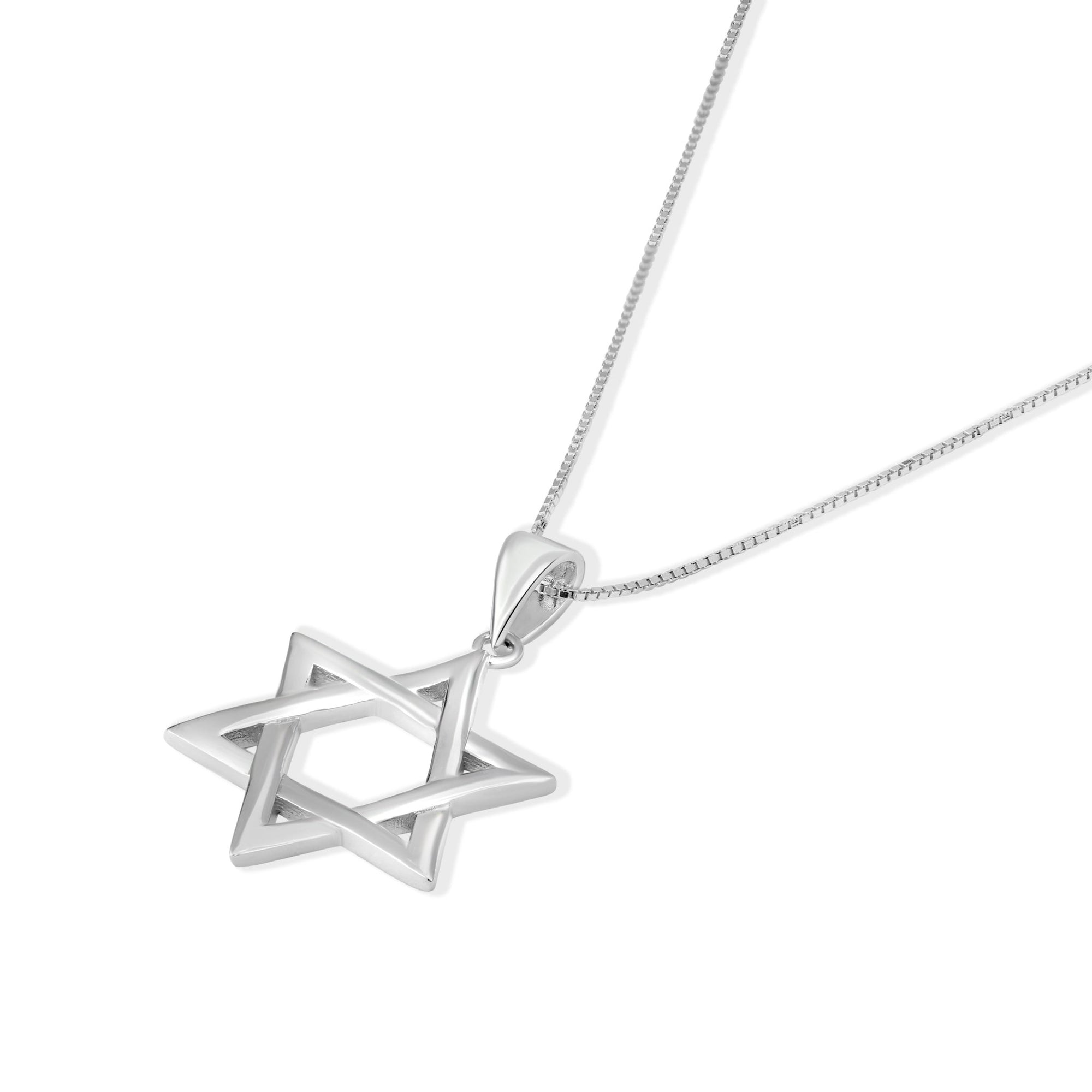
Because the meaning is layered, the piece you choose can lean toward whichever layer speaks to you. A clean, classic outline reads as identity and pride. An opal or gemstone center draws the eye to that central point Kabbalah associates with God's presence. A heavier, shield-like design leans into the "Magen" protection reading. Whichever you choose, you are wearing a statement of belonging with real history behind it. You can explore the range in our Star of David jewelry collection, from delicate everyday necklaces to bolder rings.
Wear your story. A Star of David is small enough for every day and meaningful enough for a lifetime, which makes it one of the most personal ways to carry Jewish identity with you.
Related
- The Star of David: Meaning and History
- Top Jewish Symbols and Their Meaning
- The Hamsa: Meaning and Symbolism
Last updated July 2026.