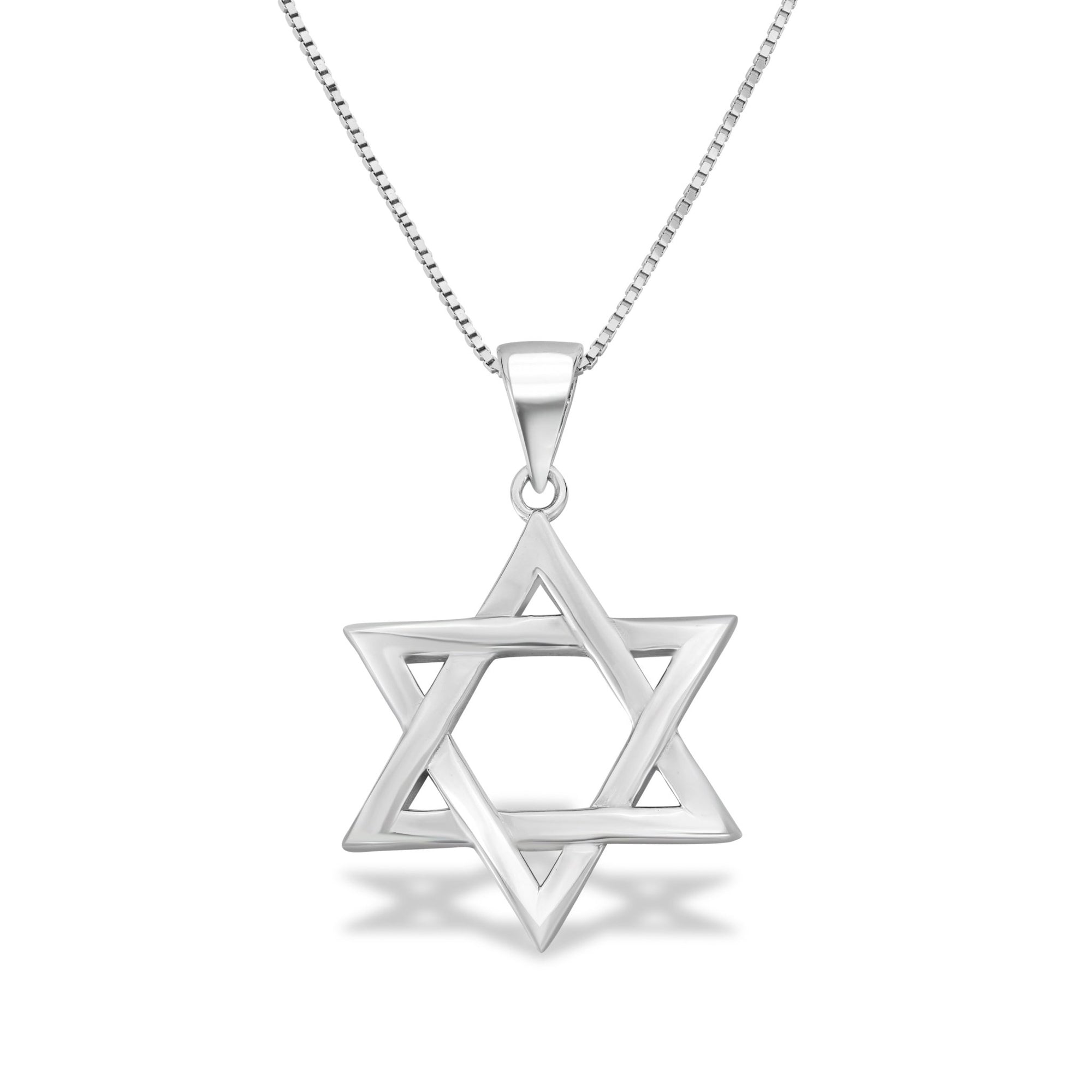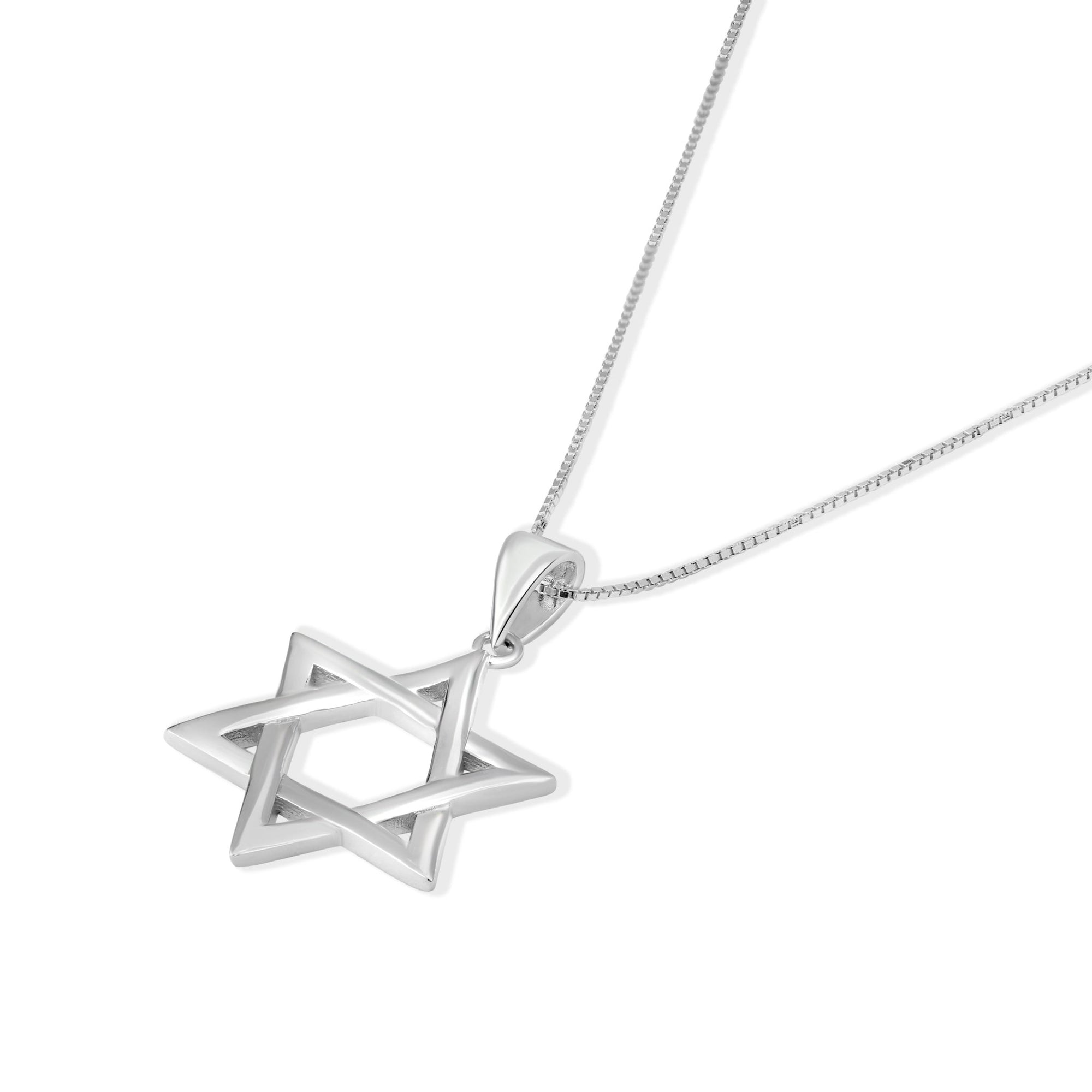


Short answer: The Star of David (Hebrew: Magen David, "Shield of David") is a six-pointed star formed by two overlapping equilateral triangles, and in jewelry it carries layered meanings rather than one fixed doctrine. The most common readings are that the six points signal God's presence in all six directions (north, south, east, west, up, and down), and that the two interlocking triangles express the bond between heaven and earth. Judaism has no single official definition of the symbol, so a Star of David pendant is worn above all as an emblem of Jewish identity, faith, heritage, and pride.
Nine meanings woven into one star
Because there is no single authoritative doctrine behind the Magen David, generations of teachers have layered respected interpretations onto it. Here are nine of the most enduring, presented as traditional readings rather than commandments (Aish, My Jewish Learning).
- Shield of David. The Hebrew name Magen David literally means "Shield of David," which is why many wearers read the star as a sign of divine protection.
- God in all six directions. The most widely repeated reading holds that the six points mark God's rule and presence everywhere: north, south, east, west, up, and down.
- Heaven and earth united. One triangle points upward for human deeds rising toward heaven; the other points downward for divine blessing returning to earth.
- Israel and God. The two interlocking triangles are often read as the bond between the people of Israel and their Creator.
- Spiritual and physical. The same overlap is taken as the balance between the spiritual and the material worlds.
- The six days of creation. A Kabbalistic reading ties the six outer points to the six days of creation, with the center representing Shabbat.
- Six attributes in union. Another mystical interpretation connects the points to six divine attributes (sefirot) joined with a seventh.
- Jewish identity and belonging. Since the Middle Ages the star has served as a communal badge, an outward sign of belonging to the Jewish people.
- Continuity and endurance. Carried from a mark of persecution to the center of Israel's flag, the star has become an emblem of Jewish survival and pride.
Where the symbol actually comes from
Here is a fact that surprises many people: the Star of David is never mentioned in the Bible (Tanakh) or the Talmud, and there is no archaeological evidence for the popular legend that King David's soldiers carried six-pointed shields (Aish). The hexagram itself is an ancient geometric shape that appears across many cultures long before it was distinctly Jewish. One of the earliest known objects bearing a six-pointed star is an excavated seal dated to roughly the 6th century BCE, and the shape later shows up as simple decoration: carved on a Galilee synagogue and an Italian tombstone in the 3rd and 4th centuries CE, and ornamenting the Leningrad Codex, the oldest complete Hebrew Bible manuscript, in 1008 CE (Judaica Webstore). In each of these early cases it was a decorative motif, not a fixed doctrine.
How it became the Jewish symbol: a short history
The star's journey from decoration to identity was gradual. In 1354 the Jewish community of Prague was granted the right to display its own flag and chose a large six-pointed star for the center, widely cited as the first clearly Jewish communal adoption of the symbol as a badge of belonging (Judaica Webstore, Aish). By the 17th century the star had spread into synagogue design and community seals across Europe, the Middle East, and North Africa, becoming a general sign of Judaism (My Jewish Learning). In 1897 it was adopted as the emblem of the First Zionist Congress, raising its profile as an international symbol of the Jewish people. During the Holocaust, Nazi Germany forced Jews to wear a yellow Star of David to mark them for persecution, and the same symbol later became an emblem of Jewish endurance. In 1948 the blue Star of David was placed at the center of the flag of the State of Israel, where it also anchors the emblem of Magen David Adom, Israel's national emergency medical service (Judaica Webstore).
Wearing the Magen David today
Understanding all of this changes what a Star of David necklace means resting on the collarbone. It is not a single mystical formula but a wearable statement: Jewish identity, faith, heritage, the "shield" of protection, and connection to Israel and the Jewish people. That is exactly why the piece has stayed meaningful for centuries while its interpretations kept multiplying.
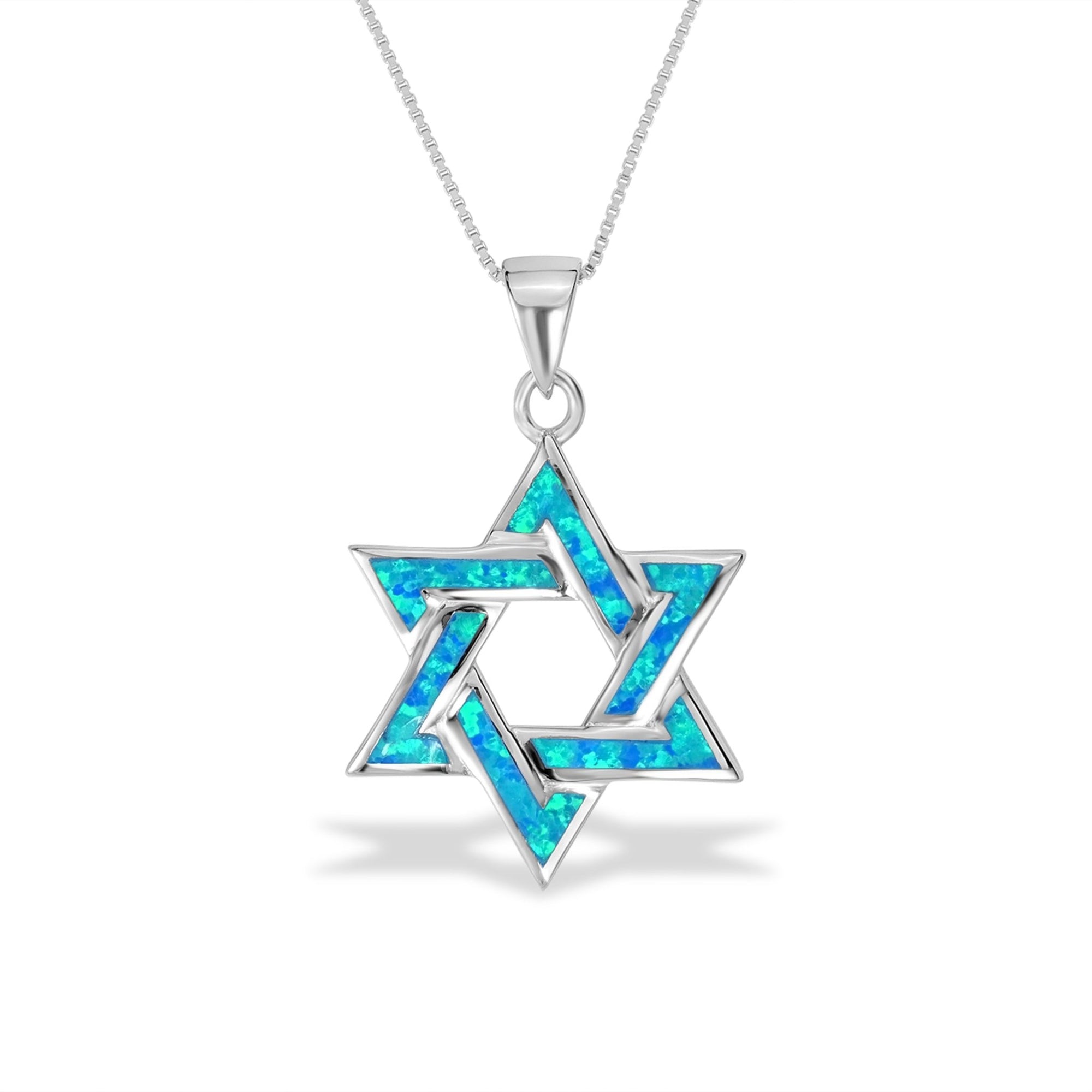
If you want to wear that story, our Star of David jewelry collection gathers pendants, rings, and necklaces in classic and opal-set designs. A piece like the Shalom Star of David necklace pairs the six-pointed star with the Hebrew word for peace, folding two of the meanings above into one everyday piece. For a wider look at Jewish emblems, our Jewish symbols jewelry collection sets the Magen David alongside the hamsa and other classics.
Related
Last updated July 2026.