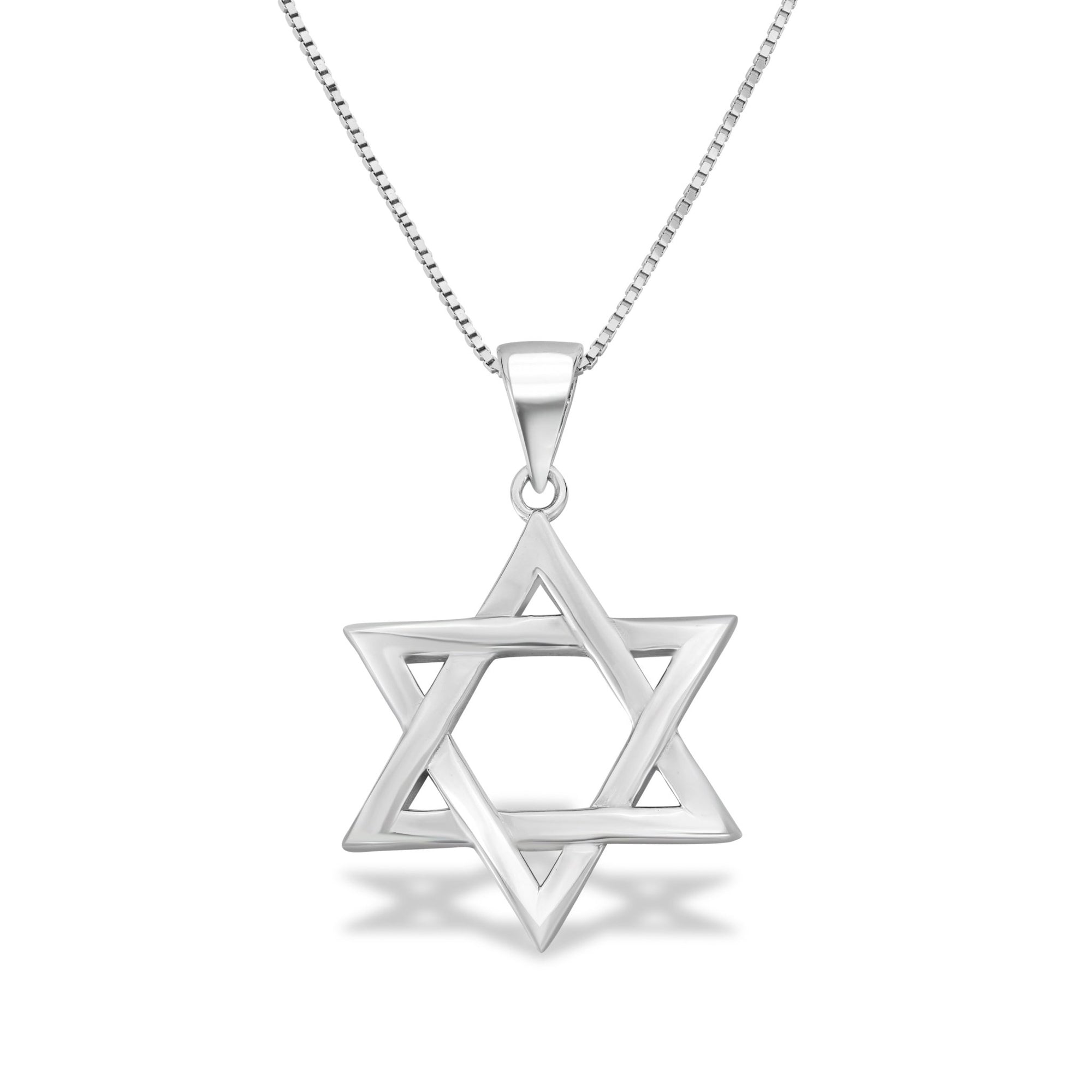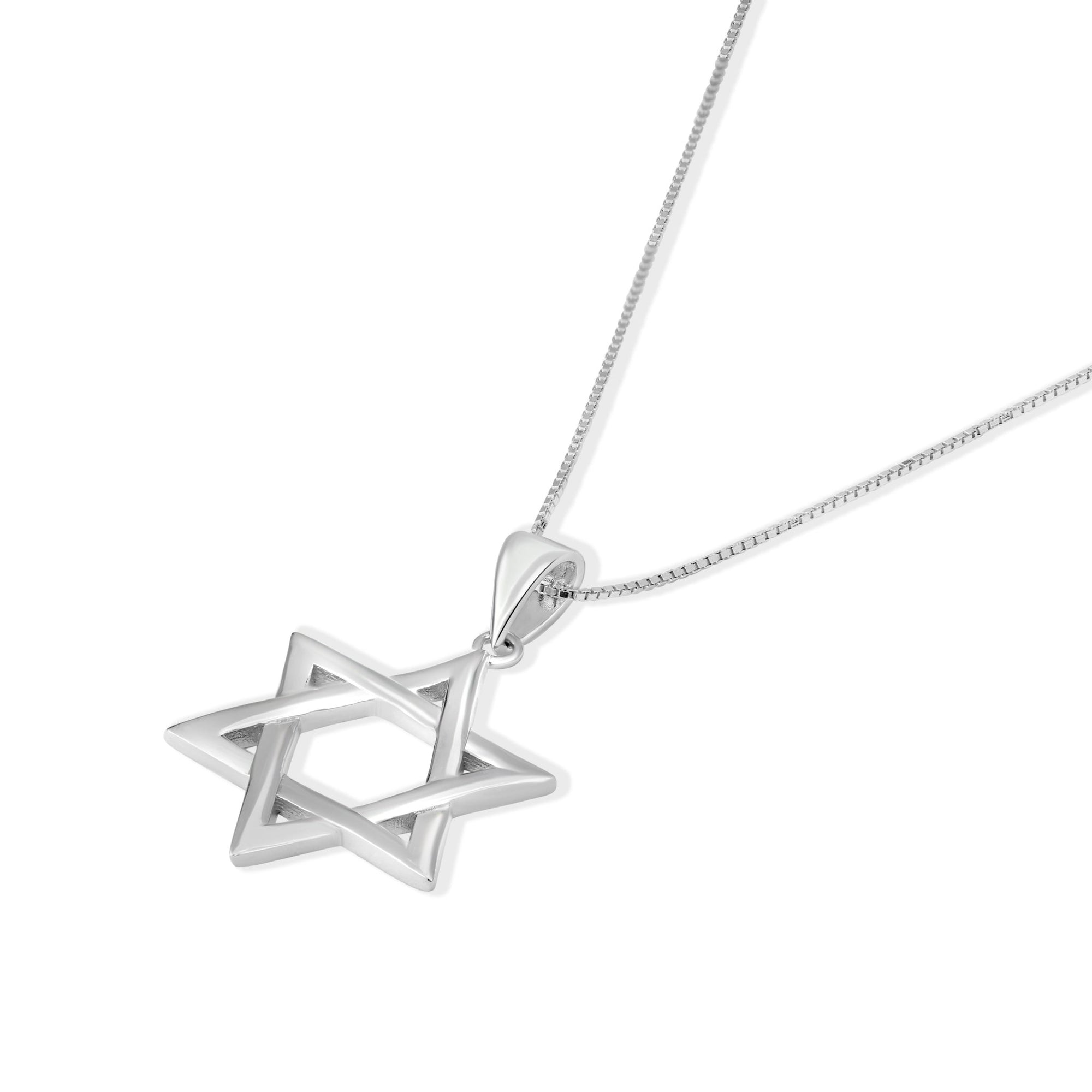


Short answer: The Star of David (in Hebrew, the Magen David, or "Shield of David") is a six-pointed star formed by two interlocking triangles, and it is the most recognized symbol of Jewish identity worn in jewelry today. No single meaning is universally accepted, but six interpretations recur across Jewish tradition: divine protection, God's presence in all directions, the union of heaven and earth, Kabbalistic depth tied to the sefirot, the twelve tribes of Israel (or creation, revelation, and redemption), and above all Jewish peoplehood, pride, and resilience. Accurate jewelry copy presents these as meaningful traditions rather than one fixed ancient decree, since the symbol became a distinctly Jewish emblem only in 17th-century Prague and went global with modern Zionism (Wikipedia).
The six meanings woven into a Star of David
Because the hexagram is not mentioned in the Hebrew Bible or the Talmud, scholars treat its meanings as interpretive traditions layered on over time rather than a single fixed doctrine (Wikipedia). Six readings recur, and each one shows up in how contemporary designers and wearers talk about the piece:
- Divine protection. The Hebrew name Magen David, "Shield of David," points to God as the protector behind King David's victories (Aish).
- God's presence in every direction. The six points are read as God's rule in all six directions, north, south, east, west, up, and down, with the central hexagon as the spiritual core.
- The union of opposites. The upward and downward triangles symbolize heaven and earth, spirit and matter, humanity reaching toward God while God's blessing flows down, a reciprocal relationship.
- Kabbalistic depth. The Zohar associates the points with the sefirot, the divine attributes, and mystics read the two triangles as the dualities within a person, good and evil, physical and spiritual (My Jewish Learning).
- Tribes and triads. Some count the star's twelve sides as the twelve tribes of Israel, and philosopher Franz Rosenzweig mapped the two triangles onto creation, revelation, and redemption, and onto God, humanity, and the world.
- Jewish identity, pride, and resilience. Through the Zionist flag, the flag of Israel, and the memory of the Holocaust badge, the star became the universal shorthand for Jewish peoplehood, which is much of why people wear it today.
Where the Magen David actually comes from
The hexagram as a shape is ancient and cross-cultural: it appears as a decorative element in the Leningrad Codex around 1008 CE and turns up in Islamic and Christian art long before it meant anything specifically Jewish (Wikipedia). Its role as a distinctly Jewish emblem is more recent, and the real history is arguably more moving than the vague "ancient symbol" framing.
In 1354, Holy Roman Emperor Charles IV granted the Jewish community of Prague the right to bear a red flag bearing the six-pointed star (Aish). By the 17th century, Prague's Jewish community became the first to adopt the Star of David as its official symbol, and from there it spread as a marker of Jewish faith, including on gravestones (Kafkadesk; Commentary, Gershom Scholem).
The symbol went truly global with modern Zionism. In 1897, the First Zionist Congress adopted the Star of David as the central emblem of the Zionist flag, in blue and white drawn from the tallit, the prayer shawl (My Jewish Learning). During the Holocaust, from 1939 to 1945, Nazi Germany forced Jews to wear a yellow Star of David badge, a history that gives the symbol added weight as an emblem of resilience and remembrance when it is worn by choice today (Wikipedia). In 1948, the State of Israel placed the Star of David at the center of its national flag, and in 2006 Magen David Adom, Israel's national emergency medical service, was admitted to the International Red Cross and Red Crescent Movement, its red star recognized alongside the cross and crescent (Wikipedia).
Choosing a Star of David piece that carries the meaning
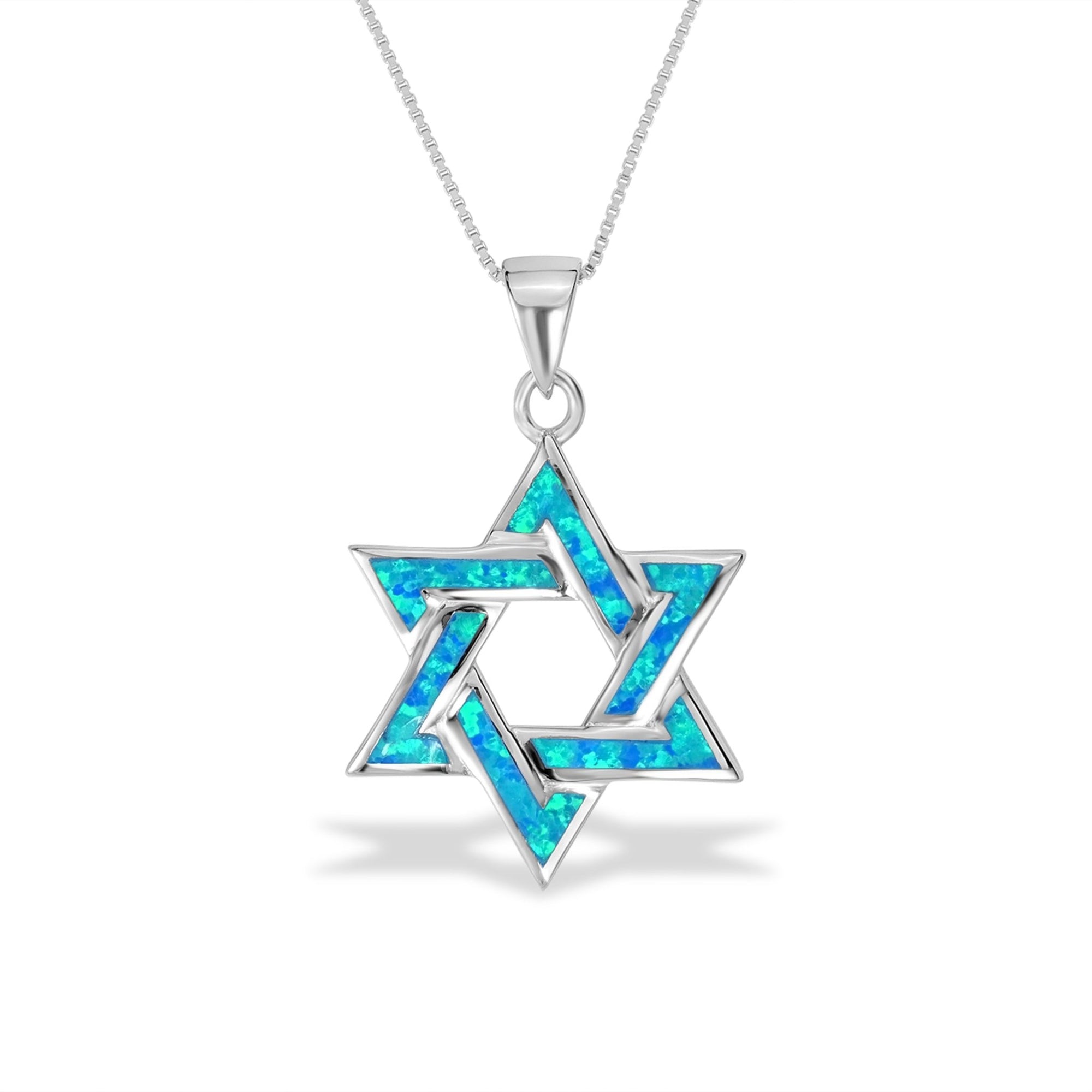
When you wear a Magen David, you carry all of these layers at once: the shield, the six directions, heaven meeting earth, the mystical depth of the sefirot, and the pride of belonging to a people. Since none of the interpretations is a single ancient decree, the meaning you lean into is genuinely yours to choose. A classic openwork pendant reads as timeless peoplehood, a gemstone version leans into light and beauty, and a ring keeps the symbol close in a quieter way.
Our Star of David jewelry collection gathers pendants, rings, and necklaces made in Israel, so the piece and its story share the same home. A design like the Shalom Star of David necklace pairs the star with the Hebrew word for peace, holding two ideas in a single piece.
Related
- Star of David meaning
- Star of David jewelry: designing with deep symbolism
- Top Jewish symbols and their meaning
Last updated July 2026.