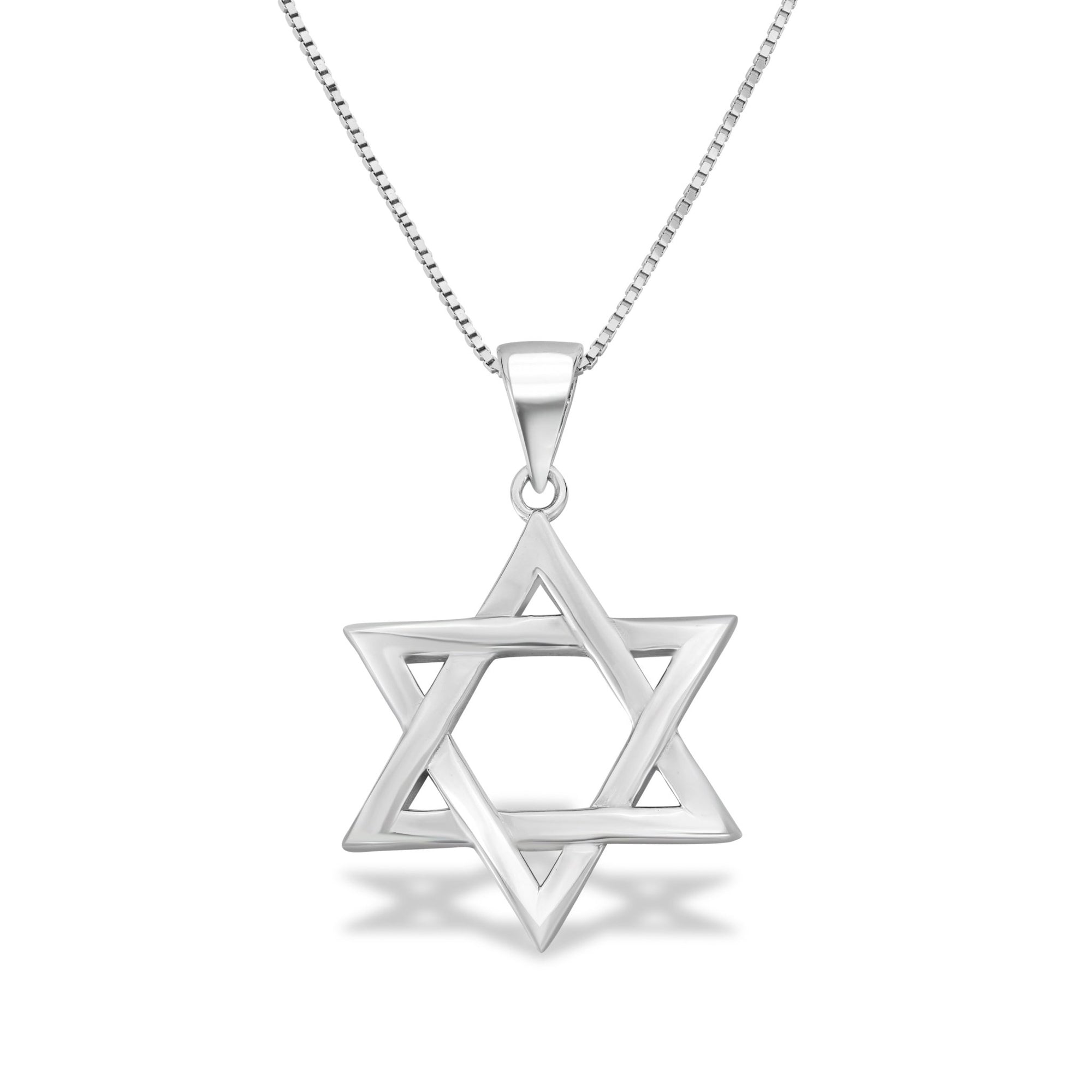


Short answer: The Star of David (in Hebrew Magen David, "Shield of David") is a six-pointed star formed by two overlapping equilateral triangles, and it is today the most widely recognized emblem of Jewish identity, sitting at the center of Israel's flag. In modern jewelry it works as a wearable statement of faith, heritage, and pride, crafted in gold, silver, diamonds, and enamel across styles that run from minimalist everyday pendants to bold sculptural pieces. Demand surged after the October 7, 2023 attacks, with sales in some stores rising by more than 400 percent as Jews and their supporters wore the symbol as a visible show of solidarity (Jewish News).
What the Star of David means
The Hebrew name Magen David translates literally as "Shield of David," and traditionally it referred to God as the protector of King David rather than to the geometric shape itself (Aish). The shape is a hexagram: two equilateral triangles overlaid to form a single six-pointed star.
Several meanings have been layered onto the symbol over the centuries, some of them rooted in Kabbalah and the Zohar. It is commonly read as a sign of divine protection, of God's rule over the universe in all six directions, and, in a popular folk interpretation, of the union of heaven and earth through its upward and downward triangles, along with the unity of the Jewish people (My Jewish Learning). These are meaningful and widely embraced interpretations that people have attached to the star over time, rather than a single documented origin. That layered, chosen quality is part of why the emblem feels so personal to those who wear it.
A surprisingly modern emblem
One honest surprise: the Star of David is a relatively modern Jewish symbol. It is never mentioned in the Hebrew Bible or the Talmud, and its earliest appearances in Jewish settings, such as a frieze in the ancient Capernaum synagogue and a tombstone at Tarentum in southern Italy around the third century CE, were decorative motifs shared with many cultures rather than a distinctly Jewish marker (My Jewish Learning, Judaica Webstore).
The symbol became the Jewish people's own gradually. Around 1354 the Holy Roman Emperor Charles IV granted the Jews of Prague the right to carry a flag bearing the six-pointed star, one of the first prominent communal uses (Aish). By the seventeenth century it served as the official seal of many European Jewish communities, including the Jewish quarter of Vienna (My Jewish Learning). The Zionist movement adopted it as its emblem at the First Zionist Congress in 1897, giving it broad international recognition as a sign of national revival. During the Holocaust the Nazi regime forced Jews to wear a yellow Star of David to mark them for persecution, and that same symbol later became an emblem of survival, remembrance, and pride (Aish). In 1948 the new State of Israel placed the star at the center of its flag and named its emergency medical service Magen David Adom, the Red Star of David (Judaica Webstore). That story of chosen meaning and resilience is arguably more compelling than any claim of ancient, unbroken use.
From symbol to statement: wearing the star today
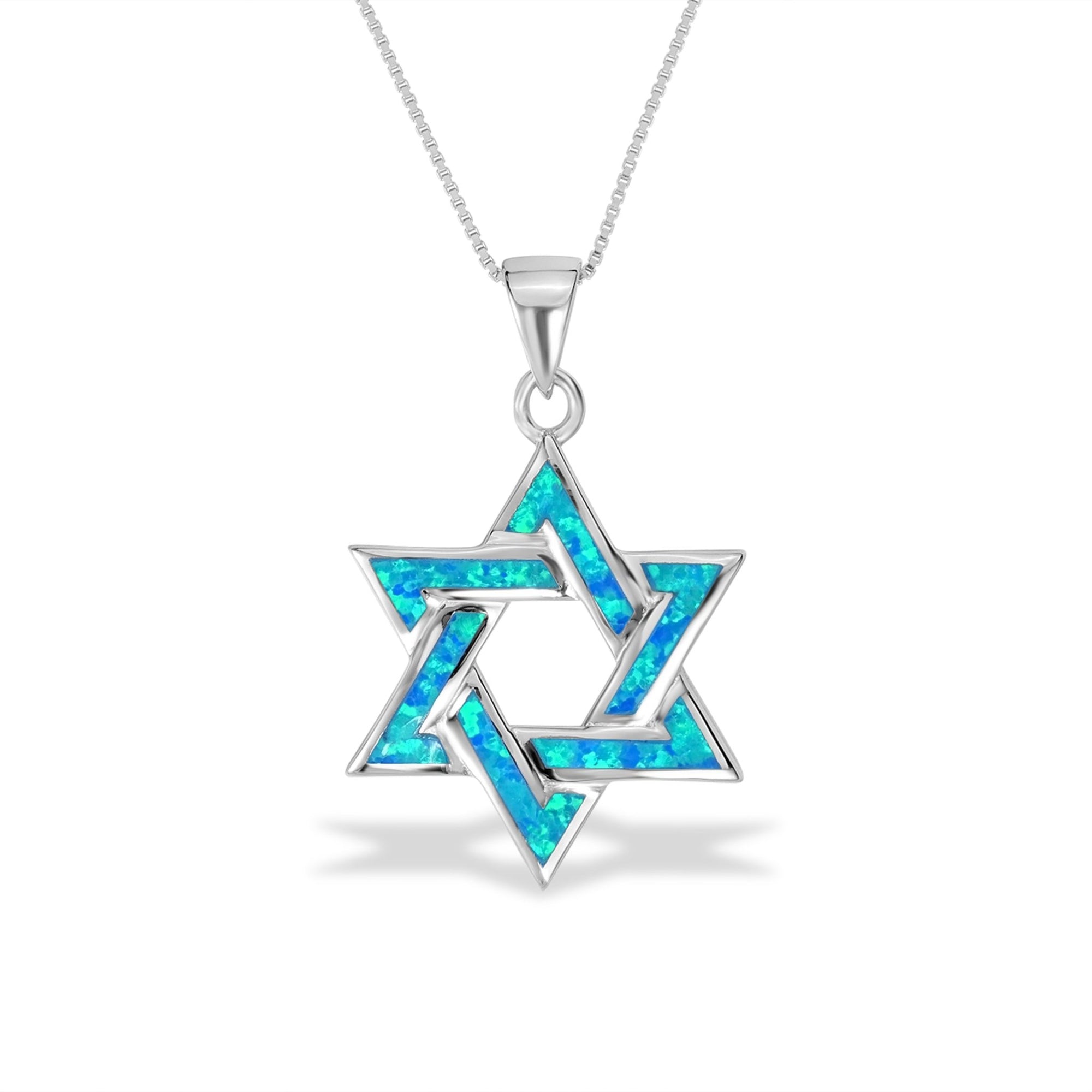
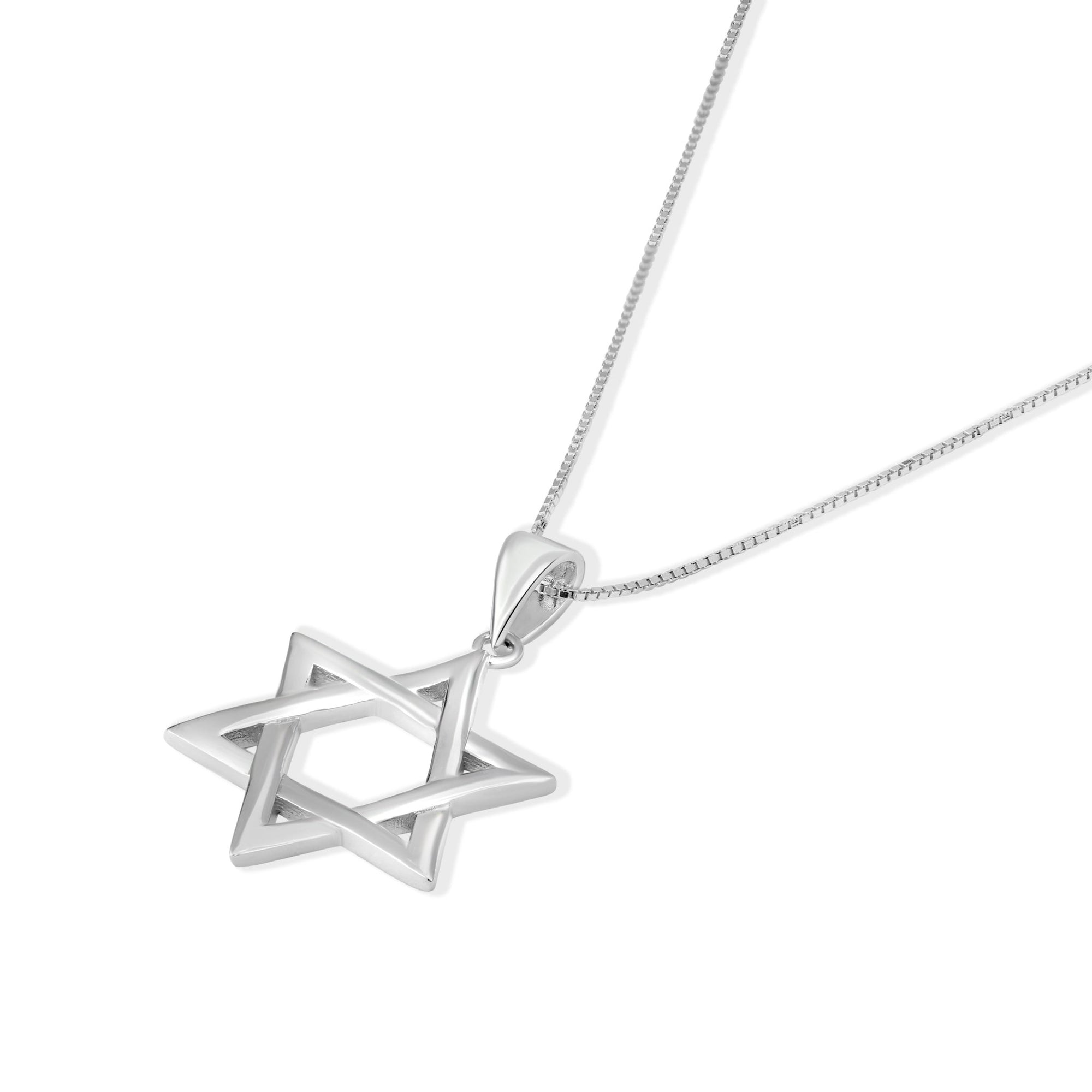
The Star of David is the anchor motif of contemporary Jewish jewelry. Artists and brands in the United States and Israel render it in gold, silver, diamonds, and enamel, in styles that span delicate everyday layering pendants, diamond pieces that blend tradition with trend, and bold sculptural designs for men and women. People wear it as an everyday expression of identity, as a gift, and as a statement piece.
The defining recent trend is the surge that followed October 7, 2023. Wearing the star openly became an act of visible pride and solidarity: demand rose by more than 400 percent in several London stores, one New York manufacturer who had sold roughly ten pendants a year sold 150 in the months afterward, and men who had never worn jewelry began wearing the star (Jewish News, The Forward). Several designers even pledged a share of their sales to Israel-related causes, so the pieces carried both meaning and impact.
If you want to wear that heritage, our Star of David jewelry collection gathers the full range, from minimalist pendants to bolder statement pieces in gold, silver, and opal. Each one lets you carry a symbol that Jews chose and elevated across the centuries, close to you every day.
Related
- The meaning of the Star of David
- Star of David jewelry: designing with deep symbolism
- Top Jewish symbols and their meaning
Last updated July 2026.