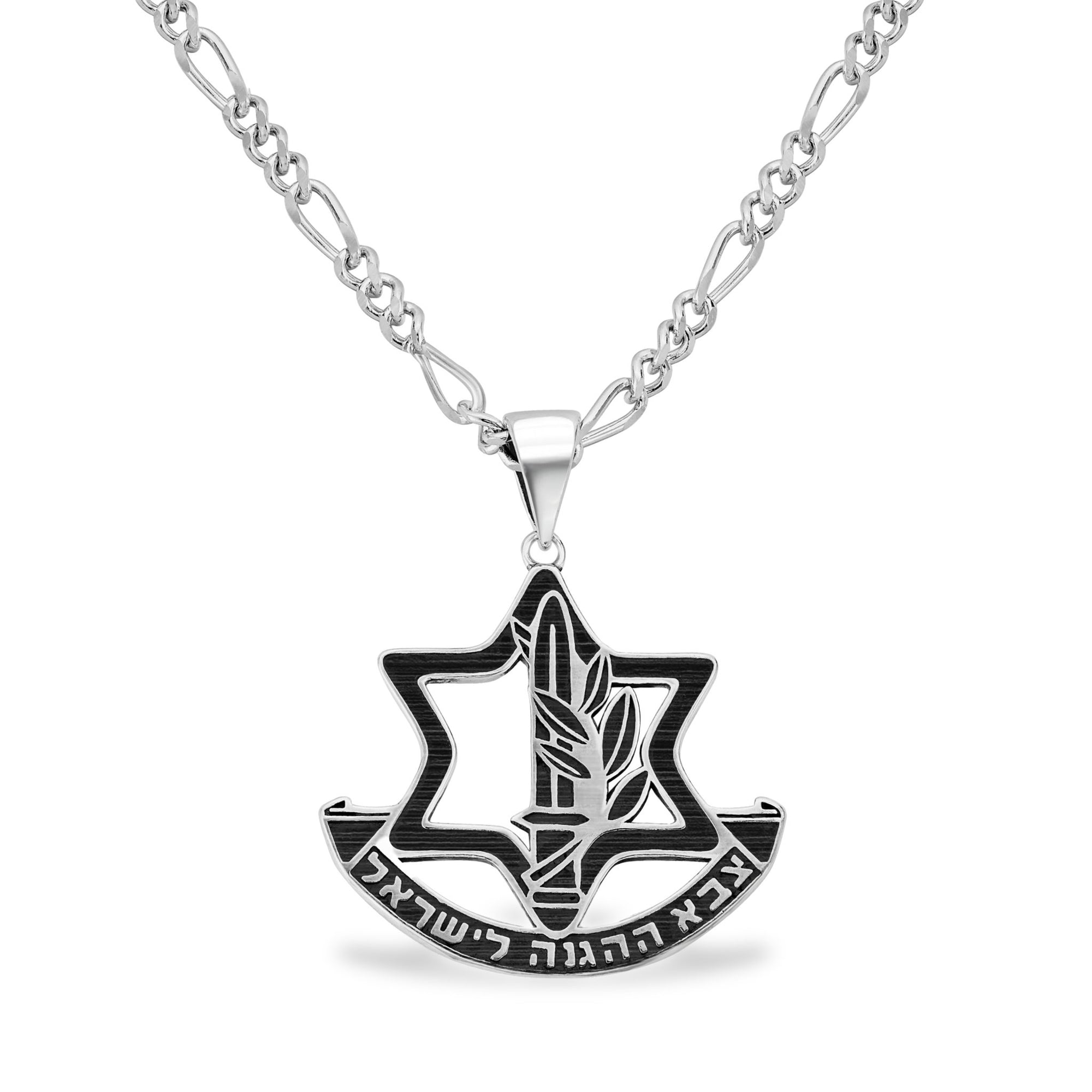


Short answer: Jewish and Israeli symbolic jewelry draws on a real, well-documented set of motifs: the Star of David, Chai, Hamsa, Tree of Life, Mezuzah, Menorah, and Pomegranate. Each has its own distinct and verifiable history rather than one single "ancient" tradition. Some, like the Menorah and Star of David, trace directly to the Bible and the modern State of Israel's official symbols. Others, like the Hamsa and Chai as a worn amulet, entered Jewish life later through folk custom and diaspora tradition, and are shared with neighboring Middle Eastern cultures. All seven are genuine, still-worn staples of Jewish jewelry today.
Where these symbols actually come from
It is tempting to treat every piece of Jewish symbolic jewelry as equally ancient, but the historical record is more textured than that, and more interesting for it. The Menorah has the clearest unbroken thread: the seven-branched lampstand described in the Torah became the emblem Rome carved onto the Arch of Titus after the Temple's destruction, and in 1948 the newly founded State of Israel adopted that same image, modeled on the Arch of Titus depiction, as its official state symbol (Wikipedia, Temple Menorah).
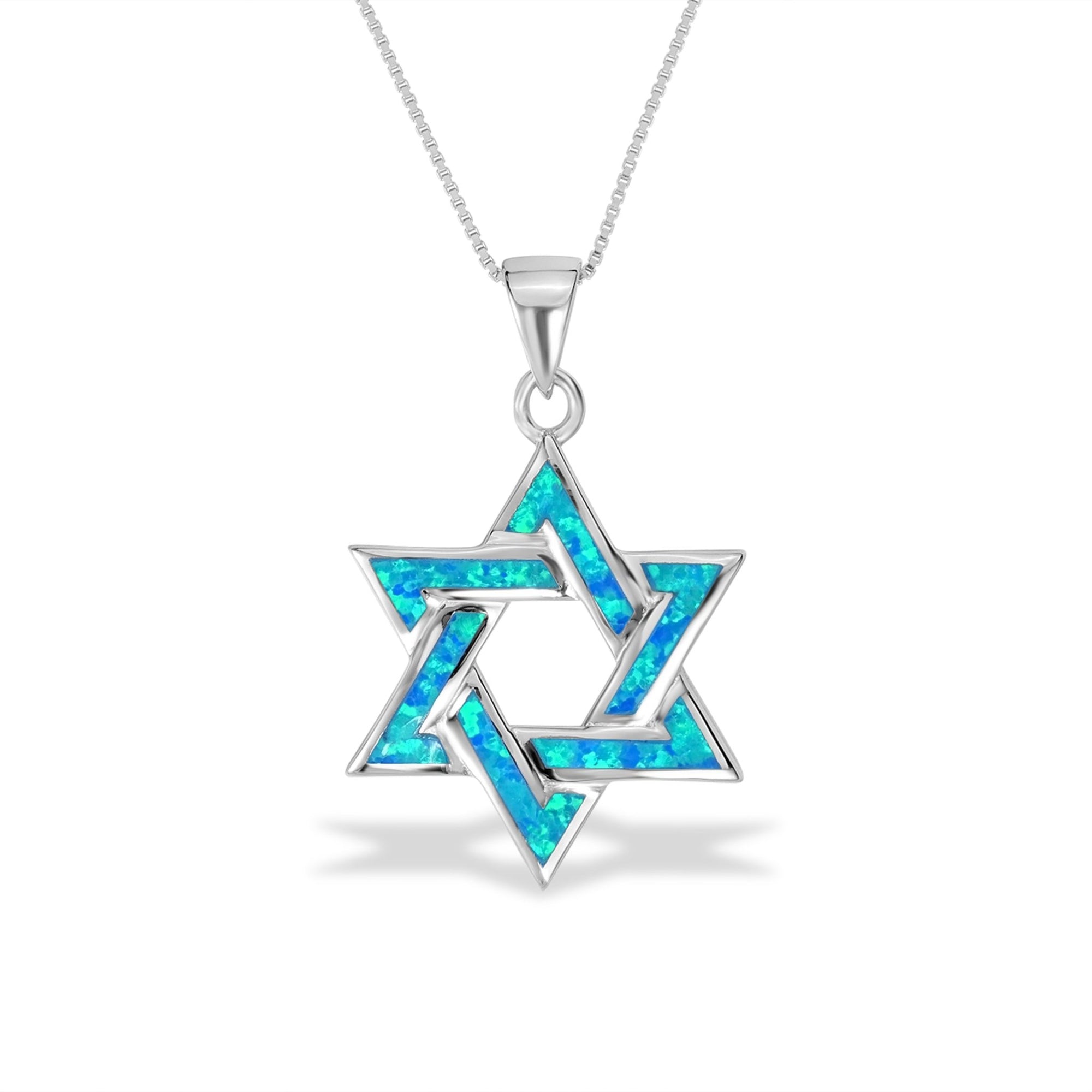
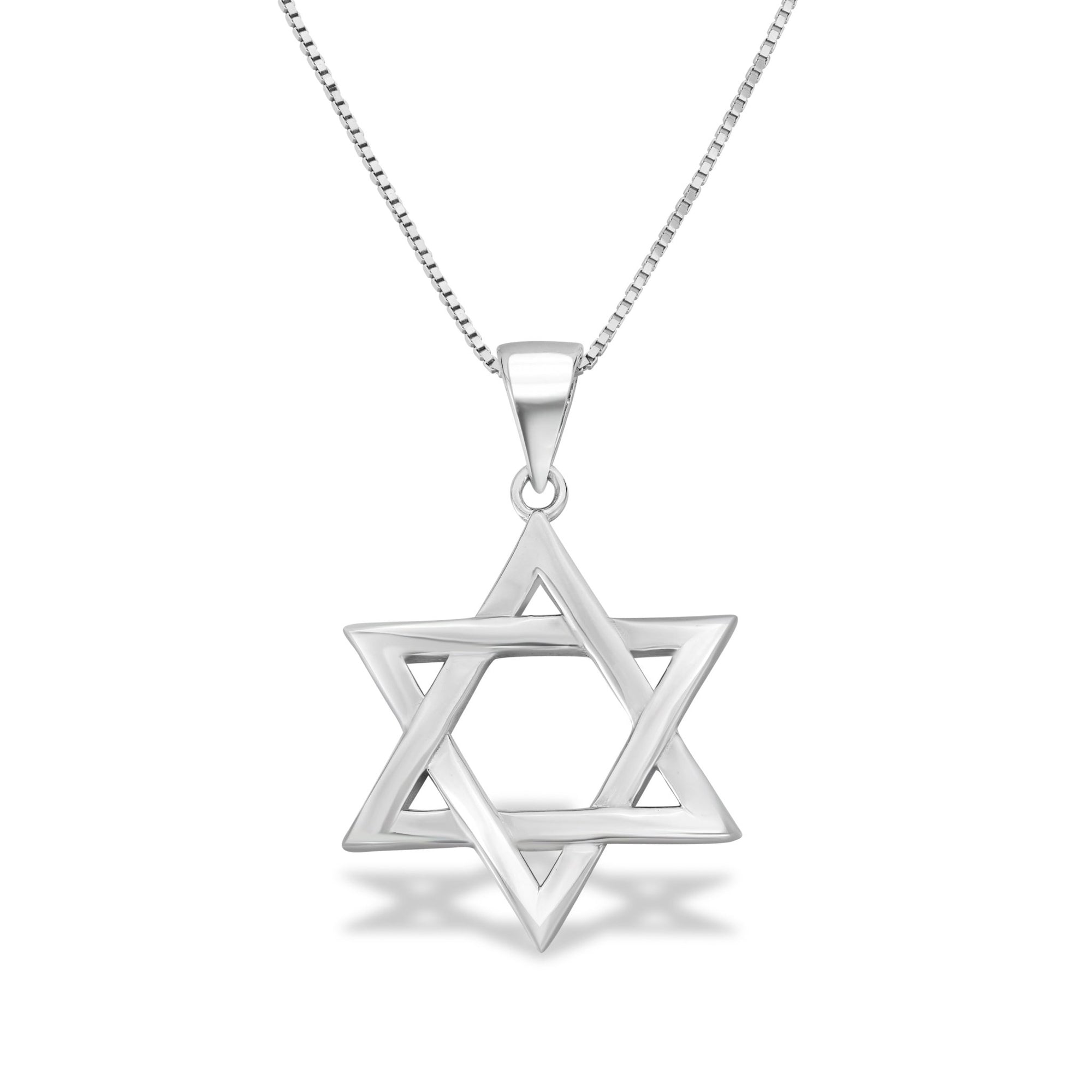
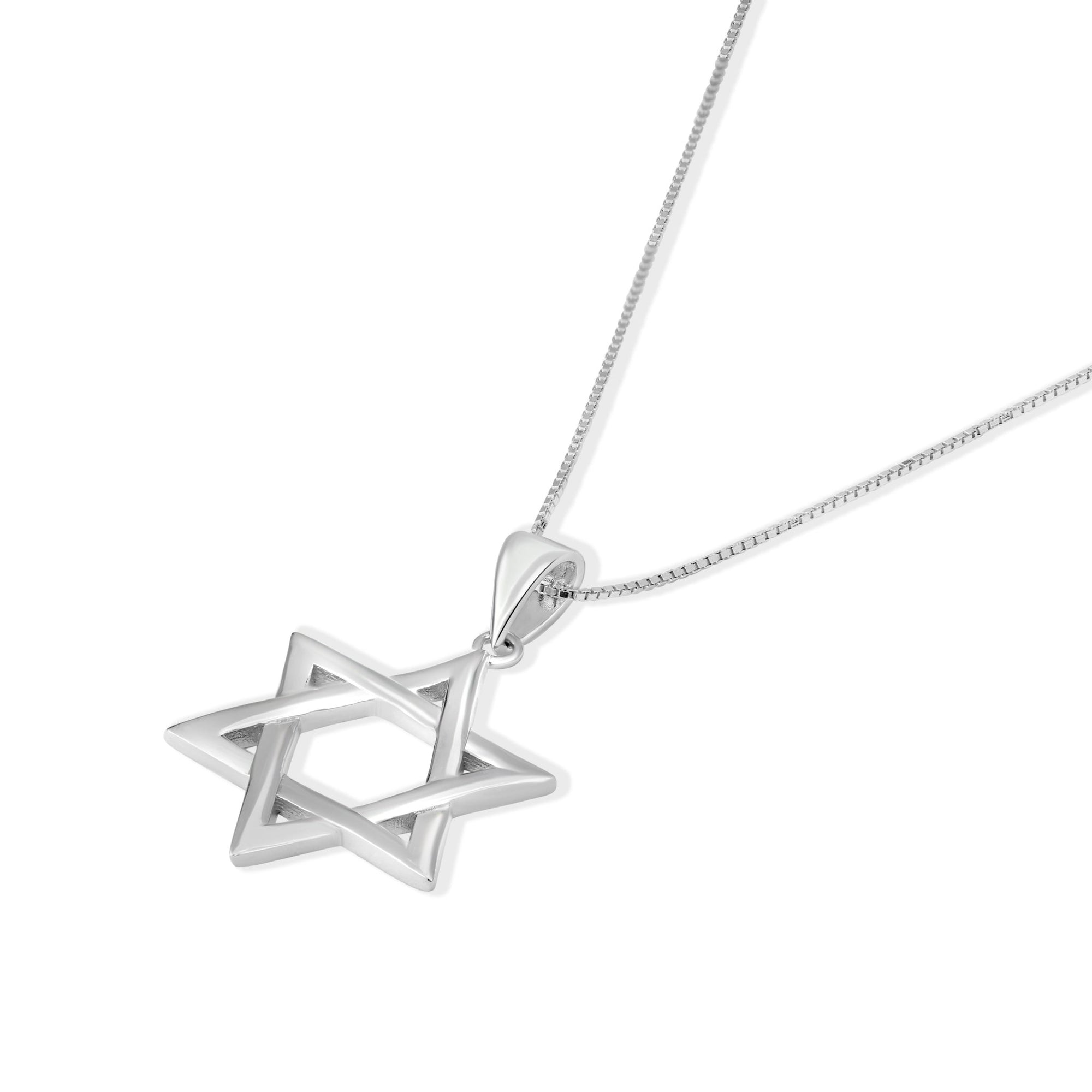
The Star of David's story is more recent than most people assume. Hexagram motifs appear in medieval Kabbalistic texts and Prague's Jewish community formally adopted the symbol by the 17th century, but it was not yet uniquely Jewish. It became THE central emblem of Jewish and Zionist identity only in 1897, when the First Zionist Congress in Basel chose it as its official symbol, a decision later carried onto Israel's flag in 1948 (Wikipedia, Star of David; My Jewish Learning).
The Hamsa's roots go back even further, but not exclusively to Jewish tradition. Open-hand amulet motifs resembling the modern hamsa appear in Israelite tombs from around 800 BCE, part of a broader ancient Near Eastern protective symbolism shared across Mesopotamia, Egypt, and the Levant. Today the same open-hand image is worn across faiths in the region, known also as the Hand of Fatima in Islam and the Hand of Mary among Levantine Christians (Wikipedia, Hamsa). That shared history does not make it less meaningful to Jewish wearers; it reflects a symbol of protection that took root across an entire region and was embraced by Jewish communities as their own.
Chai, the Hebrew word for "living," spelled with the letters Chet and Yod, entered use as a worn amulet in 18th-century Eastern Europe. Because those two letters carry a numerical value of 18 in gematria, the custom of gifting money in multiples of 18, "giving chai," grew out of the symbol. Its emotional weight deepened further in 1945, when Holocaust survivors adopted "Am Yisrael Chai," the people of Israel live, as a rallying cry after liberation (Wikipedia, Chai symbol).
Meaning and gift framing
Each symbol carries its own message, which is part of why they endure as gifts rather than passing trends. The Pomegranate has been linked to abundance and mitzvot since the Talmudic era, when Berakhot 57a taught that even a spiritually empty Jew is as full of merit as a pomegranate is full of seeds; the fruit's imagery also decorated the High Priest's robe and the Temple's pillar capitals (Jewish Virtual Library). The popular claim that a pomegranate contains exactly 613 seeds, matching the 613 mitzvot, is a widely repeated piece of folklore, not a verified fact, and seed counts vary by fruit.
The Mezuzah began as a doorpost case holding handwritten Torah verses, but has become a common jewelry motif in its own right. In recent surveys, a majority of Israeli adults say they view mezuzahs as offering household protection, a meaning that has grown well beyond the object's original educational and religious purpose (Wikipedia, Mezuzah). Worn as a pendant, it carries that same sense of protection with the wearer.
Together, these motifs cover most of what someone might want a piece of jewelry to say: strength and identity (Star of David), life and resilience (Chai), protection (Hamsa, Mezuzah), connection and growth (Tree of Life), heritage and faith (Menorah), and abundance (Pomegranate). That range is exactly why this category works so well as a gift, whether the occasion is a bat mitzvah, a wedding, a birthday, or simply a way to show support for Israel and Jewish identity day to day.
Wearing the symbolism
Because these meanings are documented and specific, choosing a piece is less about picking a trend and more about picking a message that fits the person or the moment. A Star of David pendant reads as identity and pride; a Chai necklace reads as life and hope; a Hamsa leans toward protection and good fortune. Shop Israel's Jewish symbols jewelry collection brings several of these motifs together in one place, including Star of David, Chai, and Hamsa designs, so it is easy to match a piece to the symbol that fits what a gift or a personal piece is meant to say.
Related
- Symbolism behind Israeli jewelry designs you should know
- Jewelry inspired by icons of Israeli culture and symbolism
- 6 unique jewelry designs inspired by Israeli culture and symbols
Last updated July 2026.