

Short answer: Hebrew. As of 2026, Hebrew is Israel's sole official language, spoken by the large majority of its roughly ten million citizens. Arabic, which was co-official for decades, holds a legally defined "special status" following the July 2018 Nation-State Basic Law, and it remains the mother tongue of roughly one-fifth of Israeli citizens. English is not official but functions as the everyday language of business, tourism, and academia, and Russian is widely spoken thanks to the roughly one million Soviet-era immigrants who arrived from 1989 onward.
The timeline: how Israel's languages got settled
- 1881: Eliezer Ben-Yehuda, born in Lithuania in 1858 and now widely credited as the father of Modern Hebrew, immigrates to Ottoman Palestine and begins a deliberate program to revive Hebrew as a spoken language, insisting on Hebrew at home and coining hundreds of new words for modern life, as the Jewish Virtual Library records.
- July 24, 1922: The League of Nations Mandate for Palestine designates English, Arabic, and Hebrew as the three official languages of the territory, formalizing Hebrew's official standing alongside Arabic, according to the Center for Israel Education.
- 1948: With Israel's establishment, Hebrew is already the dominant spoken language of the Jewish community (the Yishuv), and the new state carries forward Hebrew and Arabic as its two official languages, as the reference overview of Israel's languages documents.
- 1989 to the late 1990s: Roughly one million immigrants from the former Soviet Union arrive in Israel, making Russian the third-largest language group after Hebrew and Arabic, with its own newspapers, media, and schools, per Ethnologue.
- July 19, 2018: The Knesset passes the Basic Law: Israel as the Nation-State of the Jewish People by 62 votes to 55, making Hebrew the sole official language and downgrading Arabic from official status to a "special status," while stating that this does not harm the status Arabic held before the law took effect. Both NPR and Al Jazeera reported the vote.
Hebrew: Israel's main language, and a resurrection
Hebrew is the only language on Earth that died as a daily spoken tongue and came back to life. For centuries it survived as the language of prayer and study while Jewish communities spoke Yiddish, Ladino, Arabic, or the local language of wherever exile had taken them. Beginning in the late 1800s, revivalists led by Eliezer Ben-Yehuda rebuilt it into a modern spoken language, coining words for things the Torah never needed, like newspapers and ice cream.
Modern Hebrew is built on Biblical Hebrew and adapted with that new vocabulary. Today it is the native language of millions, the language of Israeli television, tech and street signs, written right to left in its own alphabet. The Hebrew Bible, the Tanakh, remains central to Jewish practice, and many everyday Hebrew expressions still trace back to those texts, which is part of why the language carries so much national identity.
Arabic: a special status defined by law
Arabic was an official language in the land from 1922, under the British Mandate, through 2018. In July 2018 the Knesset passed the Basic Law on the nation-state, which made Hebrew the state's official language and assigned Arabic "a special status," while stating explicitly that the change does not harm the standing Arabic had in practice before the law. Arabic remains on road signs, official documents, currency, and in the daily life of Israel's Arab citizens, roughly a fifth of the population.
English: unofficial, unavoidable
English has no official status, but you can live a full tourist life in Israel without a word of Hebrew. It appears on nearly every road sign alongside Hebrew and Arabic, dominates the tech industry, is a mandatory school subject, and functions as the de facto language of international business, tourism and academia, according to Ethnologue. Israelis famously switch to English the moment they detect an accent, which is either helpful or mildly insulting depending on how hard you have been practicing your Hebrew.
Russian, and how many languages are spoken in Israel
The immigration wave from the former Soviet Union in the 1990s brought hundreds of thousands of Russian speakers, and Russian remains widely spoken, estimated around 15 percent of the population as of 2022, with its own media and store signage in many cities. You will also hear French, Amharic, Spanish, and Yiddish, the last especially in Haredi neighborhoods. Ethnologue catalogues dozens of languages in use across the country. Israel is a country of ingathered exiles, and it sounds like one.
A few Hebrew words worth knowing
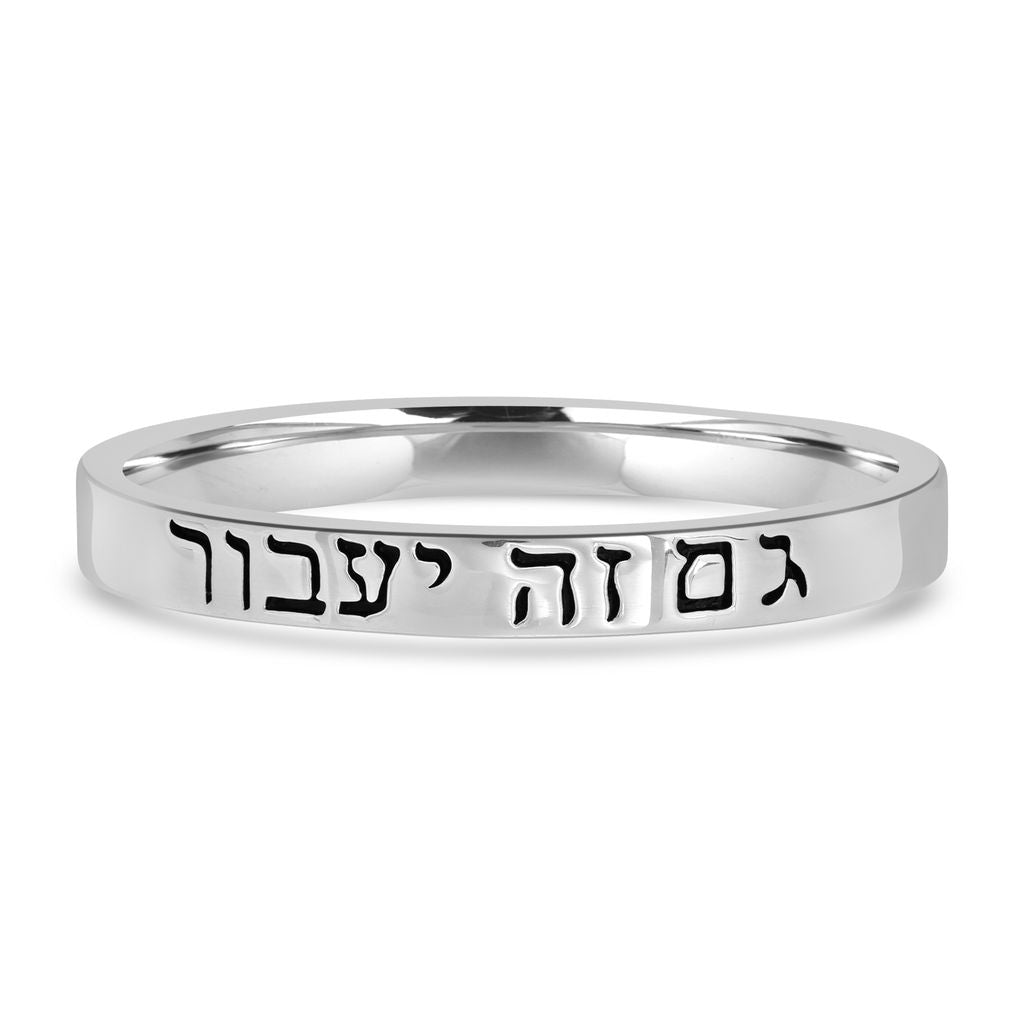
Shalom covers hello, goodbye, and peace, which tells you a lot about the culture's priorities. Toda is thank you. Ahava is love. Am Yisrael Chai, the people of Israel live, has become the anthem phrase of Jewish pride worldwide. If a word ever earned a place on a shirt, it is these: our Shalom T-Shirt and Ahava Hebrew T-Shirt put the language itself front and center, and the Am Yisrael Chai collection has the rest of the vocabulary covered.
The bottom line
Israel's linguistic reality is warm and layered. Hebrew, a revived ancient language and a symbol of national identity, is today the country's sole official language. Arabic holds a legally defined special status and remains the mother tongue of a large minority. English and Russian are widely used in daily life. The single most important update to the old picture is this: Hebrew and Arabic are no longer both official. Since the July 2018 Nation-State Law, Hebrew stands as the sole official language, and Arabic's status is "special."
Related
Last updated September 2026. We update these guides as facts change.