

Short answer: No. Burger King is a brand owned by Restaurant Brands International Inc., a public company traded on the New York and Toronto stock exchanges, and no individual or family owns it. As of April 8, 2026 its largest holder, the 3G Funds, held 21.7 percent of total voting power, and all twenty executive officers and directors together held 1.2 percent. "Jewish-owned" is not a category that appears in any filing, and the question itself comes from an antisemitic conspiracy theory about who controls large companies rather than from anything in the ownership record.
What the record actually shows
- 1953 to 1959, the founding. The business began as Insta-Burger King in Jacksonville, Florida in 1953, founded by Keith Kramer and Matthew Burns. Miami franchisees James McLamore and David Edgerton opened their outlet in 1954, bought the company, and renamed it Burger King.
- The founders' documented backgrounds. James Whitman McLamore was born May 30, 1926 in New York City, attended Northfield Mount Hermon School and Cornell's School of Hotel Administration, graduating in 1947, served in the US Navy, and died of lung cancer in Coral Gables, Florida in August 1996 at age 70. David Russell Edgerton Jr. was born May 26, 1927 in Lebanon, Pennsylvania and died April 3, 2018 at 90, with obituaries in The New York Times and The Washington Post.
- 1967 to 2014, the chain of title. The founders sold the 274-restaurant chain to The Pillsbury Company in 1967. Grand Metropolitan acquired Pillsbury in 1989 and merged with Guinness to form Diageo in 1997. An investor group led by TPG Capital, with Bain Capital and Goldman Sachs Capital Partners, bought the chain from Diageo in 2002 for about $1.5 billion, took it public in 2006, and sold the company outright to 3G Capital in October 2010 through a cash tender offer valued at about $3.26 billion, which took Burger King private again. The 2014 merger with Tim Hortons created Restaurant Brands International.
- Who holds the stock, as of April 8, 2026. RBI's own 2026 proxy statement lists four holders above 5 percent: the 3G Funds at 21.7 percent of total voting power, Capital World Investors at 9.7 percent, the Pershing Square Funds at 5.9 percent, and BlackRock at 5.0 percent. All executive officers and directors as a group, 20 people, hold 1.5 percent of common shares and 1.2 percent of total voting power.
- August 10, 2026, the largest holder. In Amendment No. 25 to their Schedule 13D, 3G Restaurant Brands Holdings General Partner Ltd. and 3G Restaurant Brands Holdings LP reported 94,373,170 exchangeable units, 21.3 percent of the shares outstanding as of July 31, 2026. That is roughly a fifth of the votes, and three 3G-affiliated directors sit on RBI's board, which is influence rather than ownership of the brand. 3G Capital describes itself as having been founded in 2004 and evolved from the investment office of Jorge Paulo Lemann, Carlos Alberto Sicupira, and Marcel Herrmann Telles, and says it is led by Alex Behring and Daniel Schwartz.
- Who runs the company in 2026. J. Patrick Doyle is Executive Chairman, Ali G. Hedayat is Lead Independent Director, and Josh Kobza is Chief Executive Officer. RBI reported second quarter 2026 revenues of $2,520 million and system-wide sales of $12,702 million, with Kobza saying the quarter was "led by Burger King's standout performance and continued strength at International."
- Nearly every restaurant belongs to someone else. As of June 30, 2026, RBI franchised or owned 19,933 Burger King restaurants and stated in its Form 10-Q that "over 95% of current system-wide restaurants are franchised." The local operator, not the brand, owns the building you walk into.
Why people ask
The question surged after October 2023, when boycott campaigns swept in brands with no Israeli corporate presence at all. The ADL documented that "since October 2023, BDS activists have also targeted companies not on the formal BDS boycott list, including McDonald's, Disney and Starbucks," and that "vandalism of Jewish or 'Zionist' businesses has increased in the wake of October 7," in an article published December 7, 2023. Burger King entered that story in October 2023 when its Israeli franchisee posted photos of free meals for Israeli soldiers, with a caption translated by Newsweek as "We went out to strengthen the nation Israel. Our teams are working diligently to continue donating thousands of meals to our heroes." Boycott calls against the global brand followed.
What happened next shows how little the corporate structure matched the accusation. TIME reported that local operators of KFC, McDonald's, Starbucks, Domino's and Burger King in Muslim-majority countries, many independently owned and staffed overwhelmingly by Muslim employees, absorbed the damage for decisions made by a parent company or by a franchisee in another country. In October 2023 a man in Turkey stabbed a Burger King employee, and windows at another Turkish Burger King were shattered by someone citing the chain's alleged support for Israel.
Two names get pulled into the question and neither survives contact with the filings. Bill Ackman, whose Pershing Square funds reported 27,136,716 shares, 7.8 percent of the class, in a Schedule 13D amendment dated May 6, 2026, has been widely described as Jewish, and the Jerusalem Post ranked him third in its 50 Most Influential Jews 2024 feature for his campaign against campus antisemitism. That is ordinary biography about an investor, and a minority fund position held on behalf of outside investors is not ownership of a brand. Daniel Schwartz, who joined Burger King in October 2010 as deputy CFO, served as CFO from January 2011 and was CEO from June 2013 to January 2019, is a director and co-Managing Partner of 3G Capital. His personal holdings sit inside that 1.2 percent officers-and-directors figure. The premise that a company can be "Jewish-owned" is a conspiracy theory, not a fact pattern, and the actual pattern here is a stock spread across index funds, pension managers, and public shareholders on two exchanges.
Burger King and Israel
Burger King's Israel record is a franchise record, not an ownership one, and it runs in both directions. In 1999 the Israeli franchisee Rikamor Ltd., associated with businessman Meshulam Riklis, opened an outlet in the West Bank settlement of Ma'aleh Adumim, and after Arab American and Muslim American groups organized a boycott and the Arab League announced on August 24 that it would vote on a chain-wide boycott, Burger King cancelled Rikamor's right to use the brand there on August 26, citing "a breach of its franchise contract and misrepresentation" and saying it had "no interest in taking sides in the Arab Israeli peace process," as reported by the Baltimore Sun and JTA. The chain's 55 Israeli locations, some kosher, converted to Burger Ranch in 2010, and the brand was scheduled to return to Tel Aviv on February 1, 2016. That return, under a French investor group, did not take hold, and Delek Israel took over the franchise in 2022, which is why Globes calls the current run the brand's third attempt. As of May 2026, Delek Israel holds 93 percent of Burger King Israel and ran eighteen branches from Mitzpe Ramon to Haifa. Full details in our companion piece Does Burger King Support Israel?
The bottom line
Burger King is not "Jewish-owned," because it is not owned by any person or family at all. It is a brand held by a publicly traded company whose largest shareholder controls roughly a fifth of the votes, whose officers and directors together hold 1.2 percent, and over 95 percent of whose restaurants belong to independent local franchisees.
When an employee at a Breinigsville, Pennsylvania Burger King told an Israeli-American customer wearing a Star of David necklace "Free Palestine" in early August 2026, the company's own public response said "we have zero tolerance for antisemitism, hate or discrimination of any kind" and that it was "working with the franchisee that owns and operates this restaurant." That phrase, in the company's own words, is the clearest statement of who actually owns what.
Celebrate your own story
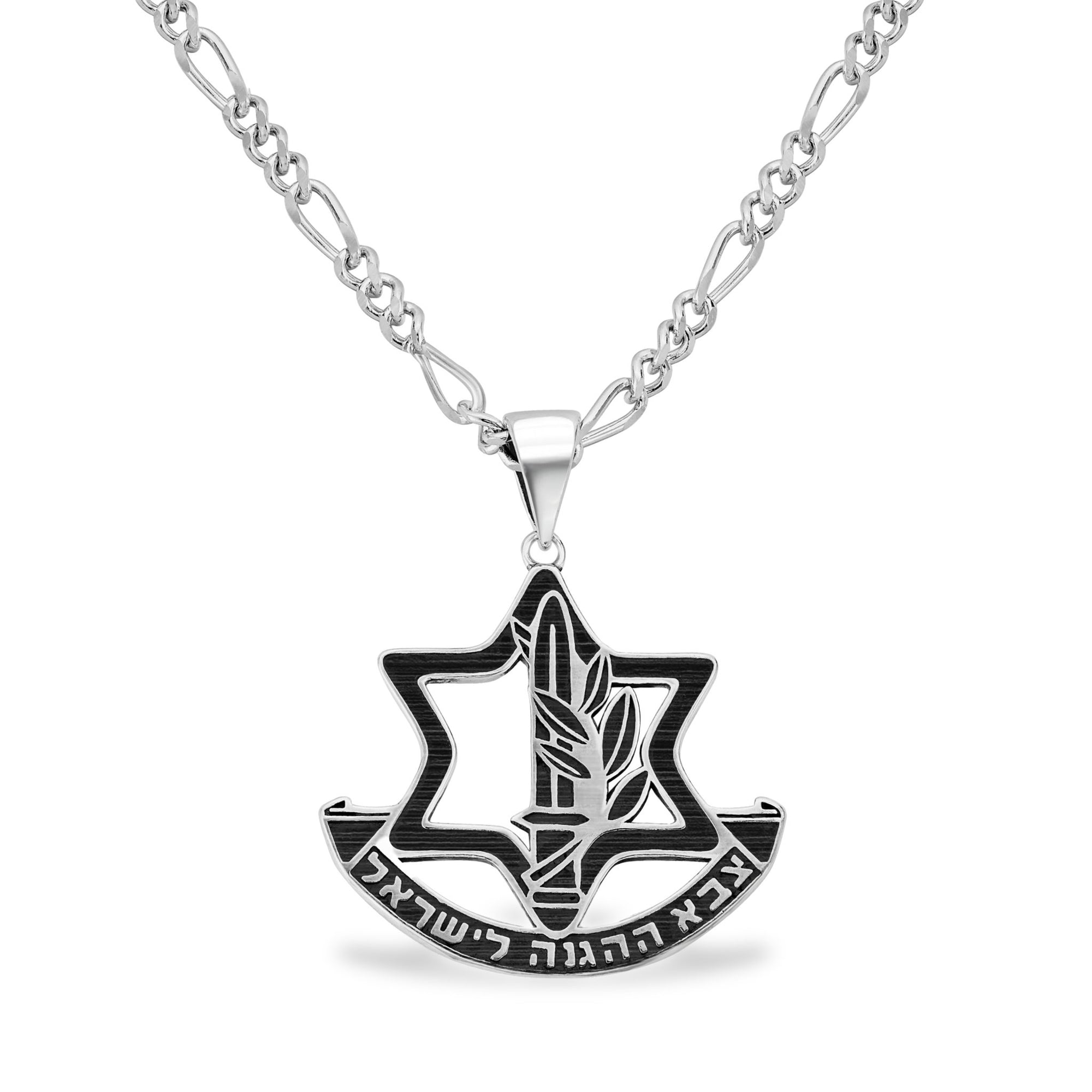
If you are exploring your own Jewish identity or looking for a quiet way to wear it, our Star of David jewelry collection was made for exactly that. Every piece ships from people who care how it lands.
Related
Does Burger King Support Israel?
Is Walmart Jewish?
Is Bill Gates Jewish?
Last updated August 2026. We update these profiles as the record changes.