

Short answer: No. As of August 2026, Norman Finkelstein remains one of the most prominent critics of Israeli policy in American academic and public life. He has repeatedly accused Israel of committing genocide in Gaza, and his sharpest friction with the pro-Palestinian movement came in 2012, when he attacked BDS leadership over what he called its undisclosed goal of ending Israel as a state. He was explicit that he supports boycotts as a tactic, and his objection was to the movement's aims, not to boycotting, and he insisted on a two-state solution.
What Norman Finkelstein has actually said and done
- February 2012: In a video interview with Frank Barat, Finkelstein called the BDS (Boycott, Divestment, Sanctions) movement a "cult," arguing its unstated goal was Israel's destruction and that Palestinians should instead pursue a two-state solution that recognizes Israel's existence, according to Mondoweiss. He later asked the interviewer to take the video down, saying it "did some harm."
- June 2012: Facing backlash from pro-Palestinian activists, Finkelstein stood by his "BDS cult" remark, telling Mondoweiss it was "historically criminal" not to support the two-state solution.
- June 2024: Finkelstein said Israel was diluting the term "Holocaust" while, in his view, committing genocide in Gaza, according to Al Arabiya English.
- 2024-2025: Finkelstein publicly disputed that systematic sexual violence occurred during the October 7 attack, including in an interview with streamer Hasan Piker, drawing condemnation covered by the Jerusalem Post and World Israel News. It is among his most contested claims of the period.
- January 21, 2025: Finkelstein spoke at a Yale Political Union debate on the resolution "the state of Israel is responsible for genocide," arguing in favor. Attendees voted 66-22 to adopt the resolution after the three-hour event, per the Yale Daily News.
- February 2026: Princeton's Students for Justice in Palestine chapter canceled Finkelstein's planned annual lecture there. The university said he remained "welcome" to return, meaning the cancellation was a decision by the student group, not an institutional ban, as reported by the Algemeiner.
- 2026: Finkelstein published a new book, "Gaza's Gravediggers: An Inquiry into Corruption in High Places," arguing that international human rights organizations and institutions failed to stop what he calls Israel's genocide in Gaza, per his author site, normanfinkelstein.com.
- June 2026: In an interview with The Cornell Daily Sun, Finkelstein continued discussing Israel's conduct since October 7, 2023, and characterized current Israeli officials' behavior as more severe than that of prior generations.
Who is Norman Finkelstein, and why his family history matters here
Norman G. Finkelstein was born December 8, 1953, in Brooklyn, to two Holocaust survivors: his mother survived the Majdanek concentration camp, and his father survived Auschwitz. He earned a PhD from Princeton and has written several books, including "The Holocaust Industry" and "Beyond Chutzpah." For decades he has been one of the most prominent academic critics of Israeli policy toward Palestinians, and since Hamas's October 7, 2023 attack and the ensuing Gaza war, he has repeatedly used the word "genocide" to describe Israel's military campaign, including in the formal Yale debate and in his 2026 book. He frequently invokes his Jewish identity and his parents' Holocaust history as part of his moral argument against Israeli conduct, not in its defense.
It's worth noting there is a different, unrelated Norman Finkelstein: Norman H. Finkelstein, a Massachusetts children's nonfiction author and school librarian, who died January 5, 2024, at age 82. He is not the political scientist covered in this profile, who remains alive and publicly active as of mid-2026.
The bottom line
Norman Finkelstein does not support Israel's policies, and he has been explicit and consistent about that for years, culminating in repeated public genocide accusations since October 2023. The one point of friction with his own political camp is that in 2012 he broke publicly with the BDS movement, calling it a "cult" and insisting on a two-state solution that recognizes Israel's existence, a position that made him unpopular with BDS supporters. That stance is a disagreement over tactics on the pro-Palestinian side, not support for the Israeli government or its conduct.
Wear where you stand
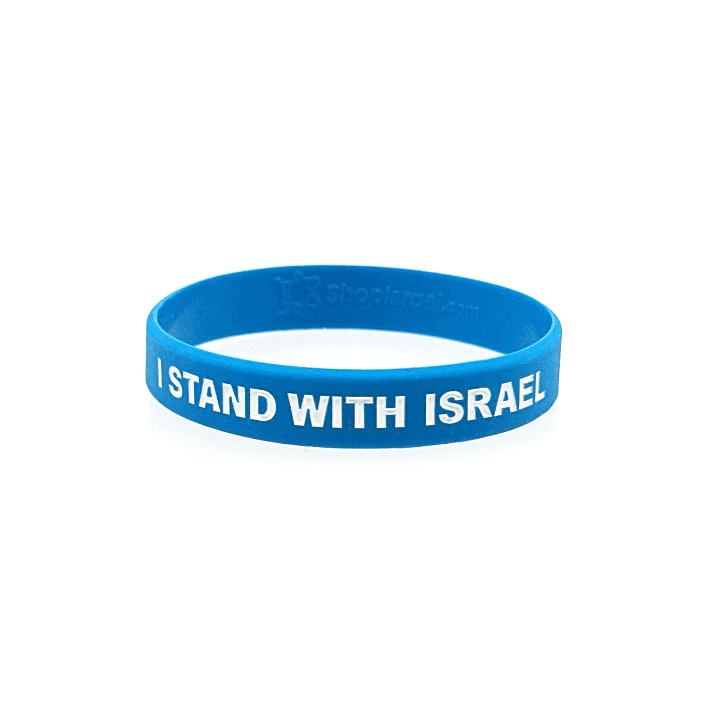
Whatever any one commentator argues in the op-ed pages, plenty of people want to say clearly where they stand. If that's you, our I Stand With Israel collection is a simple, wearable way to show it.
Related
- Does Noam Chomsky Support Israel?
- Does Roger Waters Support Israel?
- Does Rashida Tlaib Support Israel?
Last updated August 2026. We update these profiles as the record changes.