

Short answer: As of August 2026, Fumio Kishida, who served as prime minister of Japan from October 2021 to October 2024, took a cautiously pro-Israel but carefully balanced stance after the October 7 Hamas attack. He condemned the attack within a day, sanctioned individuals linked to funding Hamas, and repeatedly told Israeli leaders that Japan supported international humanitarian law and a two-state solution, all while Japan avoided joining the unified Western condemnation statement and sent hundreds of millions of dollars in aid to Palestinians. He is not Jewish and has no personal Jewish-identity connection; his engagement with Israel was diplomatic, not personal.
What Fumio Kishida has actually said and done
- October 8, 2023: One day after Hamas's attack, Kishida posted on X that "Japan strongly condemns the attacks which severely harmed innocent civilians," naming Hamas and other Palestinian militants as having attacked Israel from Gaza, while also expressing concern over civilian casualties in Gaza. He notably avoided the words "terrorism" or "terrorist," even though Japan had designated Hamas a terrorist organization back in 2003, and Japan did not join the joint US-UK-France-Germany-Italy statement condemning Hamas issued on October 9, 2023, according to The Diplomat and Al Jazeera.
- October 31, 2023: Kishida's government sanctioned nine individuals and one company, freezing their assets, over alleged links to funding Hamas, following similar US sanctions issued earlier that same month, per Al Jazeera.
- November 2023: Japan, under Kishida, pledged an additional $65 million in humanitarian aid for Gaza, on top of $10 million pledged the previous month, part of what Japan described as roughly $410 million in total Palestinian humanitarian assistance flowing after October 7, as reported by the Times of Israel.
- December 1, 2023: In a roughly 30-minute in-person meeting with Israeli President Isaac Herzog on the sidelines of COP28 in Dubai, Kishida reiterated his condemnation of the Hamas attacks, welcomed the hostage-for-aid deal in progress at the time as a step toward de-escalation, and said Japan supported international humanitarian law and UN Security Council resolutions on the conflict, according to the Prime Minister's Office of Japan.
- December 6, 2023: In a roughly 20-minute phone call with Israeli Prime Minister Benjamin Netanyahu, Kishida again condemned the Hamas attacks, urged that rising civilian casualties in Gaza be avoided, and stated that Japan supported a two-state solution in which Israel and Palestine coexist peacefully. Netanyahu raised concerns about attacks on Red Sea shipping, and Kishida condemned interference with free navigation, per the Ministry of Foreign Affairs of Japan.
- October 1, 2024: Kishida's term as prime minister ended after he announced in August 2024 that he would not seek reelection as leader of the Liberal Democratic Party. He did not run for a further term and left the premiership, according to Britannica.
The bigger picture: Japan's balancing act
Kishida's approach to Israel is best understood as part of Japan's broader Middle East balancing act rather than a personal position. Japan imports roughly 94 percent of its crude oil from the Middle East and relies on strong ties with Gulf and Arab states, which made an unreserved pro-Israel stance politically costly for Tokyo. As prime minister, Kishida condemned the October 7 attack within a day, sanctioned individuals tied to Hamas financing, and repeatedly told both Netanyahu and Herzog that Japan backed international humanitarian law and a two-state solution. At the same time, he deliberately avoided branding the attack "terrorism" in his own public statements, kept Japan out of the unified Western condemnation statement, and directed hundreds of millions of dollars in aid to Palestinians in Gaza.
Kishida left the premiership on October 1, 2024, succeeded first by Shigeru Ishiba and then, from October 2025, by Sanae Takaichi, Japan's first female prime minister. There is no public record of Kishida attending pro-Israel or Jewish community events, making personal donations to Israeli or Jewish causes, or having any Jewish ancestry or affiliation. He is a lifelong LDP politician from Hiroshima with no documented Jewish-identity connection.
The bottom line
Kishida supported Israel diplomatically in a measured, non-partisan way, condemning the Hamas attack and sanctioning Hamas financiers while also pressing for restraint in Gaza and directing large-scale aid to Palestinians. He never aligned fully with the pro-Israel bloc among Western leaders, and he has no personal Jewish-identity ties.
Wear your own answer
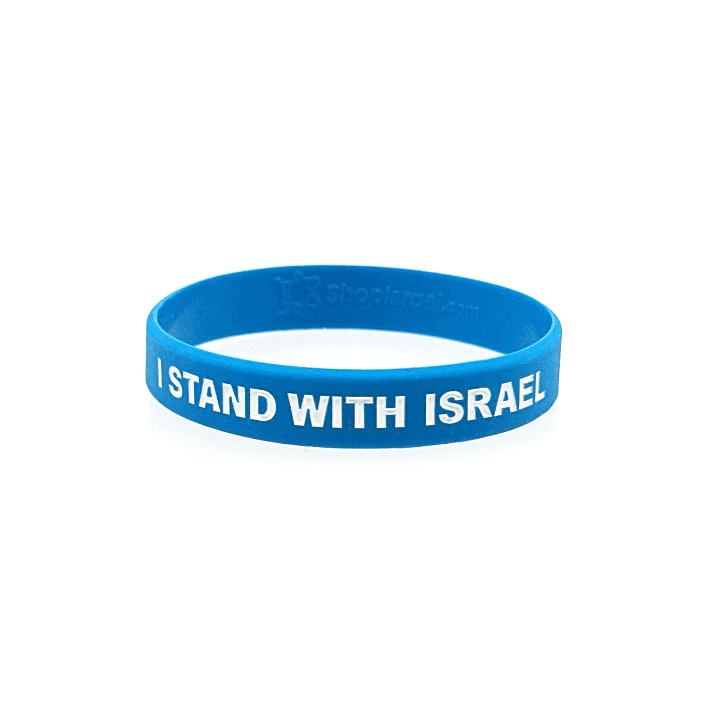
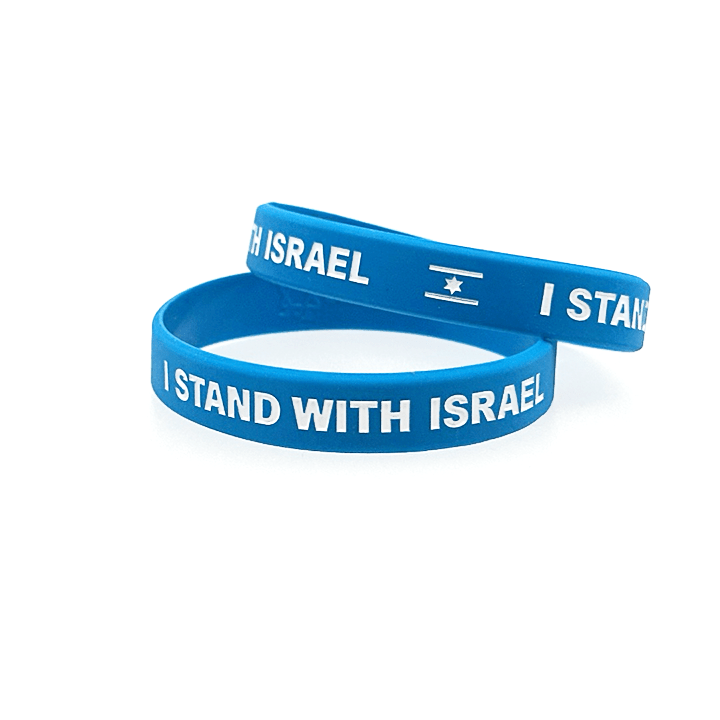
Whatever a foreign leader's balancing act looks like, plenty of people want a simple, unambiguous way to show where they stand. If that's you, our I Stand With Israel bracelet or the full I Stand With Israel collection makes the statement plainly, no diplomacy required.
Related
- Does Justin Trudeau Support Israel?
- Does Olaf Scholz Support Israel?
- Does Emmanuel Macron Support Israel?
Last updated August 2026. We update these profiles as the record changes.